Get Full Government Meeting Transcripts, Videos, & Alerts Forever!
Get email alerts on the Marijuana Revenue topic
No spam. Unsubscribe anytime.
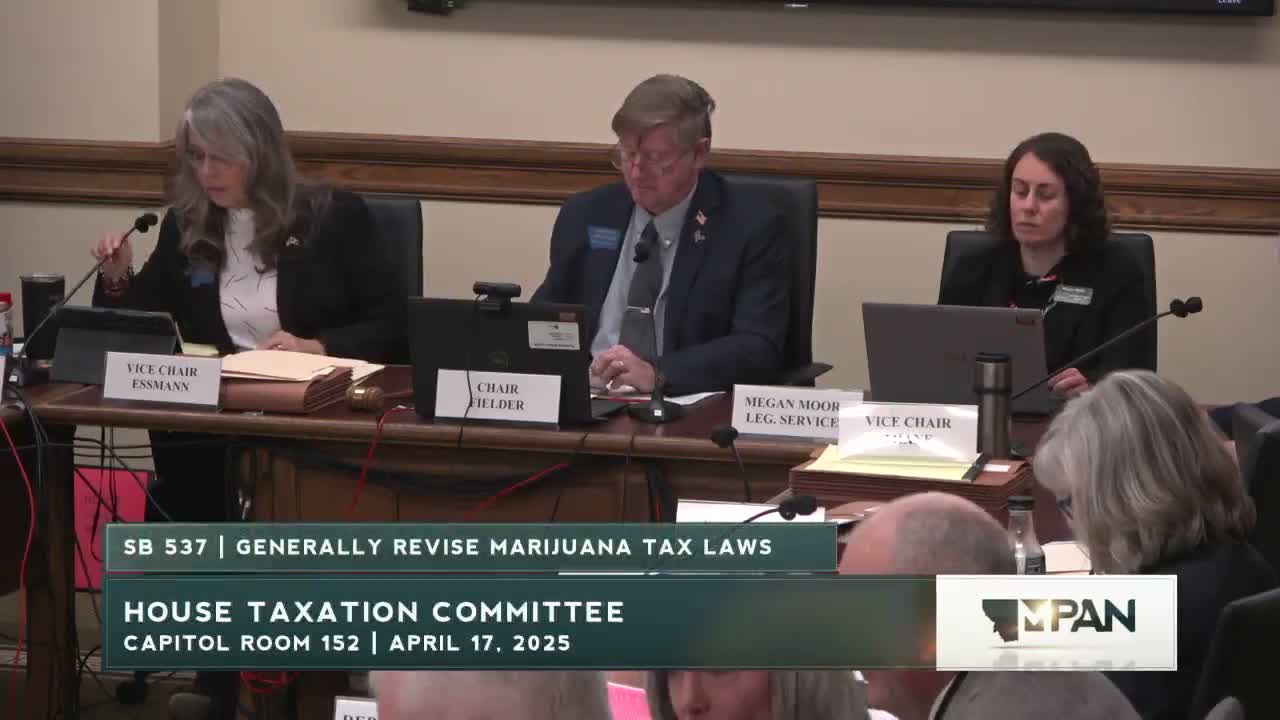
Senate Bill 537 proposes new distribution for marijuana tax revenue; committee approves amended bill
Summary
SB537 would rework recreational marijuana tax distributions while preserving a 32% conservation allocation. The sponsor outlined new buckets for law‑enforcement grants, behavioral health, forensic exam funding and expanded heart‑fund support; proponents from conservation, law‑enforcement and victim‑services supported the amendment. The committee passed the measure as amended.
Senate Bill 537, presented to the committee by its sponsor, proposes a broad reallocation of recreational marijuana tax revenue while preserving an existing 32% allocation to conservation programs. The bill creates several new or expanded distributions for law enforcement, behavioral health, forensic evidence and prevention.
Sponsor summary: The sponsor described a multi‑bucket approach: a baseline $50,000 annual grant to each police or sheriff’s office and tribal police department from a law‑enforcement allocation, plus a remainder distribution proportional to certified officers; a separate allocation for forensic assault exams and kits; increased funding for behavioral‑health programs and homelessness services; and an expansion of the heart fund allocation (from an earlier cap toward an 11% share or a floor of $7 million depending on fund size). "This spends money. This spends money coming in for marijuana, and we're trying to get it back out to, again, address issues," the sponsor said.
Proponents and details: The conservation community (Wild Montana, Montana Audubon), public‑safety officials and victim‑services representatives testified in favor. Hope Stockwell (Office of Victim Services) said dedicated funding for sexual‑assault forensic exams would remove strain from victim‑compensation resources and allow the forensic exam reimbursement program to cover more exams and pay higher rates. Testimony also highlighted the need to fund lab capacity and enforcement resources to keep illegal/contraband marijuana off the streets.
Fiscal effects and structure: Department of Revenue witnesses and Fish, Wildlife & Parks staff appeared as informational witnesses to answer technical and fiscal questions. Committee members queried the sponsor and staff about how specific allocations are defined (for example, what counts as an "officer" for distribution purposes; sponsor clarified intent is post‑certified officers) and about how shifting distributions would change general‑fund flows. Staff noted that some distributions that previously flowed to the general fund would instead be placed into state special revenue accounts under the amended bill.
Outcome: The committee considered and adopted an amendment that adjusted several allocations (including the amount dedicated to forensic‑exam funding and the heart fund cap/percentage). The amended SB537 passed the Taxation Committee by a vote of 15 to 6 and a committee member volunteered to carry the bill to the floor.