Get Full Government Meeting Transcripts, Videos, & Alerts Forever!
Get email alerts on the Housing Development topic
No spam. Unsubscribe anytime.
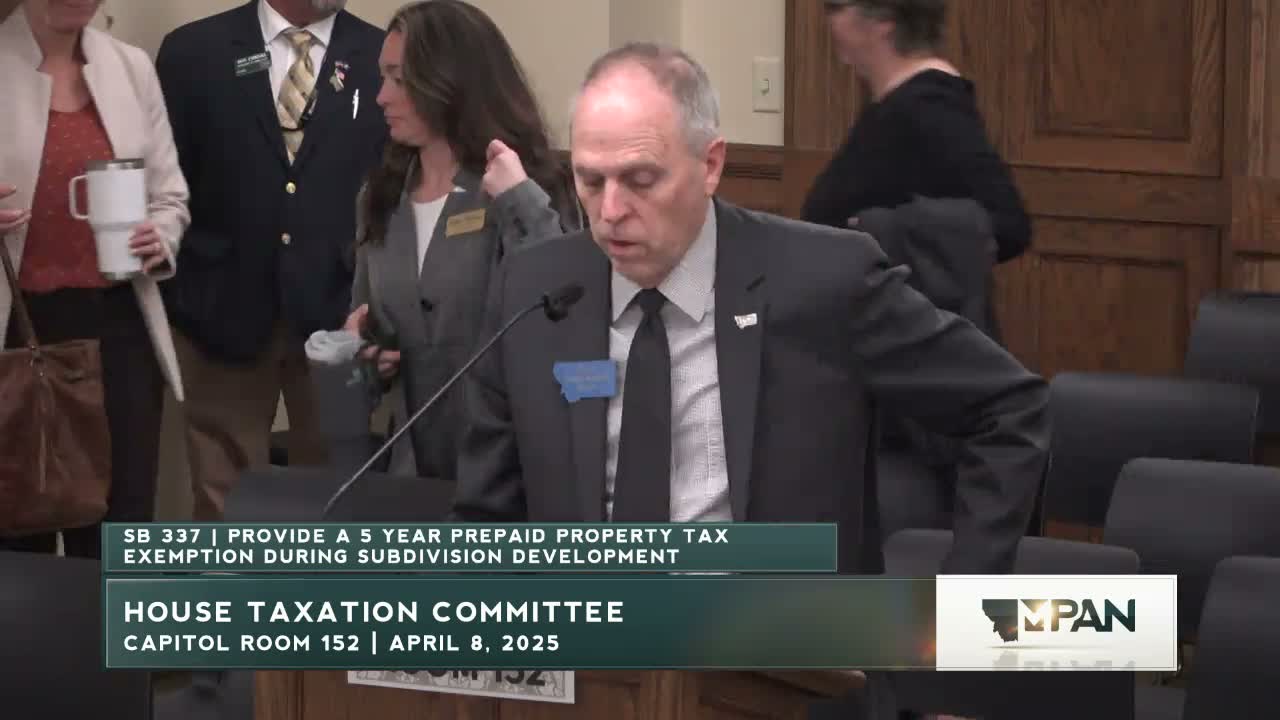
Senate Bill 337 would allow five-year prepayment tax exemptions for residential subdivisions, sponsor says it could lower housing costs
Summary
Sen. Greg Hertz proposed SB 337 to let developers prepay five years of existing property taxes (plus a 5% fee) to receive a five-year exemption for residential subdivision lots; exemption ends for each lot when a habitable dwelling is available and the whole exemption ends at 95% buildout. Proponents said prepayment protects local revenue while easing developers' carrying costs; DOR raised state fiscal impacts for school equalization.
Sen. Greg Hertz told the House Taxation Committee that Senate Bill 337 would permit a developer to apply for a five-year exemption on newly subdivided residential lots after prepaying five years of existing property taxes plus a 5% fee; counties would certify the prepayment and DOR would administer exemptions. The exemption would end for each lot when a habitable dwelling is available for occupancy; the entire exemption terminates when 95% of lots in the development are built out or the five-year window expires.
Supporters, including the Montana Building Industry Association, said advance prepayment preserves local governments’ cash flow and gives builders predictable carrying costs that can help lower the eventual price of homes. Ashley Martinez said the prepayment "ensures that local governments are not deprived of tax revenue while offering developers the flexibility they need to redirect funds into projects."
Informational witnesses from the Department of Revenue and the Property Assessment Division explained administration specifics: property is reassessed as of Jan. 1 each year and DOR picks up new construction percent-complete at that date; the fiscal note projects modest initial state impacts rising over time as more lots are exempted (state school-equalization impacts were estimated to grow into the hundreds of thousands to low millions across several years in the fiscal note narrative).
Committee members raised questions about phased development, potential gaming (creating subdivisions without building), incidence when lots are sold to third parties, effects on agricultural-to-residential reclassification timing, and whether developers must pass savings to buyers. Sponsors said the five-year limit, monitoring at assessment dates and rulemaking ability would mitigate gaming, and closed asking for a "do pass" while offering to work on technical details.
No vote was taken on SB 337 at the hearing.