Get Full Government Meeting Transcripts, Videos, & Alerts Forever!
Get email alerts on the Data Centers topic
No spam. Unsubscribe anytime.
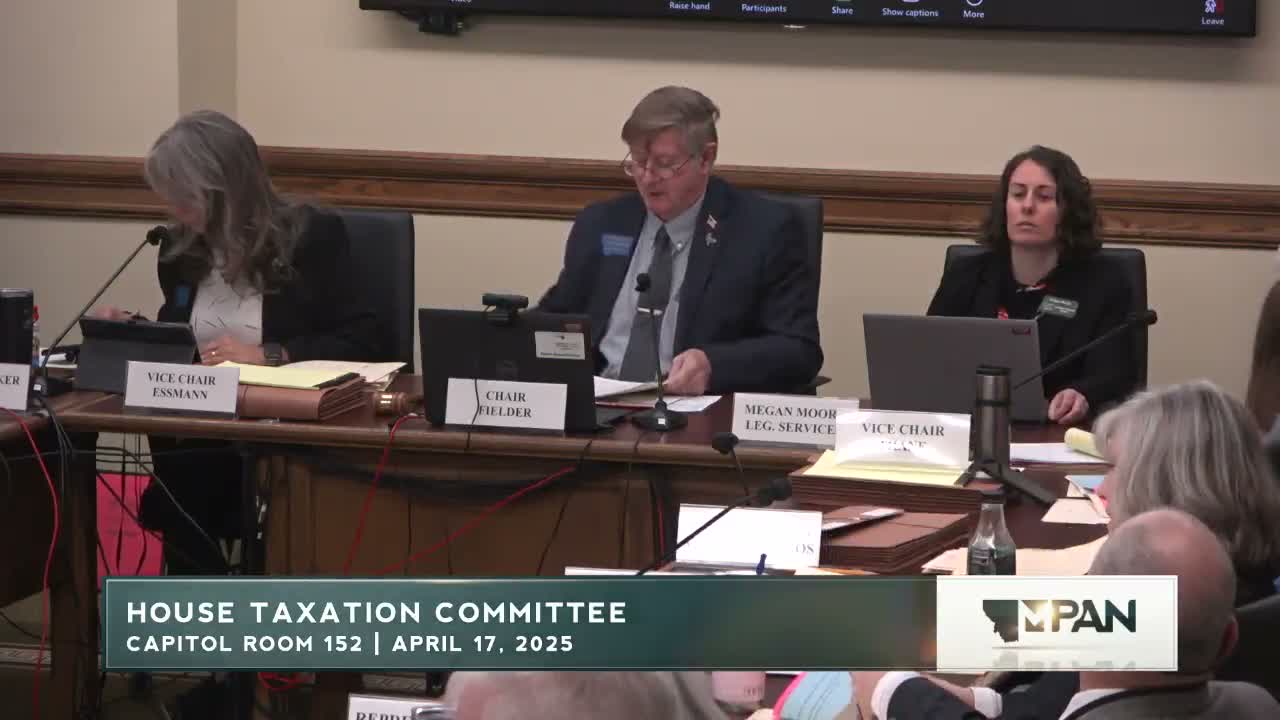
committee hears SB540 to clarify Class 17 data‑center taxation; industry backs clarity, environmental group urges coordination
Summary
SB540 would clarify local assessment rules for dedicated communications infrastructure at qualified data centers and extend local tax treatment; industry and chambers urged the committee to adopt the bill to attract investment, while environmental groups urged coordination with other bills to preserve local protections. Committee later concurred on an amended version.
Senator Becky Beard opened the hearing on Senate Bill 540, saying the bill clarifies how Class 17 property taxation applies to data centers and the dedicated communications infrastructure that supports them.
"This is intended, to clarify class 17 property tax code and to promote economic development by bringing business opportunities to our state," Beard said in her opening remarks.
What the bill does: SB540 provides a definition of "local dedicated communications infrastructure" (fiber, copper, microwave and satellite systems within a single county and within a data‑center’s external boundaries) and clarifies which components are locally assessed versus centrally assessed. Proponents told the committee this clarity will reduce investor uncertainty and make Montana more competitive for data‑center investment.
Industry and economic arguments: Shelby DeMars (R plus Energies) and testimony from NetChoice and other industry witnesses emphasized potential capital investment, construction and operational jobs, and the role of data centers in supporting digital infrastructure and AI‑related growth. DeMars said the bill removes an outdated 15‑year trigger that shifted communications infrastructure away from local assessment and instead treats locally assessed communications infrastructure as part of the qualified data‑center property for tax purposes.
Local‑revenue and environmental concerns: Anne Hedges of the Montana Environmental Information Center opposed the bill in part and urged close coordination with other bills (notably SB424 and amendments discussed in committee) to ensure local governments retain protections and revenue streams. Hedges and other local government interests warned that shifting tax treatment without preserving local protections could harm rural budgets.
Fiscal and technical clarifications: Department of Revenue economists (John Allen and Jared Isom) said the fiscal note currently shows no anticipated growth of class‑17 property in the forecast period because there are no confirmed projects; they explained the bill’s effect would vary by location and the makeup of a data center’s tax base. Isom also outlined how the bill changes phase‑out rules: qualified data‑center property would remain in class 17 at the lower rate, while centrally assessed communications infrastructure would still phase as previously if it crosses county boundaries.
Outcome and next steps: Committee members pressed sponsors on coordinating amendment language to preserve the intent of both SB540 and related bills; the committee adopted an amendment and later concurred in SB540 as amended during executive action. The committee recorded a concurrence vote on SB540 (as amended) during executive action later in the day.