Get Full Government Meeting Transcripts, Videos, & Alerts Forever!
Get email alerts on the Utility Relocation topic
No spam. Unsubscribe anytime.
Committee advances bill to tighten utility relocations and set MDT rulemaking timeline
Summary
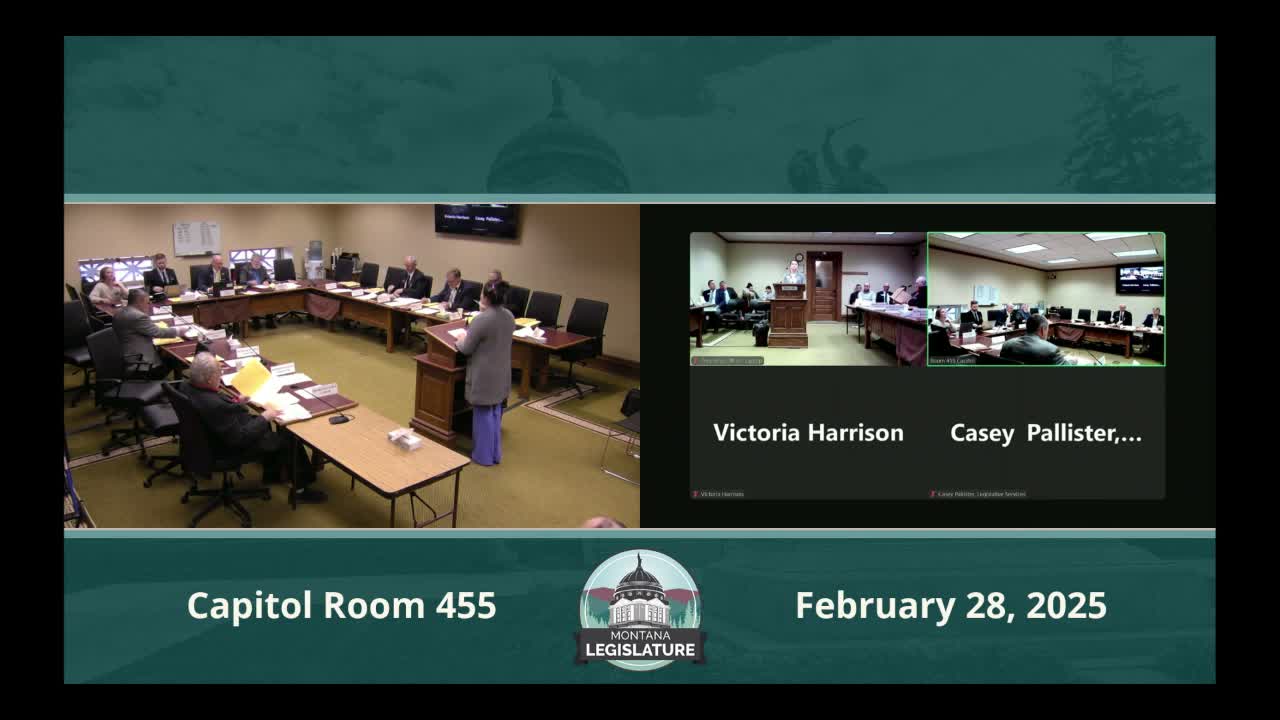
The House Transportation Committee gave HB 672 a due‑pass recommendation after sponsor Representative Courtney Sprunger and MDT Director Chris Dorrington described a stakeholder process to fix chronic utility‑relocation delays, preserve up to 75% reimbursement, and allow incremental reimbursement reductions for repeated noncompliance.
Representative Courtney Sprunger, sponsor of House Bill 672, told the House Transportation Committee the bill is aimed at resolving chronic delays caused when utilities do not relocate facilities in time for highway construction.
"This bill comes from very personally lived experience," Sprunger said, and she described retaining the current relocation reimbursement that covers up to 75% of utilities’ costs while adding a penalty scale for utilities that repeatedly fail to relocate after multiple notices. The bill also requires a stakeholder‑driven rulemaking process, giving contractors, utilities and the Montana Department of Transportation (MDT) six months to work through exceptions and timetables.
Chris Dorrington, director of the Montana Department of Transportation, rose in support and told the committee the measure moves “accountabilities to the right place” and creates a process that pairs notice with consequences. "With notice and a little bit more notice and ongoing noncompliance, there's a consequence," Dorrington said.
Utility and contractor groups — including the Montana Contractors Association, Helena Sand & Gravel, Northwestern Energy, Broadband Montana, Lumen/CenturyLink, and the Montana Electric Cooperatives Association — testified in favor, citing repeated project delays and the economic cost of stalled construction seasons.
Tom Ebzery, counsel for CenturyLink/Lumen, said stakeholders began meeting in January and submitted timeline proposals; he and other utility witnesses urged longer timelines than those first proposed in draft rule language and pushed back on an original indemnity clause. "We felt that this hold harmless clause . . . was untenable," Ebzery said, describing negotiations that produced the current compromise language.
Committee members questioned the scope of the liability language in section 7 and whether it protects the department from claims arising from relocation activity. Dorrington and Ebzery explained the department would hire qualified contractors to perform relocations if utilities fail to act, and that the liability standard ultimately agreed to was narrow — limited to gross negligence or willful misconduct in certain circumstances.
Representative Sprunger closed by saying the bill aims to "create transparency" and "consistency" and asked the committee for a do‑pass recommendation. The committee did advance HB 672 to the House floor for second reading.
What happens next: HB 672 was reported out of committee with a do‑pass recommendation and will go to the House chamber for consideration on second reading. The bill sets a target effective date and a rulemaking window so stakeholders can agreed detailed timelines and exceptions before the law takes effect.