Get Full Government Meeting Transcripts, Videos, & Alerts Forever!
Get email alerts on the Veterans Tax Relief topic
No spam. Unsubscribe anytime.
Senate Bill 424 would broaden Montana's disabled‑veteran property‑tax assistance; committee hearing held
Summary
Senate Bill 424 would expand eligibility for the Disabled Veteran Property Tax Assistance Program to include veterans rated between 60% and 90% disability, aligning Montana with neighboring states; the Department of Revenue estimates the change would let roughly 5,460 additional veterans qualify. The committee took testimony and later tabled the bill during executive action.
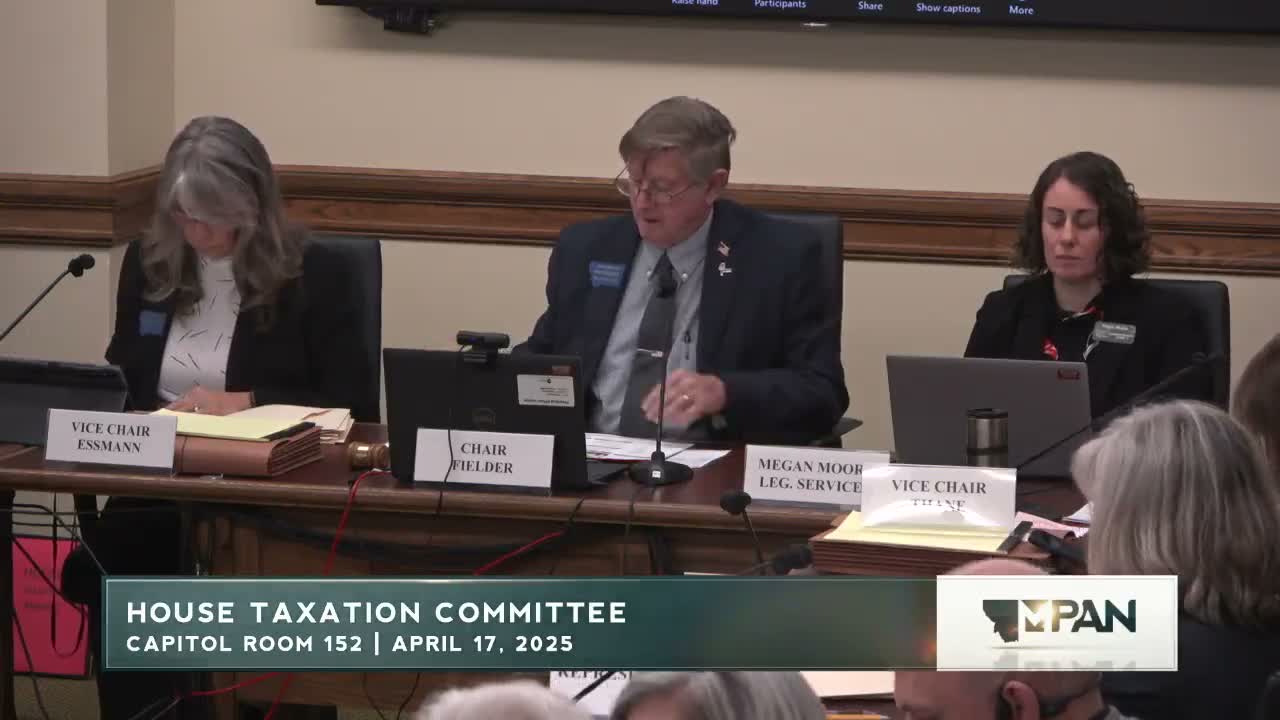
Senator Ellie Boldman, sponsor of Senate Bill 424, told the House Taxation Committee the bill narrows a gap between Montana and neighboring Western states by expanding which disabled veterans qualify for property‑tax assistance.
"All it does is just change Montana, to 1 of the final states now that does provide property tax relief," Boldman said, describing the measure as an expansion of the existing program to include veterans rated between 60% and 90% disability under the Department of Veterans Affairs framework.
Why it matters: The change would increase the pool of qualifying veterans and reduce property‑tax burdens for more households. Boldman said the Department of Revenue indicates the expansion would "make about 5,460 more disabled veterans in the state of Montana, qualify for the program." That estimate is derived from applying national disability‑rating distributions to current Montana participation and taxable‑value reduction tables.
Fiscal and administrative details: Dylan Cole of the Department of Revenue told the committee the fiscal note and program tables show about 3,000 households currently fully exempt under the program and roughly 100 households in each other reduction category. Cole said his office estimated impacts by mapping national statistics for veterans rated 60–90% disabled onto the distribution of those already in the 100% category and applying current taxable‑value reductions.
Several committee members asked about verification and administration. Representative Heshman asked where the bill requires "annual verification" of income or eligibility; Boldman and Department witnesses said eligibility thresholds and verification processes are defined by the VA, and Department of Revenue staff administer property tax reductions under that federal eligibility framework.
Outcome and next steps: The committee heard no in‑room proponents or opponents beyond the informational witnesses. During executive action later in the day, the bill failed a concurrence vote in committee and was subsequently tabled.