Get Full Government Meeting Transcripts, Videos, & Alerts Forever!
Get email alerts on the Taxation topic
No spam. Unsubscribe anytime.
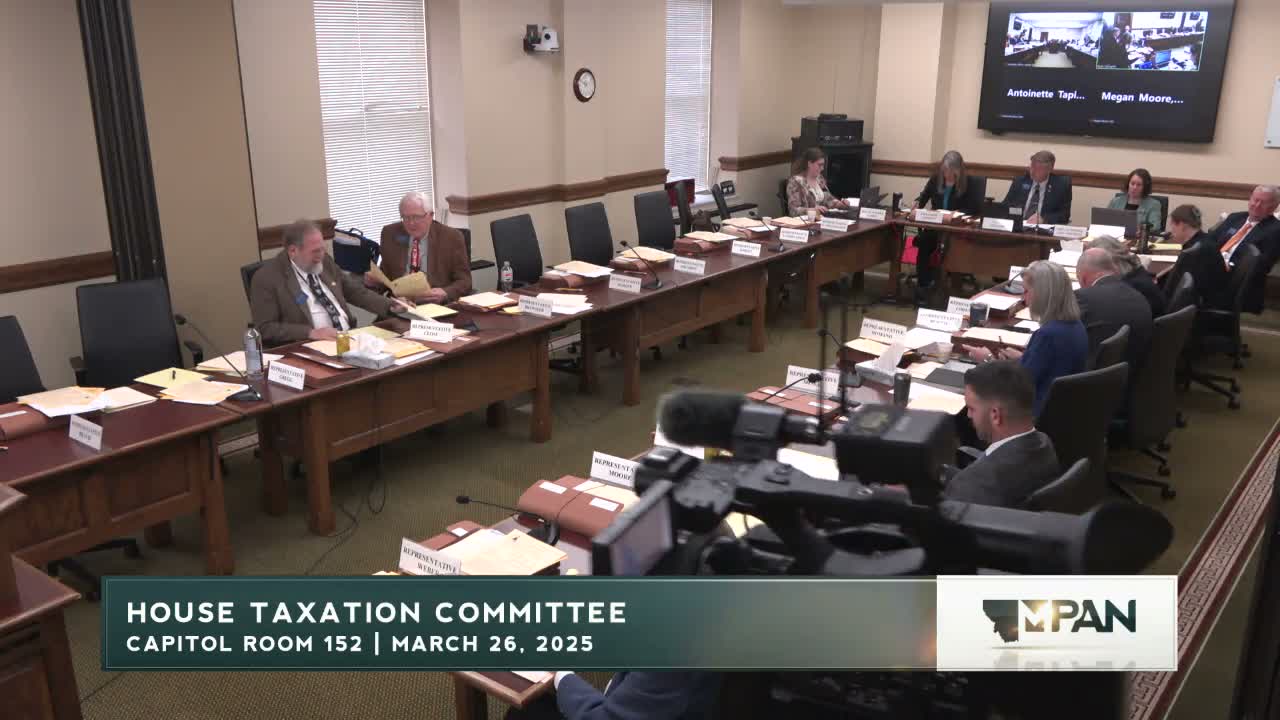
Committee hears $1-per-pack cigarette tax increase; health groups urge passage, retailers warn of cross-border effects
Summary
Representative Melody Cunningham’s HB 826 would raise the state cigarette tax by $1 per pack. Health groups, pediatricians and youth witnesses urged the committee to approve the increase citing public-health gains and Medicaid savings; retail and convenience-store groups opposed it, warning of cross-border purchases, smuggling and negative impacts on small businesses.
Representative Melody Cunningham opened HB 826 asking the committee to raise the tax on combustible cigarettes by $1 per pack, arguing Montana has not adjusted the tax in 21 years and that price increases reduce smoking and initiation among youth. "This bill proposes a $1 increase in tax on combustible cigarettes," Cunningham said, noting studies showing price sensitivity and citing a $511 million annual estimated cost of smoking to Montana and $87.2 million in Medicaid costs.
Youth witnesses and public-health organizations provided the bulk of proponent testimony. Students from Powell County and Deer Lodge testified that higher prices deter initiation and help families; Jackie Semmens of the American Heart Association and Lauren Wilson of the American Academy of Pediatrics emphasized reduced youth initiation and past declines after price increases. Supporters also pointed out that existing cigarette-tax revenue is already used for health programs and that increasing the rate would fund cessation and prevention efforts.
Industry groups vigorously opposed the increase. Brad Griffin of the Montana Retail Association and convenience-store owners warned that Montana's tax would jump well above neighboring states, prompting cross-border purchases, black-market sales and lost incidental sales—fuel, snacks and other items that sustain small retailers. Several industry witnesses also raised enforcement and theft concerns and argued the tax would be regressive for lower-income Montanans.
Department of Public Health and Human Services and Department of Revenue staff answered questions about prevalence, quit-line usage and how cigarette-tax revenue is allocated (witnesses said a substantial portion supports health initiatives, veterans' homes and long-range planning). Committee members pressed both sides for data on smuggling, cross-border effects and distributional impacts; sponsor Cunningham closed by reiterating health benefits and the bill's potential to reduce smoking-related illness costs.
The hearing record shows a sharp division: public-health coalitions and medical groups framed the increase as an evidence-based tool to reduce initiation and fund health programs; retail and convenience-store groups emphasized economic and enforcement risks if Montana’s rate rises significantly above neighbors.