Get Full Government Meeting Transcripts, Videos, & Alerts Forever!
Get email alerts on the Property Tax Relief topic
No spam. Unsubscribe anytime.
Committee backs clarity on disaster tax-relief claims with two-year filing deadline
Summary
House Bill 89 would add a two-year deadline to file for property-tax relief after a natural disaster; Department of Revenue witnesses said the window balances owners’ needs to recover with the agency’s need to verify damage before repairs occur.
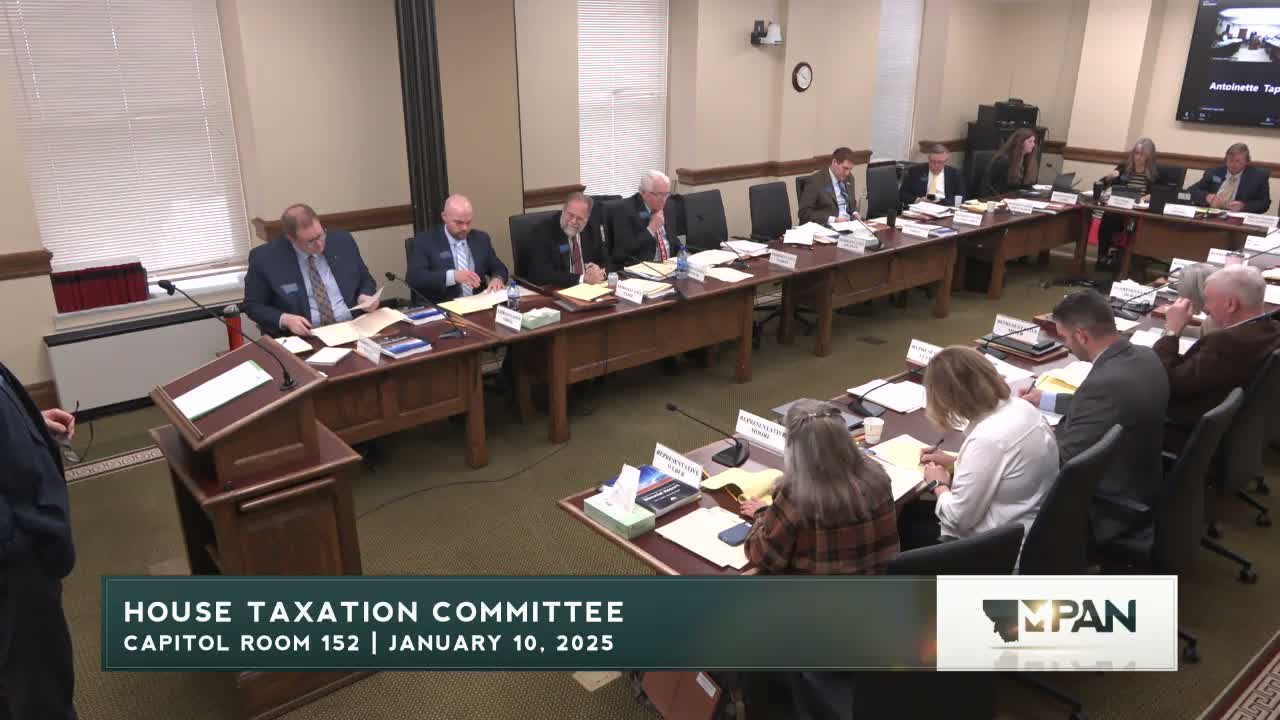
House Bill 89, sponsored by Representative Shane Clacken at the request of the Department of Revenue, would add a two-year deadline for property owners to apply for property-tax relief following destruction caused by a natural disaster.
Representative Clacken said the bill simply amends section 15-16-611 of the Montana Code Annotated to require an application for disaster-related value adjustments be filed within two years of the disaster date. “Currently there’s no statutory deadline for when the application must be submitted,” he said.
Paula Gilbert, administrator for the Property Assessment Division, told the committee the department needs a reasonable window to assess damage and prorate property values while structures remain in the damaged state. “Without an application deadline, it becomes difficult when the property has already been repaired,” she said, and the department believes two years is reasonable to allow owners to address immediate recovery and still permit the agency to verify damage.
John Allen, lead industrial appraiser for the Property Assessment Division, said the department is not aware how often filings arrive beyond two years but noted at least one instance had motivated adding the deadline. Committee members asked whether ownership changes would complicate refunds or prorations; witnesses said ownership change can affect refunds because treasurers cannot refund money to a non-owner and they would follow up with procedural clarifications.
Representative Clacken closed by characterizing the bill as a simple fix to an infrequent but administratively challenging problem. The committee closed the hearing on HB 89 without taking executive action.