Get Full Government Meeting Transcripts, Videos, & Alerts Forever!
Get email alerts on the Revenue Estimate topic
No spam. Unsubscribe anytime.
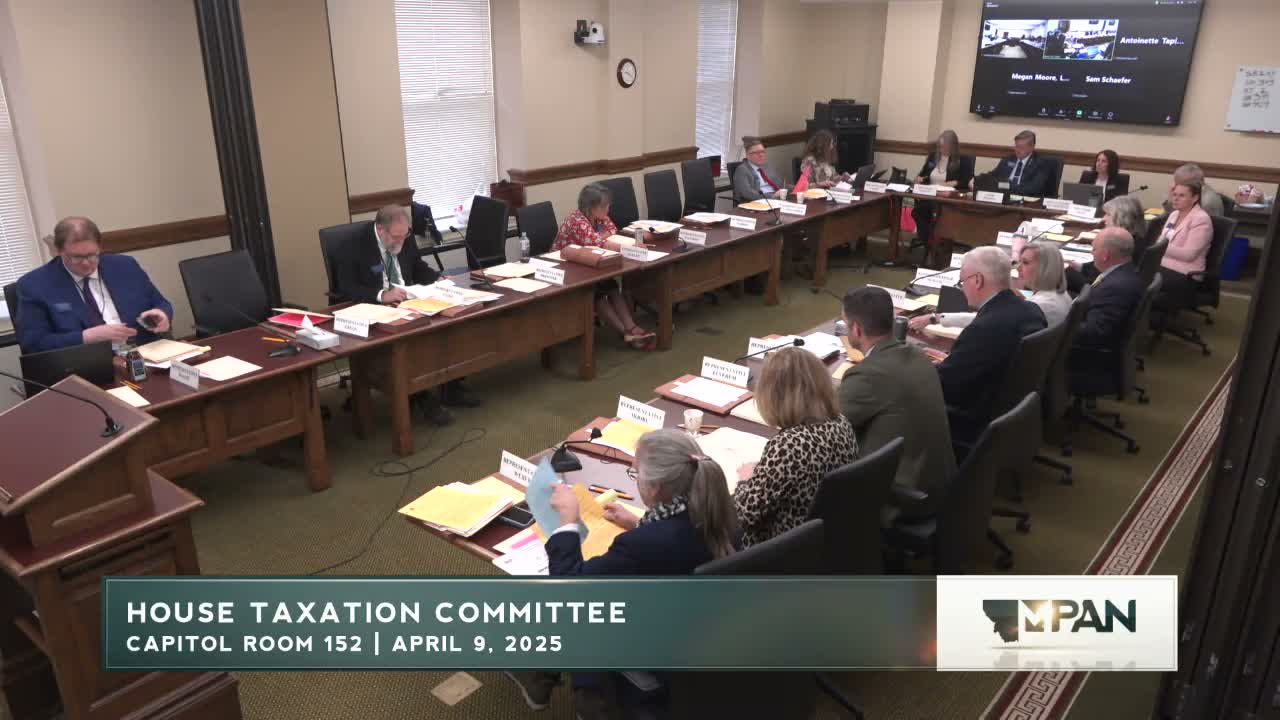
House Taxation hears HJ 2 revenue estimate; LFD urges caution on out‑year volatility
Summary
Legislative Fiscal Division staff presented the three‑year revenue estimate in HJ 2, showing a modest out‑year growth trajectory but warning that capital gains and macroeconomic shifts create significant uncertainty for fiscal 2026–27. Members asked for updated forecasts and weekly status sheets.
Legislative Fiscal Division director Amy Carlson introduced House Joint Resolution 2 and the LFD team, and Sam Schafer walked the House Taxation Committee through the adopted three‑year revenue estimate for fiscal 2025–27.
Schafer told the committee the adopted HJ 2 numbers reflect current‑law assumptions and a set of common economic inputs, noting the estimate includes general fund and select state special revenues that fund major programs. He reported fiscal‑year 2024 collections totaled about $3.3 billion and the adopted forecast projects roughly $3.27 billion for fiscal 2025, rising to about $3.57 billion by fiscal 2027. Schafer emphasized that while the year‑to‑date performance through March tracks close to the estimate, out‑year projections are sensitive to capital gains volatility, oil and natural‑resource prices, and changing taxpayer behavior.
Committee members pressed Schafer on timing and risks. Representative Thain asked about the long‑term structural impact of redirecting established revenue streams; Schafer and other staff said the office forecasts under current law and that any federal tax changes would be incorporated only as new data or statutory changes warranted. Members asked about the potential effect of rising unemployment and stock‑market fluctuations; Schafer said those factors would likely lower forecasts if they materialize, and the LFD could rerun models with new S&P Global inputs in roughly two weeks.
Ryan Evans of the Governor’s Budget Office testified as a proponent, saying executive and legislative fiscal staff are closely aligned and urging caution in building budgets that rely on out‑year revenue. Representative Brewster, sponsor of the resolution, recommended adopting HJ 2 so the Legislature has a common baseline for fiscal notes and status reports.
The committee asked staff to provide weekly or Monday status sheets tracking how bills and active proposals affect the bottom line; Schafer confirmed the LFD posts status reports and could provide more routine updates. After questions and brief discussion, the committee advanced HJ 2 in executive action.
Next steps: HJ 2 provides the revenue baseline used across committees; members asked the LFD for updated forecasts as new economic data arrive and for regular status reports during the session.