Get Full Government Meeting Transcripts, Videos, & Alerts Forever!
Get email alerts on the Federal Public Lands topic
No spam. Unsubscribe anytime.
Committee hears broad support for keeping federal lands federal; amendment passes but HJ 39 is tabled
Summary
The House Natural Resources Committee heard testimony from conservation, hunting and recreation groups urging federal management of public lands. An amendment to HJ 39 passed 9–5 in committee, but the resolution failed final committee action and was tabled after a 6–8 vote.
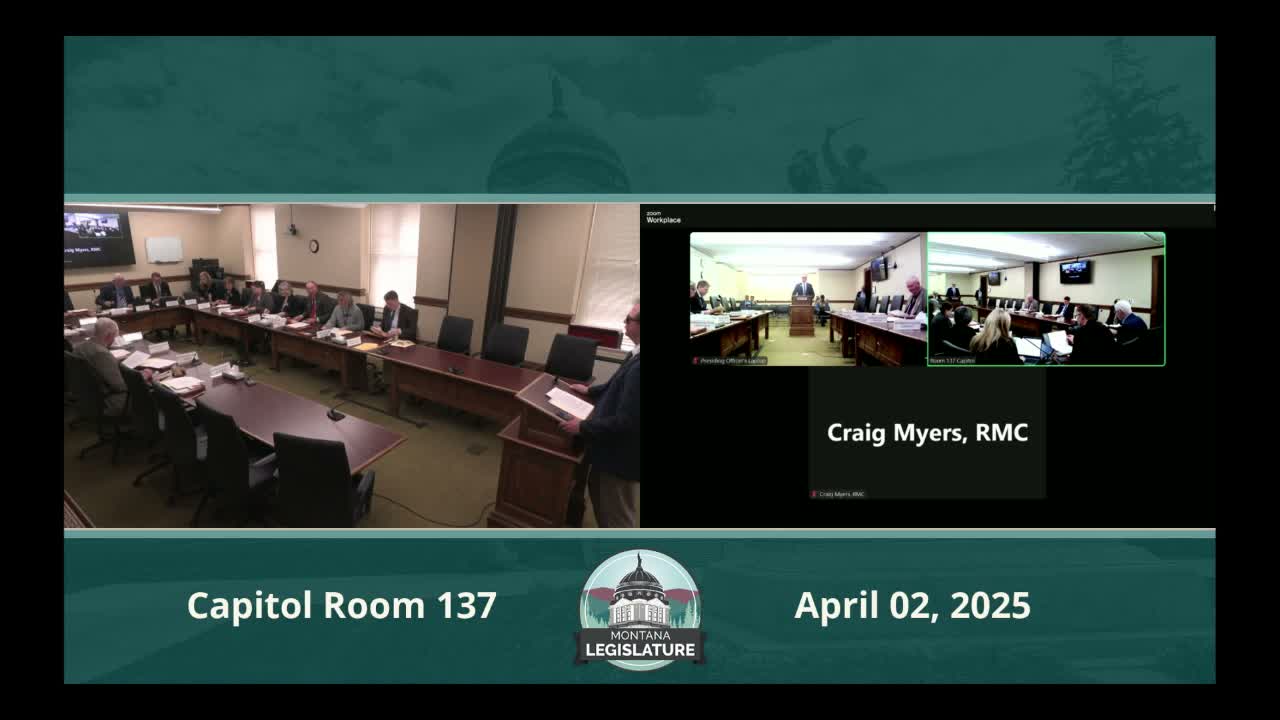
The House Natural Resources Committee on Tuesday heard hours of testimony supporting House Joint Resolution 39 (HJ 39), a bipartisan statement urging that federal public lands remain under federal ownership and control. Proponents from conservation and sportsmen’s groups told the committee that federal management preserves public access, protects wildlife habitat and avoids large costs to the state.
Representative Seconder, the sponsor, opened the hearing and emphasized the resolution’s scope: "This resolution has nothing to do with state owned lands, only federal lands," he said, arguing that the measure is about ownership rather than day‑to‑day management. The sponsor warned that transferring federal lands to state control would carry large fiscal burdens, saying the state could face "between $300,000,000 and $500,000,000 annually" in management costs.
Why it matters: supporters said federal ownership protects multiuse access (hunting, fishing, recreation), leverages federal wildfire and infrastructure capacity, and sustains an outdoor economy that benefits small towns. Micah Fields of the Montana chapter of Backcountry Hunters & Anglers told the committee HJ 39 "retains the current successful model of federal public land management," and cited the recent rejection on the House floor of a competing resolution (HJ 24). Kirsten Cook of the Montana Conservation Voters Education Fund cited a 2025 poll showing "68% are opposed to giving state government control over federal lands."
Groups including Montana Audubon, the Montana Wildlife Federation, Trout Unlimited and the Greater Yellowstone Coalition provided testimony focused on wildlife connectivity, habitat restoration investments by federal agencies, and the federal firefighting and maintenance capacity that, they said, would be difficult for the state to duplicate.
Committee members questioned specific language in the resolution. Representative Hinkle raised the Salish Kootenai Water Compact and asked whether the measure would cover land swaps, transfers or compact‑related exchanges; the sponsor replied that the resolution intentionally avoids land swaps and addresses only outright transfers of federal land to state ownership. Representative Maness said he opposed parts of the whereas clauses, arguing they oversimplify tradeoffs and that the committee had not heard from agricultural or forestry agency representatives.
Executive action: Vice Chair Marler moved HJ 39 version 1.1 and an Amendment 1.1. The committee voted on the amendment by roll call; the amendment passed 9–5. When the committee took final action on HJ 39 as amended, the motion failed on a 6–8 vote and the Chair announced that HJ 39 was tabled. The committee record shows the amendment passed but the resolution did not advance out of committee.
What was not decided: the committee did not adopt a substantive management plan or transfer authority. Multiple witnesses and members emphasized that the resolution addresses ownership, not a change to day‑to‑day federal management arrangements. Several members suggested nonbinding additions — language recognizing Congress’s role in managing public lands and calling on the federal delegation to support resources for federal land management — but no such changes were adopted before final action.
Next steps: because the committee tabled HJ 39, the resolution will not move forward from this committee at this time. The transcript records the committee’s votes and the public testimony entered into the record; any future consideration would require the sponsor to reintroduce the measure or seek removal from the table under House rules.
(Reporting note: all quotes and attributions come from participants who identified themselves in committee testimony and from the official roll calls recorded in the committee executive action.)