Get Full Government Meeting Transcripts, Videos, & Alerts Forever!
Get email alerts on the Open Government topic
No spam. Unsubscribe anytime.
Committee hears bill to limit governor's recently recognized "candor" privilege
Summary
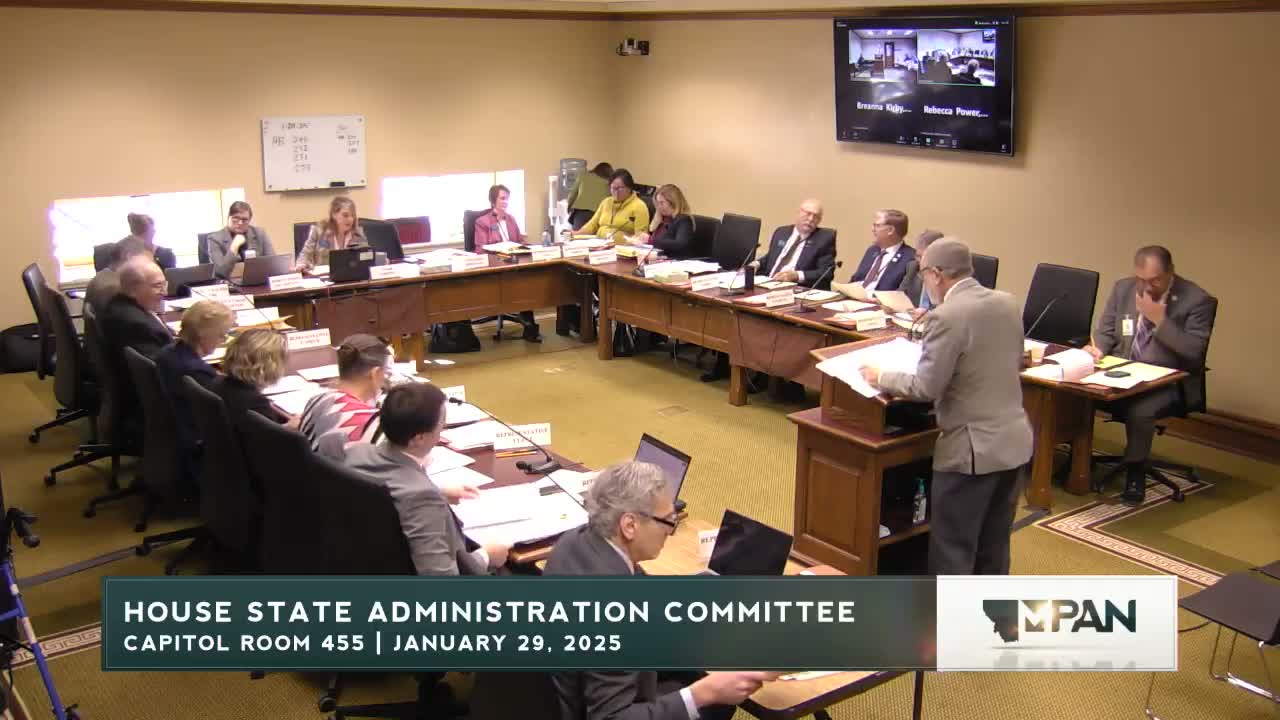
Representative Staffman told the committee HB 271 would statutorily limit a common-law "candor" privilege the Montana Supreme Court recently recognized for the governor, preserve existing statutory confidentiality lists, and ease public access to executive-branch records.
Representative Ed Staffman opened House Bill 271 saying it addresses a Supreme Court decision (O'Neil v. Gianforte) that the sponsor said recognized a common-law "candor" privilege for communications between the governor and staff. Staffman said the majority opinion created a cumbersome process for public-records requests and that the Legislature can override common law by statute, preserving constitutionally rooted privacy exceptions and existing statutory confidentiality categories.
Staffman explained the bill defines confidential information by statute and preserves the hundreds of statutory confidential categories (57 pages in the sponsor’s handout) such as tax records, certain mediation records and secure facility information, while excluding a broad executive candor privilege from confidentiality. He told the committee that the bill would restore the practical right of citizens to access executive records without the costly litigation process the recent court opinion outlined.
Proponents including Derf Johnson (Montana Environmental Information Center), Kirsten Cook (Montana Conservation Voters Education Fund), David Saslav (private citizen and plaintiff), and Evan Barrett (citizen and constitutional historian) urged a due pass. They said restricting a broad candor privilege preserves transparency and accountability for a chief executive whose decisions affect budgets, appointments, and agency actions.
Committee members asked whether the bill simply restates the constitutional privacy standard and whether courts or historical practice had used executive-privilege assertions previously; Staffman replied the bill preserves the constitutional privacy exception for personal privacy and enumerates statutory confidentiality while attempting to close a newly opened door to broad privilege claims. He offered to follow up on specific instances and data about past claims.
Sponsor Staffman closed by saying the bill strikes a blow for open government and limits an exception that he said would swallow the rule. The hearing closed.