Get Full Government Meeting Transcripts, Videos, & Alerts Forever!
Get email alerts on the Ballot Initiatives topic
No spam. Unsubscribe anytime.
Montana bill would raise referendum approval threshold to 60%; opponents warn it would constrain voters
Summary
Representative Jodie Etchart introduced HB 821 to raise the voter approval threshold for constitutional referenda from 50%+1 to 60% ("three-fifths"). Opponents — initiative advocates and labor groups — said access-to-ballot rules and long review processes already protect the constitution and that a higher bar would unduly restrict citizens.
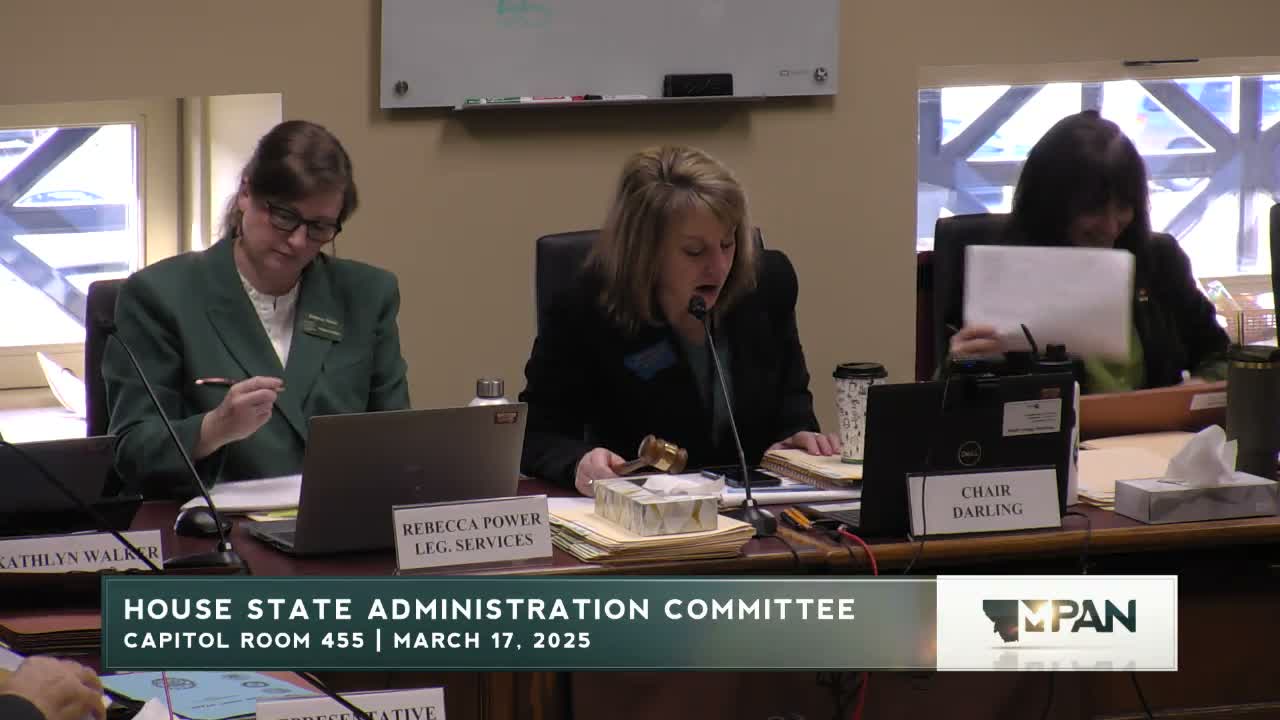
Representative Jodie Etchart, R-Billings, opened a House State Administration committee hearing on House Bill 821 by saying the measure seeks to raise the voter approval threshold for constitutional referenda from a simple majority to 60 percent.
"Do we wanna make that threshold for changing our constitution 50% or do we wanna make it at 3 fifths?" Etchart said in her opening remarks, framing the proposal as a debate about how difficult it should be to amend Montana's constitution.
Opponents who testified included longtime initiative advocates and public-employee groups. Helena attorney Jonathan Motl told the committee he opposes the bill because Montana already imposes higher access requirements to place constitutional measures on the ballot, and raising the post-ballot approval requirement to 60% would limit citizens’ ability to change government.
"I appear today in opposition to House bills 8 21 and 8 22," Motl said, arguing that signature-distribution rules and other procedural filters already raise the bar for qualifying constitutional initiatives.
Mark MacKin, an initiative advocate who provided historical vote data, told the committee that constitutional and statutory ballot measures already face multiple "filters" — legislative services review, court review and signature thresholds — and that a 60% approval standard would make it too difficult for either the legislature or voters to enact change.
Hunter Losing of the Montana Federation of Public Employees cautioned that public opinion shifts over time and that making approval thresholds more stringent would make it harder to reverse prior amendments. CB Pearson, testifying online, echoed the distinction between ballot access requirements and the vote-count threshold after placement on the ballot, urging committee members to reject the bills.
Committee members pressed witnesses on technical points. Representative Perry asked whether the percentages cited by witnesses referred to registered voters or to those who actually voted; witnesses said their charts reflected voting percentages and suggested Ballotpedia as a source for registered-voter breakdowns.
The committee closed testimony after Rep. Etchart's brief rebuttal and closed the hearing on HB 821 without a vote.
What happens next: The committee may take executive action on bills heard prior to transmittal; HB 821 will await that scheduling and possible recommendation from the committee.