Get Full Government Meeting Transcripts, Videos, & Alerts Forever!
Get email alerts on the Geoengineering Cloud Seeding topic
No spam. Unsubscribe anytime.
Bill to ban geoengineering draws wide public comment; opponents warn it would restrict cloud‑seeding tools
Summary
SB 473—a proposed ban on geoengineering and stratospheric aerosol injection—drew dozens of public proponents alleging harmful aerosol spraying, while water‑resource groups, ski areas and DNRC witnesses warned the bill risks constraining cloud‑seeding programs used to augment snowpack and water supplies. Committee discussed an amendment exempting agricultural uses and closed the hearing without a vote.
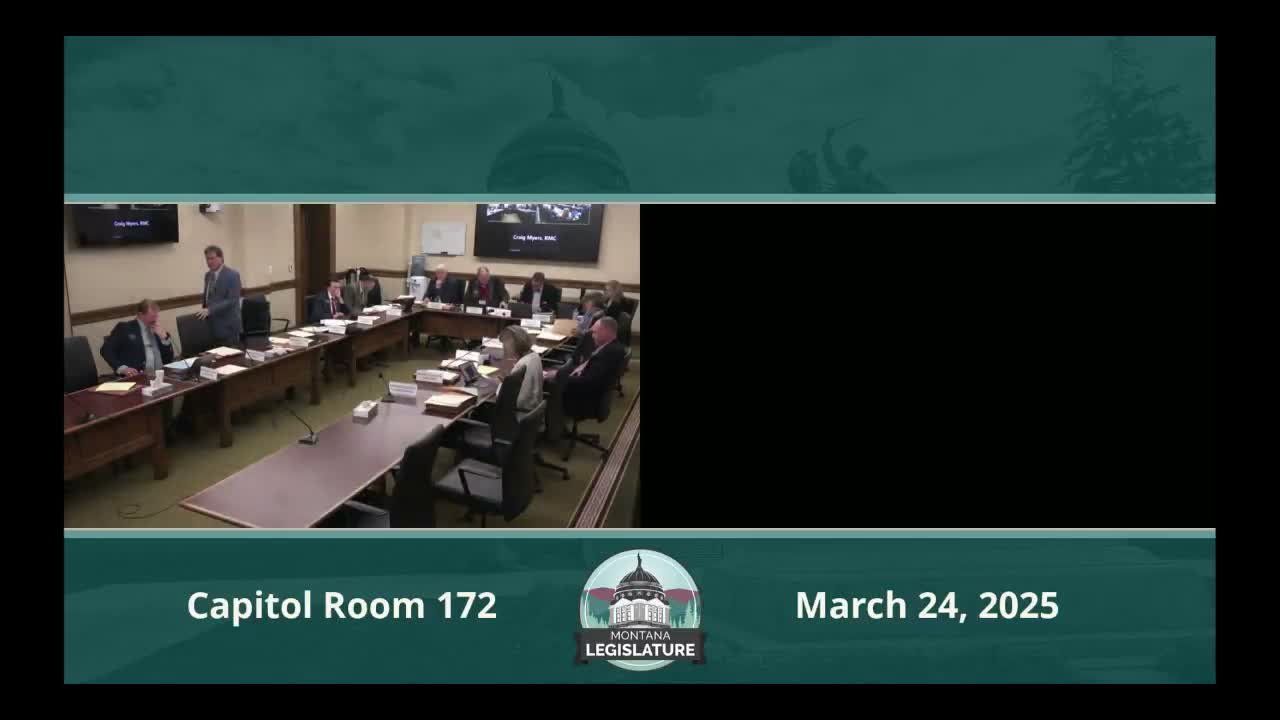
Sen. Bob Phelan opened the committee hearing on SB 473 by invoking the state's duty to maintain a "clean and healthful environment," and described concerns about large‑scale geoengineering (stratospheric aerosol injection) and alleged fallout from aircraft dispersal. "This bill is not about cloud seeding," Phelan said in closing, and the sponsor presented an amendment that would exempt agricultural activity.
The committee heard an extended panel of public testimony. Proponents, many of them private citizens, described observations of persistent grid‑like aircraft trails they identified as chemtrails or stratospheric aerosol injection and reported personal or ecological health concerns; Robin Richardson summarized soil‑health arguments and urged support, and multiple witnesses described sampling and anecdotal evidence they say shows heavy‑metal accumulation in snow and soil.
Opponents included water‑resource groups, recreation and industry representatives who urged the committee not to conflate local cloud‑seeding operations with global geoengineering. Jim Hagenbarth (Big Hole Watershed Committee) and several water‑users presented studies and explained that cloud seeding is a proven localized weather‑modification technique used to increase high‑mountain snowpack. Amy Grama (Montana Ski Area Association), Trout Unlimited and the Montana Chamber of Commerce warned the bill could limit snowmaking, cloud‑seeding pilot programs and other water‑management tools.
Michael Downey, DNRC's drought program coordinator, told the committee Montana had not authorized cloud seeding since the early 1990s and that a 1993 Senate provision effectively prohibited cloud seeding without an environmental review and a large bond; he said he was not aware of federally run geoengineering operations occurring over Montana. Committee members pursued technical questions to distinguish cloud seeding (local, low‑altitude operations that require specific cloud conditions) from proposed stratospheric aerosol injection (a research topic at some universities and a theoretical global‑scale technology that would operate tens of thousands of feet higher).
Committee members discussed an amendment that would exempt agricultural cloud seeding and questioned whether legislative language properly distinguishes cloud seeding from broader geoengineering. Sponsor Phelan said the amendment (adopted during transmittal in the Senate) was intended to preserve agricultural cloud‑seeding uses while prohibiting stratospheric aerosol injection. The committee closed the hearing for the day without voting on SB 473.
Next steps: committee members signaled interest in precise statutory language and in ensuring the bill exempts local cloud‑seeding and operational snowmaking where intended.