Get Full Government Meeting Transcripts, Videos, & Alerts Forever!
Get email alerts on the Open Government topic
No spam. Unsubscribe anytime.
Bill would declare legislative "junk files" public while protecting personal notes
Summary
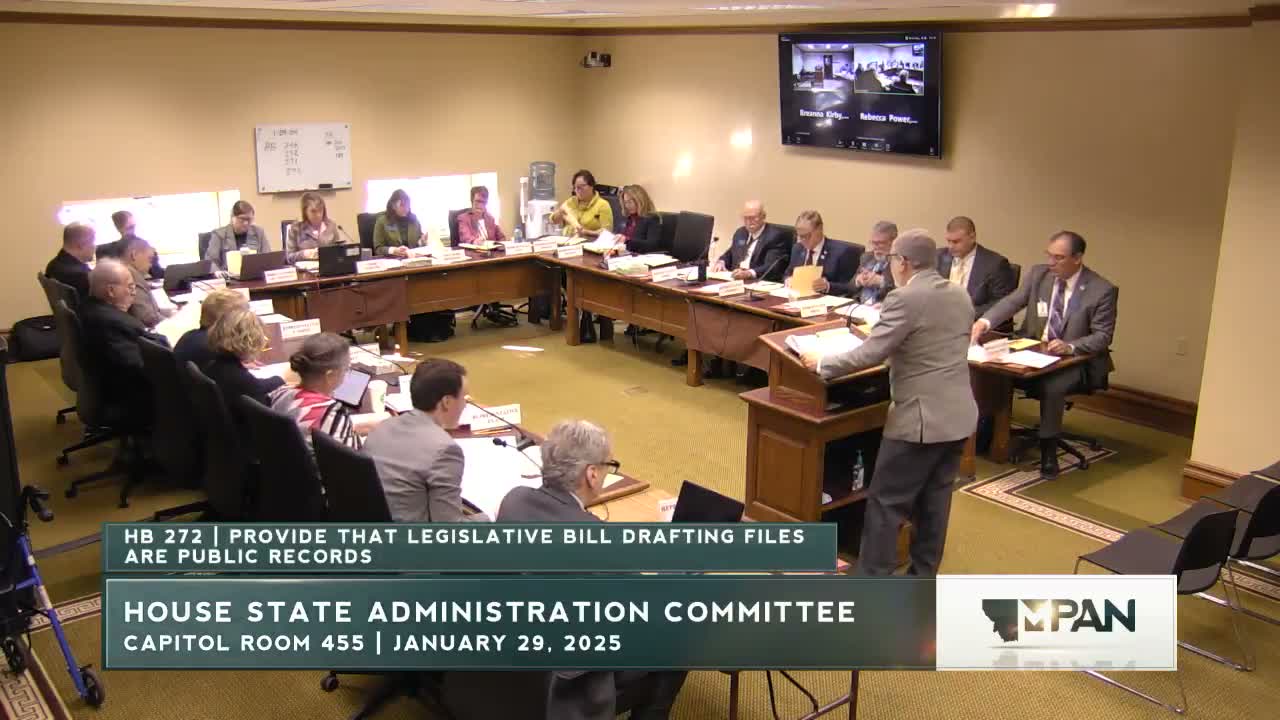
Representative Staffman told the House committee HB 272 would codify that legislative bill-drafting files ("junk files") are public records, clarify what remains confidential, and restore longstanding access the public has used for decades, supporters said.
Representative Ed Staffman opened House Bill 272 by saying the measure is designed to resolve confusion about whether legislative bill-drafting files are public records. Staffman and proponents argued the files — which can include draft versions, communications, redlines and materials from third parties — historically have been available under Montana precedent and the bill would affirm that practice while explicitly preserving personal writings and some privileged staff communications.
Staffman referenced a 1995 ruling (Montana Environmental Information Center v. Montana Environmental Quality Council) that established public access to such files and said a recent district-court order and subsequent appeal have created uncertainty; HB 272 would codify what is public and what is protected. He told the committee that while the speech-and-debate clause (Article 5, Section 8) protects legislators against prosecution for legislative acts, it does not create a general confidentiality privilege against public-records disclosure.
Derf Johnson of the Montana Environmental Information Center, who disclosed ongoing litigation with legislative services, said junk files show bill development and who was involved, and he urged a due pass. Other proponents — including Kirsten Cook (Montana Conservation Voters Education Fund), online plaintiff David Saslav (Sasloff v. Howe litigation), and multiple citizens — emphasized the role of access in transparency and accountability.
Committee members asked about the practical process for obtaining files (historically requestors asked legislative services and the files were produced) and whether fees might apply; Staffman said the bill does not change cost policies. He framed the bill as a legislative choice to declare values about open government rather than leave the question to courts.
Staffman closed by urging the committee to vote for transparency: "Vote on this bill will be a vote for sunshine," he said. The hearing closed with proponents seeking a due pass.