Get Full Government Meeting Transcripts, Videos, & Alerts Forever!
Get email alerts on the HB74 Private Fish Ponds topic
No spam. Unsubscribe anytime.
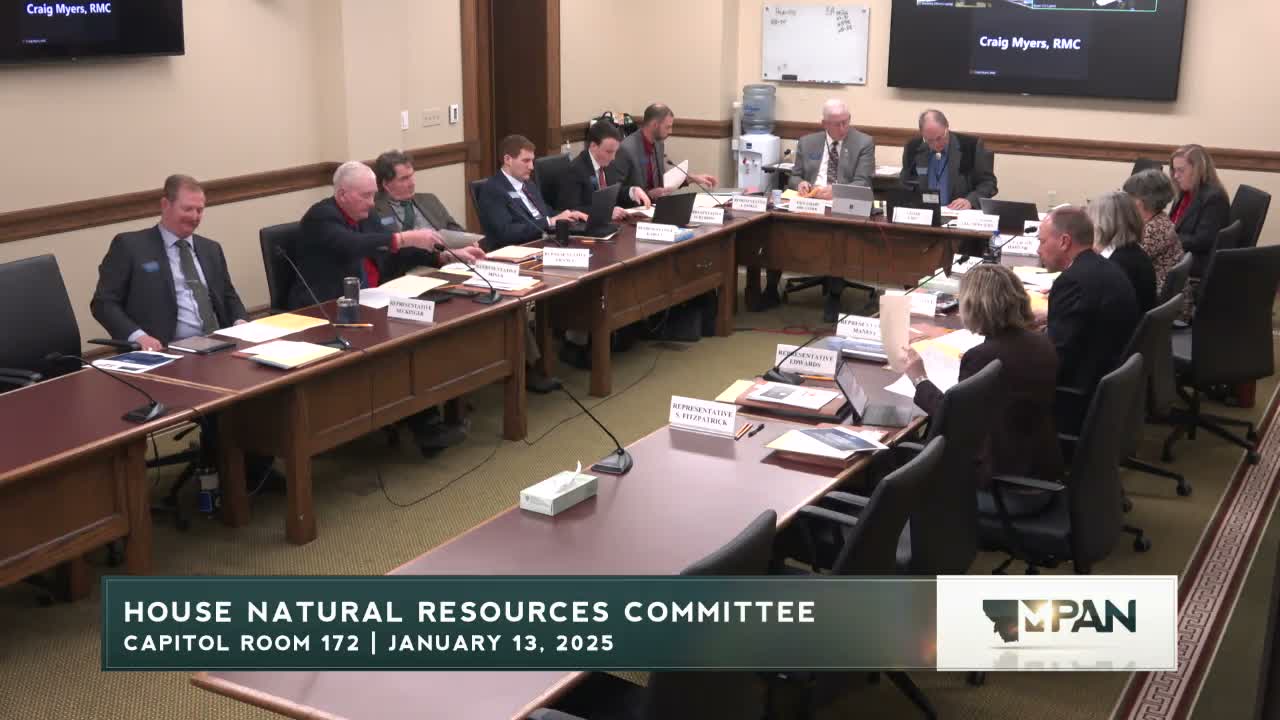
Committee hears HB 74 on private fish ponds; proponents cite invasive species risks, opponents cite fee burden
Summary
House Bill 74 would clarify DNRC water-right requirements for private fish ponds, shift permit terms from 10 to 5 years and increase application and renewal fees (proposed $600 application, $250 renewal) to better align with administrative costs; proponents stressed risks from illegal fish introductions and pathogens, opponents warned the fee structure could unduly burden small operators and raise property-rights concerns.
The House Natural Resources Committee considered House Bill 74, a water-policy interim committee bill that addresses regulation of private fish ponds, including water-right clarity, permit term and fees, and rulemaking authority.
Representative Ken Walsh (sponsor) said the bill responds to the study mandated by HB 520 (2023) and is intended to clarify when a private pond becomes regulated (stocking fish) and how to manage risks such as illegal fish introductions, pathogens and aquatic invasive species. "Private fish ponds are required to have a valid water right," Walsh said in his opening remarks, placing part of the bill's purpose in clarifying water-right and beneficial-use requirements.
Clayton Elliott of Montana Trout Unlimited, a proponent, said the bill addresses demonstrated risks including past illegal introductions and pathogens such as whirling disease; he told the committee the $10/10-year permit historically charged by Fish, Wildlife & Parks does not cover administrative costs. The bill would shorten the permit term to five years and raise the initial application fee to $600 with renewal at $250; proponents said those figures were chosen to better align user fees with the department's estimated administration costs.
Opponent Rick Jore, a commercial pond operator, said the fee increase would be burdensome for small operators and raised property-rights and fairness concerns, urging the committee to be cautious about passing a measure that shifts costs primarily to private pond owners. Jore noted the fiscal note projects a modest increase in FWP revenue (transcript cited approximately $72,000) and said some regulation costs should remain in the general hunting-and-fishing account.
Informational witnesses included Lena Havron (FWP chief financial officer), Adam Strainer (FWP fisheries division administrator) and Nate Ward (DNRC water-rights bureau chief). FWP staff explained the current administration and renewal practices: initial inspections occur when a permit is issued, but renewal inspections are not automatic for every pond; FWP enforces import permits and a fish-health screening process for fish sourced from outside the state.
Committee members pressed the department and proponents on the bill's renewal standard, which uses the phrase "documented substantive new information" as grounds for denying renewal. Sponsor and proponent witnesses said that standard was intentionally drafted to require a legal, common-law-caliber showing (not a simple neighbor complaint), provide a 30-day response period to affected owners and preserve due process including a show-cause hearing. Representative Miner said he would offer an amendment to return the renewal interval to 10 years.
No vote was taken; the committee closed the HB 74 hearing and the sponsor said committee members may amend the bill before further action.