Get Full Government Meeting Transcripts, Videos, & Alerts Forever!
Get email alerts on the Investments topic
No spam. Unsubscribe anytime.
Board of Investments briefs House panel on trust funds, investment transparency
Summary
The Board of Investments’ executive director told the House State Administration committee the board posts holdings information online and described how state trust funds, the short-term investment pool, and real-asset portfolios are managed; he said Bitcoin and precious metals are not held because custody and asset‑liability matching make them unsuitable.
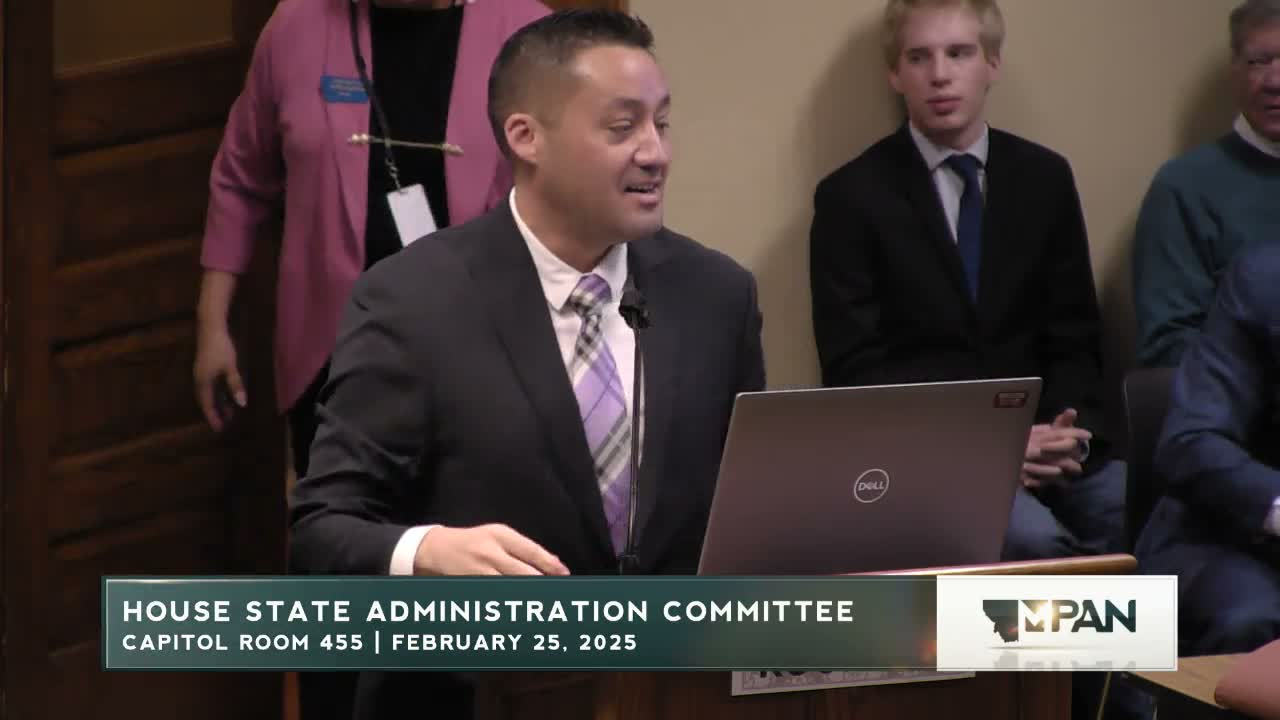
Director Villa, the executive director of the Board of Investments, briefed the House State Administration committee on the board’s responsibilities and where legislators can find trust-fund investment information.
Villa told the committee that his office has fiduciary duties of loyalty, care, prudence and disclosure and that most investment information is publicly available on the board’s website. He said holdings for trust funds are posted semiannually (June 30 and Dec. 31) and that performance reports and separately managed account information are accessible by pool. "You can see on a monthly basis who has what holdings in the Trust Fund investment pool," he said during the briefing.
Committee members asked whether the board holds commodities or speculative assets. Villa said the board’s real-assets portfolio includes gravel/aggregate pits, mid-level oil and gas positions and restoration projects, and that the board does not currently hold Bitcoin or precious metals because such assets do not fit the asset‑liability profile of most state funds and present custody challenges. “Relative to Bitcoin, it’s really hard to custody,” he said, and noted institutional custodial banks still raise concerns about holding blockchain‑based assets.
Villa also pointed committee members to several program figures discussed during the hearing: he said about $254,000,000 of the coal tax trust is dedicated to in‑state economic development loan programs and recapped housing-related funds made available in prior sessions (he referenced approximately $106,000,000 authorized previously and another $100,000,000 proposed). He emphasized that when an agency such as DNRC converts land to cash, the board’s role is to invest the cash to maximize returns for beneficiaries, but the board does not decide how those dollars are raised.
Villa closed by offering to meet with committee members individually and provided a direct contact number for follow-up questions. The briefing was offered as background ahead of committee consideration of House Bill 379, which relates to state trust land proceeds.