Get Full Government Meeting Transcripts, Videos, & Alerts Forever!
Get email alerts on the Housing Density Study topic
No spam. Unsubscribe anytime.
Montana lawmaker seeks interim study on housing density, citing affordability crisis
Summary
Rep. Julie Darling introduced HJ 30, asking the legislature to study incentives and programs to increase housing density and affordability, with proponents — including Habitat for Humanity — saying density can increase taxable value and expand attainable homes.
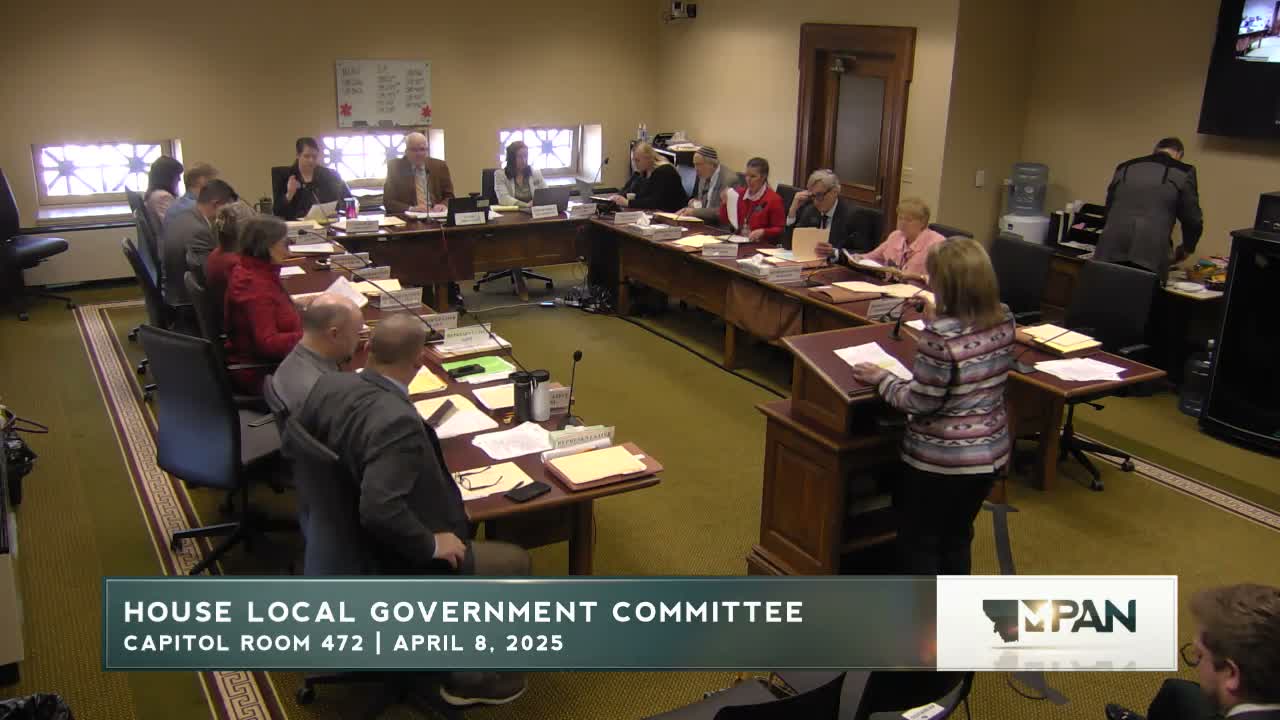
Representative Julie Darling asked the House Local Government Committee to support House Joint Resolution 30, a request for an interim study on ways to increase housing density and affordability across Montana. Darling told the committee the study would analyze incentives for increased housing density, review state programs, assess economic consequences, identify funding for water and wastewater upgrades, and explore programs that encourage development that uses existing city infrastructure. She said the study would report by Sept. 15, 2026, to the 70th Montana Legislature.
Proponents framed the study as a practical step toward expanding housing supply. Jacob Kuntz, director of Helena Area Habitat for Humanity, told the committee that "over 80% of Montana's workforce can't afford to purchase a median priced home" and described an East Helena infill project whose modeling showed a 40% increase in the city's tax base under a denser neighborhood design. Other witnesses representing the Montana Housing Coalition, Shelter Whitefish, the City of Bozeman and the Montana League of Cities and Towns urged committee members to prioritize the study during the interim so local governments and developers can explore cooperative solutions.
Opponents did not appear in force at the HJ 30 hearing; several committee members asked questions about fiscal impacts and how resolution studies are prioritized and funded. Darling and proponents said study resolutions are triaged by the legislature and that the interim process would help identify funding options and necessary implementation steps.
The hearing closed after sponsor remarks and a short question period. The study's scope as presented emphasized practical investigation into financing mechanisms, infrastructure needs, and policy strategies that local governments and developers could pursue to expand middle-housing and workforce housing.
The committee did not take an on-the-record executive vote on HJ 30 during this hearing; proponents urged prioritization in the interim work plan.