Get Full Government Meeting Transcripts, Videos, & Alerts Forever!
Get email alerts on the Public Defender Assignments topic
No spam. Unsubscribe anytime.
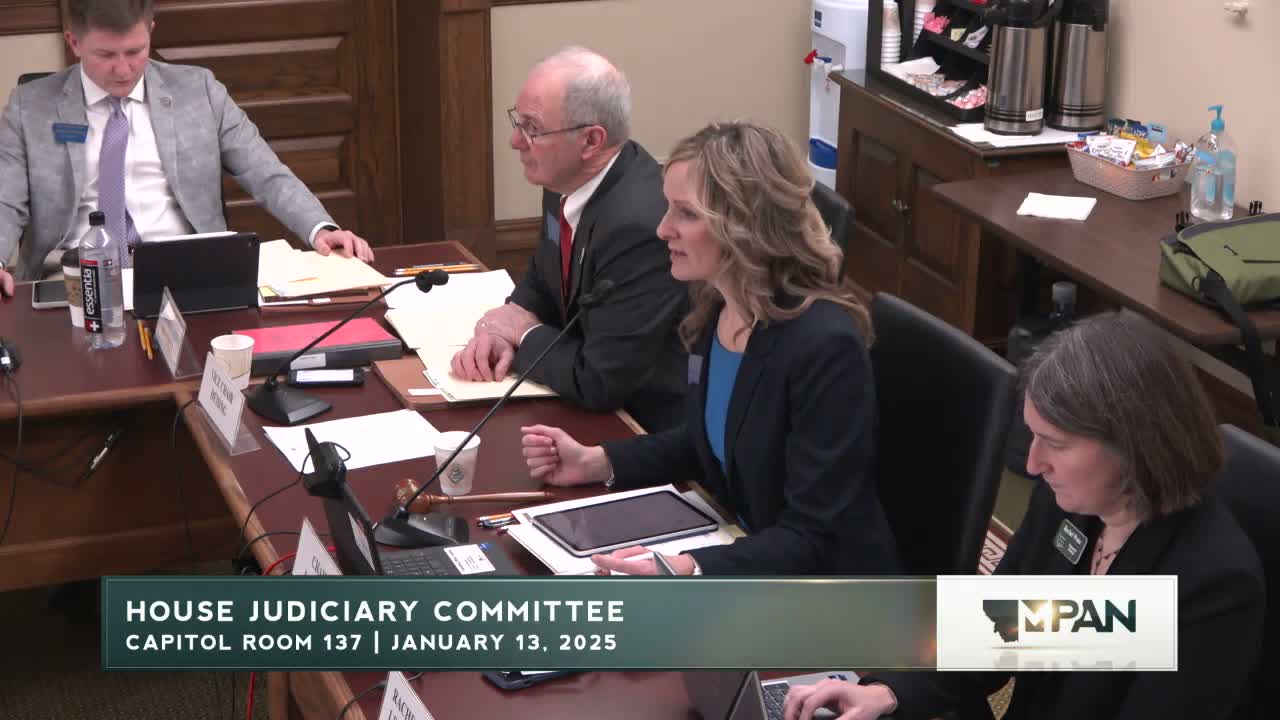
Committee hears bill to update century-old statute and clarify public defender assignment powers
Summary
Sponsors and the state public defender told the House Judiciary Committee HB 46 updates an 1895 statute so the Office of State Public Defender, not individual judges, is recognized as the entity that assigns and reassigns counsel; proponents say the change prevents courts from blocking reassignment while preserving judicial supervision.
Representative James Reavis, the bill sponsor, opened the hearing on House Bill 46 by telling the Judiciary Committee the statute at issue dates to 1895 and does not reflect the modern Office of State Public Defender. He said the measure would recognize the officeas the appropriate body to assign and reassign counsel when the office is appointed to represent a defendant and would not remove a judges supervisory authority.
Brett Schandelson, director of the Office of State Public Defender, said the existing statutory language predates the creation of the Office and has led to disputes in some jurisdictions when courts attempted to prevent the Office from reassigning attorneys. "This statute does predate the Office of Public Defender and does not contemplate the different kind of assignment protocols that Title 47 imposes," Schandelson said, adding that courts in some cases have ordered departing attorneys to remain on cases rather than allowing the Office to reassign them.
Schandelson described a Yellowstone County example in which a private attorney left employment at the Office and a court initially ordered the attorney to remain on those cases; the attorney later agreed to return on contract, but the incident illustrated the committees concern. He told members the Office maintains a conflict-public-defender division and continues to use contract counsel where appropriate; the bill would not change the Offices ability to contract for conflict work.
Committee members asked whether judges had been consulted. Schandelson said he had distributed a letter to district court judges and held individual conversations but had not heard formal opposition from judges' associations. Representative Reavis cited City of Missoula v. Fogarty (2013 MT 254) in closing and urged a favorable committee recommendation.
The hearing closed without a committee vote; sponsors indicated readiness to respond to follow-up questions.