Get Full Government Meeting Transcripts, Videos, & Alerts Forever!
Get email alerts on the Superintendent Candidate Dave Youngberg topic
No spam. Unsubscribe anytime.
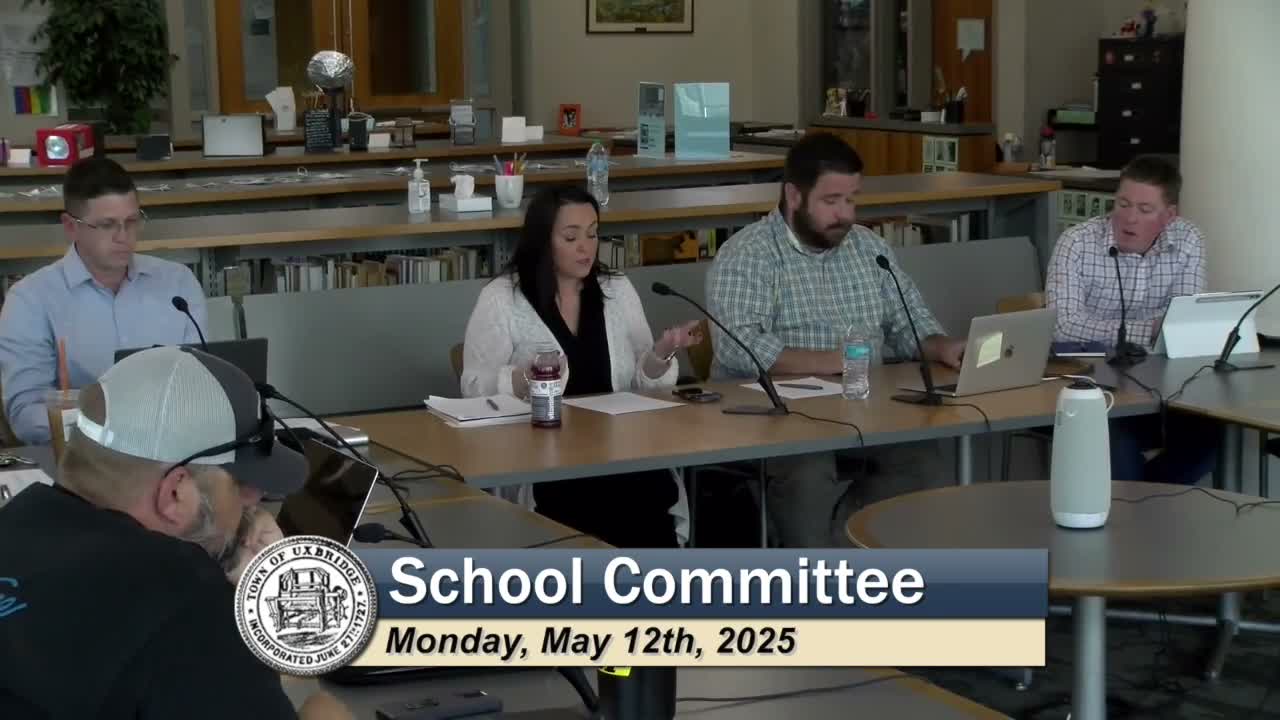
Stoneham superintendent highlights fiscal experience, school safety policy changes in Uxbridge interview
Summary
In an interview with the Uxbridge School Committee, candidate Dave Youngberg described his Stoneham superintendent experience, recounted a high-school project cost overrun and subsequent policy changes on community notification, and emphasized data-driven budgeting, contract bargaining strategies, and early-literacy investment.
Dave Youngberg, the current superintendent of Stoneham Public Schools, told the Uxbridge School Committee he is seeking a long-term superintendent post in a smaller district and emphasized fiscal planning, community engagement and student-focused decision-making.
Youngberg said a major test of his leadership came when a Stoneham high-school construction project rose in cost from $189,000,000 to $218,000,000. He described value-engineering decisions that included removing planned district offices from the project to reduce costs (about $2.25 million saved) and later renting interim office space. Separately, Youngberg recounted a safety incident in which an individual with an unspecified mental-health crisis briefly entered school property; after public criticism he said he held a public hearing, apologized, and revised procedures so that police or fire calls now trigger community notifications when appropriate.
Why it matters: Youngberg emphasized that fiscal pressures and public-safety expectations drive many district choices. He told the panel he uses data to prioritize investments—citing early literacy as an example—and wants a five-year capital plan aligned with town officials. On special education, he noted Uxbridge’s combined 504/IEP rate is “close to 28%,” higher than his cited state average of about 20–22%, and called for an audit of referral sources and prior interventions before committing new budget lines.
On labor relations, Youngberg described preparing for bargaining by auditing contract language, reviewing grievance histories, building relationships with the local education association, and considering interest-based bargaining approaches to find common ground. He also described community outreach tactics used in a failed then-reworked Proposition 2½ override in Stoneham: multi-stakeholder meetings, DLS-based property-value analyses, flyers and public forums; he said a rushed follow-up vote had to be retracted after new select-board members and concerns about timing.
Youngberg framed his leadership as listening-first, then convening relevant stakeholders to produce rationale-backed recommendations. He emphasized being visible in school buildings, building relationships with principals and town officials, and protecting student-facing positions when facing budget cuts. The interview ended with committee members commending his preparation and candor; the committee recessed after his session before interviewing the second finalist.
The committee took no formal action on hiring during the meeting; next procedural steps for the search were not stated during the session.