Get Full Government Meeting Transcripts, Videos, & Alerts Forever!
Get email alerts on the Water Affordability topic
No spam. Unsubscribe anytime.
Appropriations subcommittee hears presentations on water affordability; advocates seek $60 million in FY2026
Summary
Presenters told a House Appropriations Subcommittee the state lacks a permanent water-assistance program, estimated 371,000 Michigan households would qualify for aid and asked the panel to include $60 million in the FY2026 Health and Human Services budget; members raised concerns about landlord responsibility and regional opt-outs.
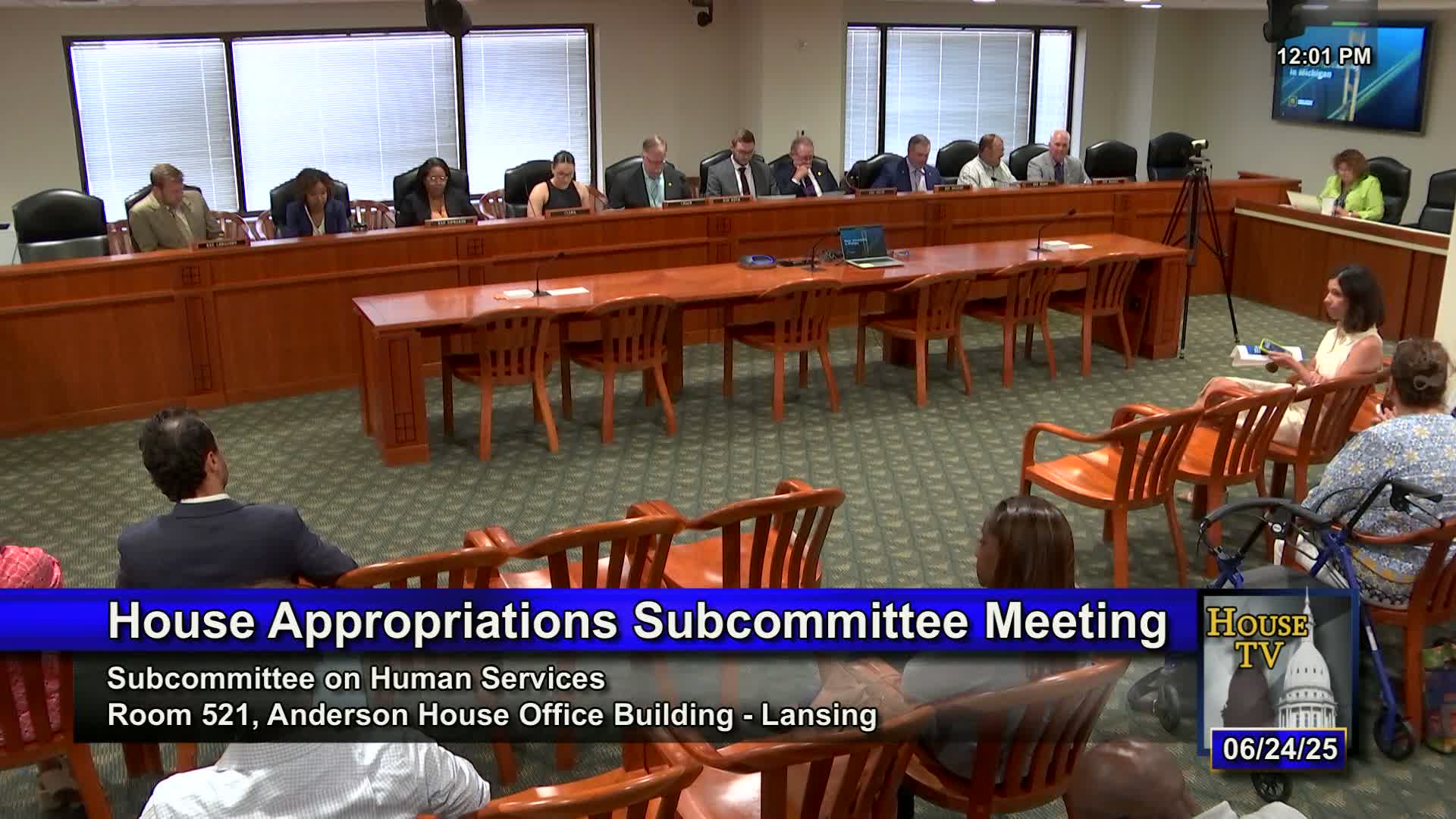
The House Appropriations Subcommittee on Human Services heard testimony Thursday on statewide water affordability and a request for emergency and longer-term funding to help low-income households avoid service interruptions.
Sarah Rubino, representing the Michigan section of the American Water Works Association, asked the subcommittee to include $60,000,000 in the fiscal year 2026 Health and Human Services budget to support water assistance programs across the state. "Until a permanent statewide solution is established, we're respectfully requesting that the subcommittee include 60,000,000 in the fiscal year 20 26 health and human services budget to support water assistance programs across the state," Rubino said.
Advocates and researchers provided the committee with data on need and program experience. Maggie Ploone of Public Sector Consultants said PSE collected rates from roughly 500 utilities (about 85 percent of the state’s population) and estimated about 371,000 households would qualify for a program that limits water bills to about 3 percent of income; Ploone said the average annual assistance gap for qualifying households is about $435, or roughly $36 per month. "There is no permanent federal program that supports water assistance," Ploone told the panel, and she framed a statewide program as a way to stabilize utilities while protecting public health.
Jasmine Carson, executive director of the Wayne Metropolitan Community Action Agency, described local administration and outcomes: Wayne Metro has administered about $59,500,000 since 2022 and reached more than 36,000 households, she said, and urged continued appropriations because enrollments and need are growing.
Committee members pressed presenters on program design and limits. Vice chair Edwards asked whether the cited $84 average monthly bill included sewer and fees; Ploone said the figure reflects water, sewer and associated fees and that bills vary widely by community. Several members raised how funds would be allocated if the $60 million were approved, and witnesses said MDHHS previously administered one-time funds and that agencies use existing channels and local partnerships to distribute aid.
A point of contention centered on whether program funds should be used for repairs or in situations where landlords own the property. Representative Beeson and others expressed concern that state funds could effectively subsidize negligent landlords. "It should not happen for people in the state of Michigan," Beeson said, arguing the state should not pay for landlords' maintenance failures. Deborah Pospeach, a stakeholder working with Detroit Water and Sewerage Department interests, said the legislation includes an opt-out provision and that regions can elect to administer funds locally; she added local ordinances and program rules can target assistance to tenants rather than subsidizing landlords.
Rubino and other witnesses stressed the public-health rationale for assistance: unpaid bills and service interruptions can create hygiene and housing stability risks and shift costs to taxpayers in the form of downstream health care and emergency services. Witnesses also noted federal funding historically shifted from grants to loans, contributing to rising rates and deferred maintenance; Ploone cited an estimated statewide underinvestment in water infrastructure on the order of $3 billion per year.
No formal vote on funding or legislation occurred at the hearing. The committee approved the minutes from May 20 by consensus early in the session. Members requested follow-up information, including a possible renter-versus-owner breakdown of the 371,000 qualifying households and additional details about program administration, residency verification and how local opt-outs would operate.
The subcommittee received written materials and cards of support from groups including the Natural Resources Defense Fund and United Way of Southeastern Michigan; MDHHS provided an information sheet for members to review. Chair Roth closed the hearing and the subcommittee adjourned with no further business and without action on the funding request.