Get Full Government Meeting Transcripts, Videos, & Alerts Forever!
Get email alerts on the Rural Improvement Districts topic
No spam. Unsubscribe anytime.
Bill to clarify maintenance and improvement authority for Rural Improvement Districts moves through committee hearing
Summary
House Bill 159 would add explicit language about "improvements" (and maintenance budgeting) to statutes governing Rural Improvement Districts. Proponents said the change resolves confusion in multiple counties about budgeting for improvements versus maintenance and consent thresholds for private and public roads.
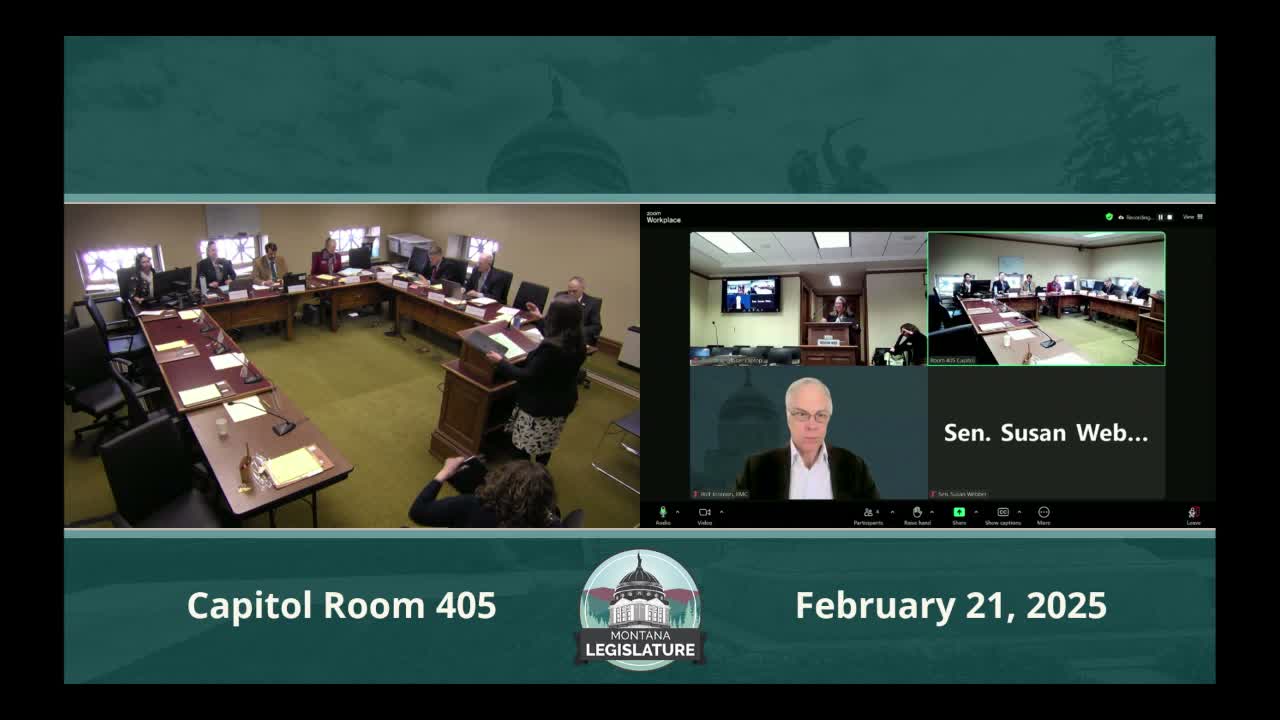
Representative Alana Griffith introduced House Bill 159 in the Senate Local Government Committee, saying the bill adds the word "improvements" to the Rural Improvement District (RID) statute to address confusion that has arisen in several Montana counties.
Debbie Randolph, a Broadwater County commissioner testifying for Mako (a member‑services organization for Montana counties), said RIDs are used to fund projects such as paving gravel roads, improving drainage and building water and wastewater facilities. Randolph told the committee HB 159 "cleans up the process for creating an RID and tells the county how to budget for the improvement and how to request funding for the maintenance of that." She said some counties use separate votes for construction and separate voted levies for maintenance so property owners know costs up front.
Senator Hertz asked whether private‑road RIDs require consent from more than 85% of affected property owners and whether public‑road RIDs only need 50% consent; committee members and witnesses confirmed those consent thresholds appear in the bill. Hertz also asked whether assessments are generally expressed in mills or as dollar amounts; witnesses said assessments are usually set as dollar amounts in local practice.
Representative Griffith closed by saying the bill addresses a long‑standing problem in multiple rural counties and asked for the committee's support. No opponents appeared and the committee closed the hearing without taking action.