Get Full Government Meeting Transcripts, Videos, & Alerts Forever!
Get email alerts on the Property Tax Notification topic
No spam. Unsubscribe anytime.
Senator Logie’s bill would notify counties after large drops in assessed property value
Summary
Senate Bill 289 would require the Department of Revenue to notify counties when a property’s assessed value falls by $1,500,000 or more so local officials can factor changes into budgeting and planning; department witnesses said about 300 such instances met that threshold last year.
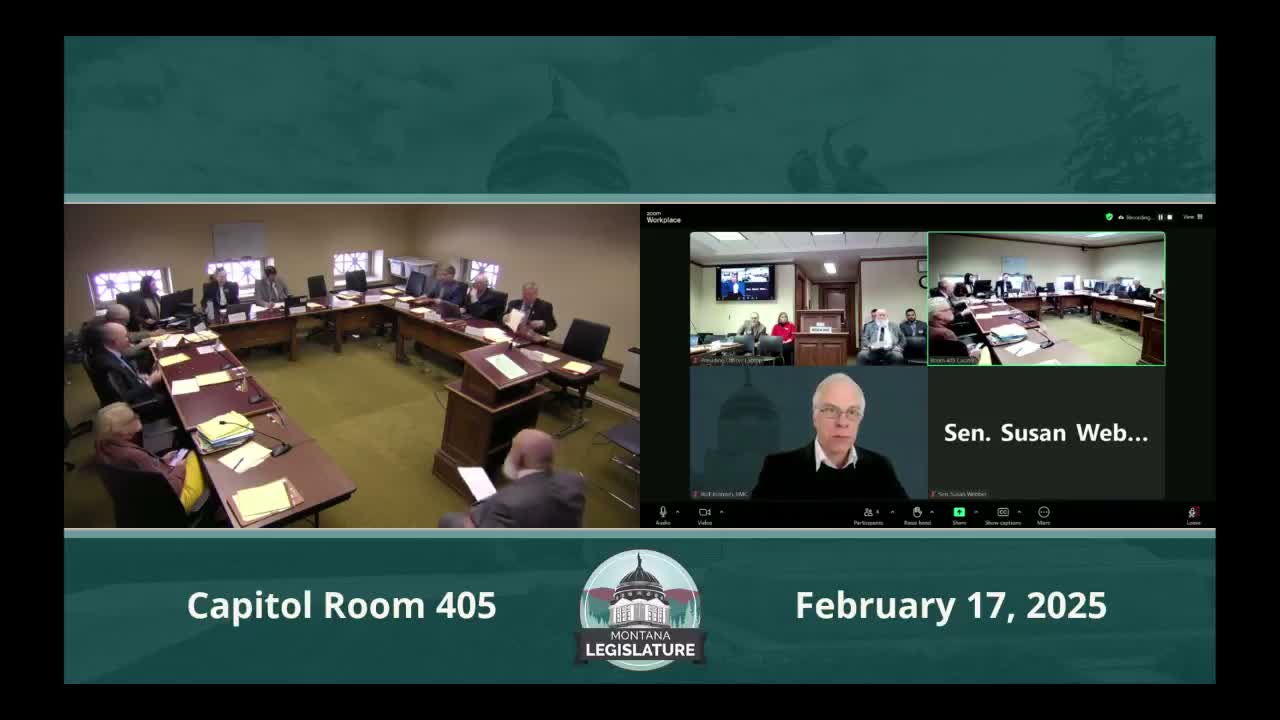
Senator Danilo Logie opened a committee hearing on Senate Bill 289 by saying the measure grew from a Monroe County request after a Saint Regis lumber mill closure led to a large reduction in assessed value. Logie said the bill would require the Department of Revenue to send an electronic notice to affected counties when a property’s assessed value decreases by $1,500,000 or more, enabling county officials to plan and offer limited input without changing the department’s final valuation.
Jason Bridal of the Montana Association of Counties told the committee the change is “pretty simple” and would help counties during budgeting. Bridal cautioned about timing for centrally assessed properties and said counties should be notified after a property’s value is apportioned to counties; he said stakeholders were working on that technical detail and would accept a narrow amendment on apportionment.
Broadwater County Commissioner Debbie Randolph said small counties like hers could be “dramatically” affected by an unexpected drop and urged passage so counties and residents would have advance notice and stronger coordination with the Department of Revenue.
Derek Bell, division administrator for the Department of Revenue’s business and income tax division, and Bryce Kautz, bureau chief with the property assessment division, answered committee questions on valuation mechanics. Kautz said about 300 events last year would have met the $1,500,000 trigger; roughly one-third of those were centrally assessed companies and many others reflected declines in class 8 personal property (equipment depreciation) rather than plant closures.
Committee members pressed why the threshold was set at $1.5 million and why class 4 property was excluded. Proponents said the figure was negotiated to limit the number of notices and to avoid triggering a large fiscal or administrative burden for the department; removing class 4 was intended to exclude property types unlikely to fluctuate by that magnitude. On a question about fiscal impact, DOR said a fiscal note was not requested and, as drafted, the department expected no administrative cost for sending notices.
Senator Logie closed by reiterating that the bill was intended to give small counties advance clarity so they could adjust budgeting and planning, not to alter DOR’s valuation authority. The hearing was closed with no committee vote on the measure recorded that day; the committee proceeded to executive action on other bills.
The committee will take further action on SB 289 at a later date if it is placed on an executive agenda.