Get Full Government Meeting Transcripts, Videos, & Alerts Forever!
Get email alerts on the Online Harms topic
No spam. Unsubscribe anytime.
Committee amends, then clears HB 752 to let victims sue content providers for child sexual‑abuse material online
Summary
The committee considered substantial sponsor amendments to HB 752 that broaden and clarify the bill’s definitions of content providers and remedies; the amended draft added private‑plaintiff rights and changed penalty and damages allocations before the committee concurred in executive action.
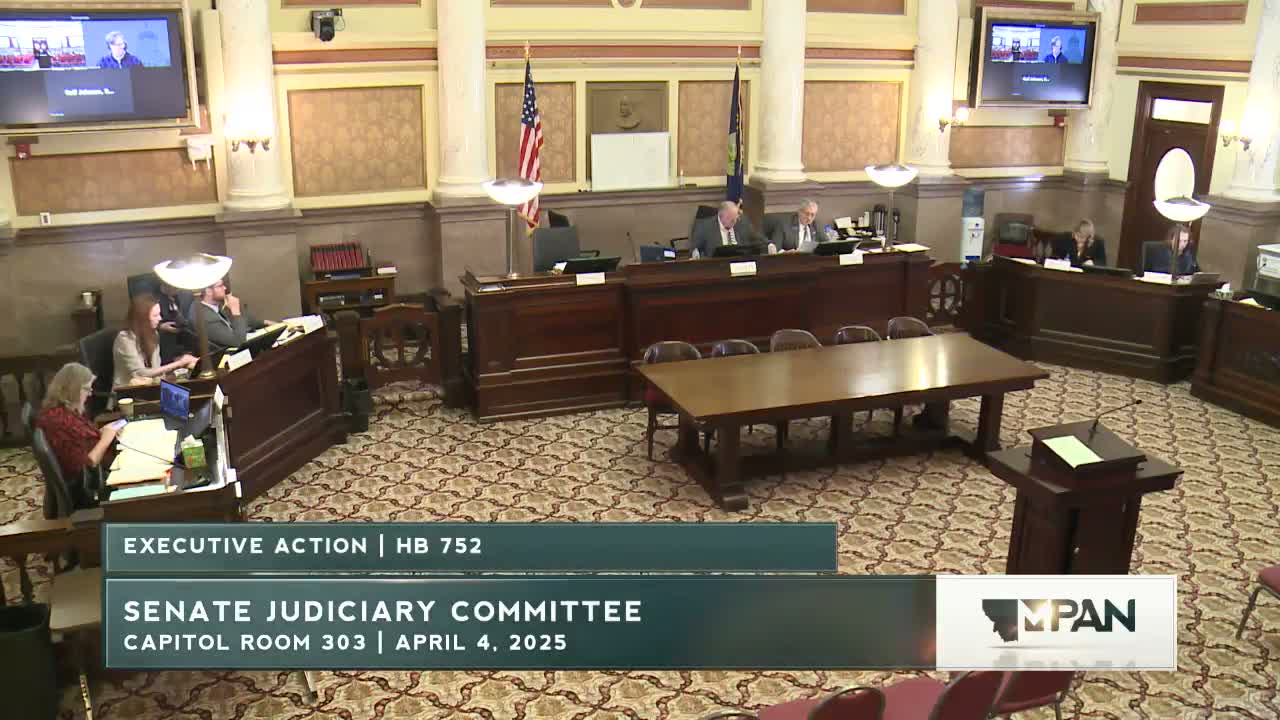
Senate Judiciary took executive action on House Bill 7 52, a complex bill aimed at civil remedies against content providers that host or make child sexual‑abuse material reasonably accessible in Montana. The sponsor circulated substantial amendments that reworked definitions and remedial allocations.
Key changes in the adopted amendment included: narrowing the covered providers and adding precise definitions (including social‑media platform and search engine definitions using federal cross‑references), defining "substantial amount" as a higher visual‑content share (moved from 5% to 30% in one draft and then refined in later amendments), adding a private‑plaintiff remedy that allows a victim or guardian to seek restitution and statutory damages, and creating a complex apportionment schema for punitive/statutory awards and state special‑revenue deposits. The amendment also added defenses (for example, where a plaintiff caused the alleged posting) and clarified that hyperlinking without visual content is not a violation.
Committee debate focused on enforcement pathways, penalties and whether DOJ should retain a role in enforcement; some senators said DOJ workloads motivated removing an enforcement‑by‑DOJ clause and relying on private actions and civil remedies. The chair and sponsor emphasized the amendments were drafted to refine and limit unintended scope and to increase clarity about which providers would be liable.
After amendment debate and technical fixes, the committee voted to concur in the amended bill during executive action and the motion passed.