Get Full Government Meeting Transcripts, Videos, & Alerts Forever!
Get email alerts on the Child Safety Online topic
No spam. Unsubscribe anytime.
Committee hears DOJ, ICAC testimony supporting limited subpoena authority for online child‑exploitation probes
Summary
HB710 would give state‑level Internet Crimes Against Children task force officers subpoena authority — with judicial approval and affidavit justification — to obtain narrowly scoped subscriber records; DOJ and ICAC witnesses said federal partners now limit subpoenas and quick state tools can speed investigations of child exploitation.
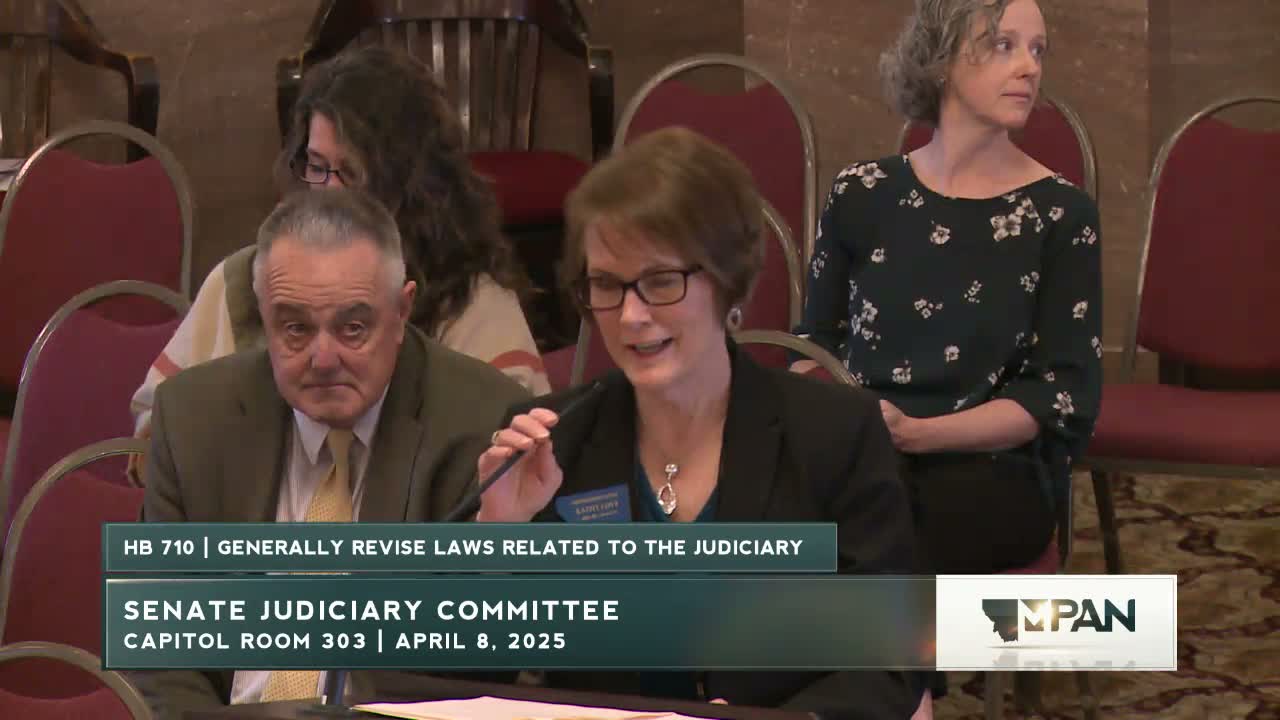
Representative Kathy Love opened House Bill 710, a bill to authorize Internet Crimes Against Children (ICAC) task force officers to seek subpoenas for limited subscriber information in investigations of child exploitation, with judicial approval and affidavit justification for each request.
Department of Justice Director of External Affairs Alex Sturhan and ICAC Commander Brian Cassidy testified in support (SEG 738–806). Cassidy said Montana’s state ICAC receives roughly 3,000 tips a year, often beginning with an IP address; he described delays when state investigators must route basic information requests through federal partners whose current guidance and prosecutorial thresholds sometimes limit the number of subpoenas they will pursue. Cassidy said federal guidance can require substantial evidentiary thresholds (he described a federal standard that, in many circumstances, corresponds to large volumes of material) that slow time‑sensitive investigations (SEG 771–804).
Witnesses emphasized safeguards in the bill: subpoenas would require judicial approval and be limited to basic subscriber records (sponsor’s opening SEG 711–718). Committee members pressed for clarity on which task‑force officers would qualify, cross‑jurisdictional application and training requirements; Cassidy said the state maintains a core of two ICAC investigators and more than 35 affiliates across the state that could act under the statute when properly trained (SEG 866–906).
No formal vote occurred at the hearing; the bill was discussed without final action in the hearing phase and sponsors asked for due pass and further committee consideration.