Get Full Government Meeting Transcripts, Videos, & Alerts Forever!
Get email alerts on the Online Grooming Ai topic
No spam. Unsubscribe anytime.
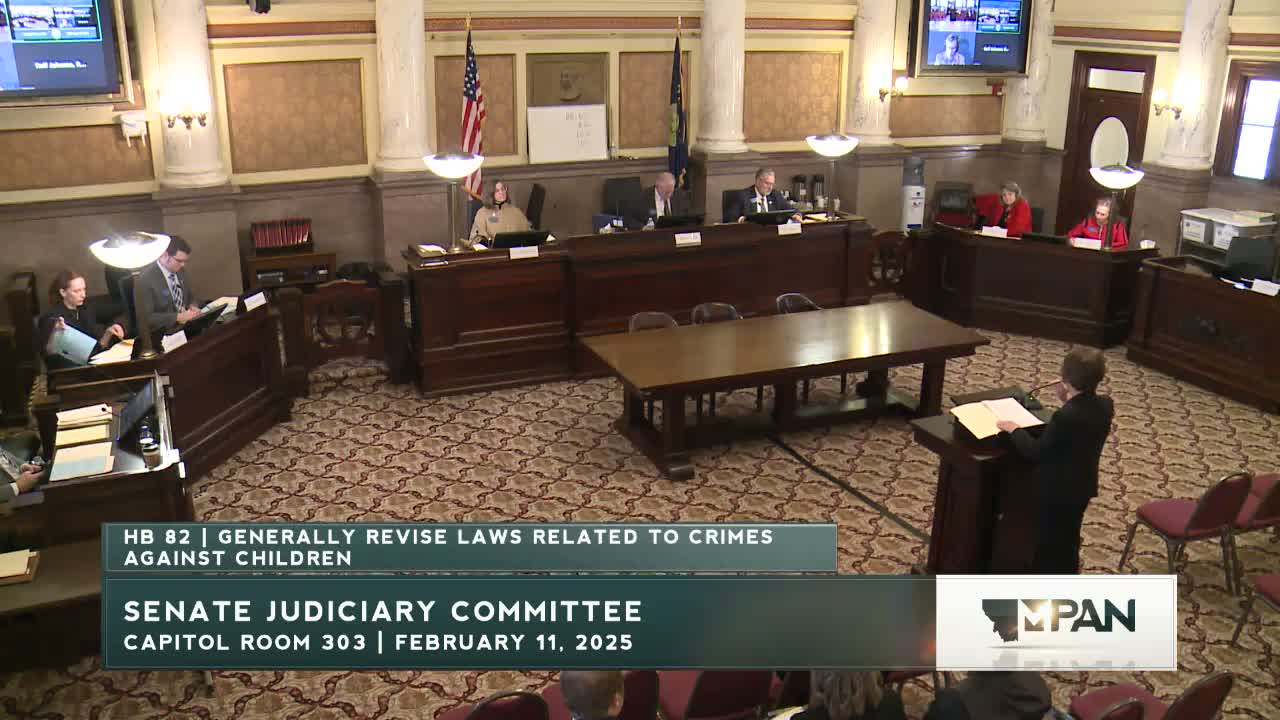
Committee hears DOJ-backed bill to criminalize online grooming and AI-generated child exploitation
Summary
House Bill 82, requested by the Department of Justice, would create specific offenses for online grooming, add AI-generated exploitation to statutes, and permit undercover officers to stand in for children in online investigations; prosecutors and investigators urged passage while committee members raised questions about penalties and enforcement capacity.
Representative Kathy Love (House District 85) opened testimony on House Bill 82, which the Department of Justice brought to the Legislature to address online grooming, sextortion and the emergence of AI tools that can fabricate exploitative child images. Love told the committee the measure creates specific offenses for online grooming, expands law enforcement tools and establishes penalties for digital exploitation.
Alex Sturhan, director of external affairs for the Department of Justice, and Selene Koepke, an assistant attorney general in prosecution services, said the bill closes gaps that hamper timely intervention. Koepke explained a key change: the bill clarifies that a law enforcement officer acting undercover may ‘‘stand in the place of a real child victim’’ in online cases so prosecutors can pursue offenders who communicate with a person they believe to be underage. She said the change addresses inconsistent appellate rulings and helps prosecutors prove intent in cases involving victims under different age categories.
Brian Cassidy, commander of Montana’s Internet Crimes Against Children (ICAC) task force, described operational pressures supporting the bill: Montana received more than 3,000 cyber tips last year (up from roughly 200 in 2014), ICAC has limited investigative staff and a growing backlog in computer forensics, and investigators are increasingly seeing sextortion and AI-altered imagery used to coerce children. Cassidy said the bill would help investigators identify victims and pursue cases earlier.
Committee members asked about platform liability and federal immunity, juvenile prosecution, the practical number of expected prosecutions, and penalty levels. Koepke said expanded statutory language now includes AI-generated materials and sextortion and permits proactive investigation; she also noted that some high-tier penalties (for the youngest victims) carry mandatory sentencing consequences under existing law. Department of Corrections and prosecution witnesses said they expected only a small increase in incarceration statewide — Representative Love cited a DOC estimate of about three additional incarcerations per year if the bill passes — and prosecutors said fines are rarely imposed in practice, which informed decisions about statutory fine levels.
Several senators suggested a consistency edit — changing references from 'Act' to 'conduct' on page 8 — and proponents agreed that the change would clarify language. No opponents spoke in the room during the hearing; proponents included DOJ staff, ICAC leadership and several policing and family-advocacy groups.
What’s next: The committee closed HB 82 after the hearing; staff indicated an amendment to clarify terminology was anticipated.