Get Full Government Meeting Transcripts, Videos, & Alerts Forever!
Get email alerts on the Bail Bonds topic
No spam. Unsubscribe anytime.
Bail agents seek repeal of 2023 bail‑bond licensing changes; insurance commissioner raises safety concerns
Summary
SB 197, sponsored by Sen. Trebis, would repeal 2023 changes (HB 62) that moved bail bond licensing and oversight into insurance‑commissioner authority; bail agents argued the prior law curtailed in‑state providers and allowed out‑of‑state operators to expand; the Deputy Insurance Commissioner urged opposition citing violent incidents and the need for regulatory sideboards.
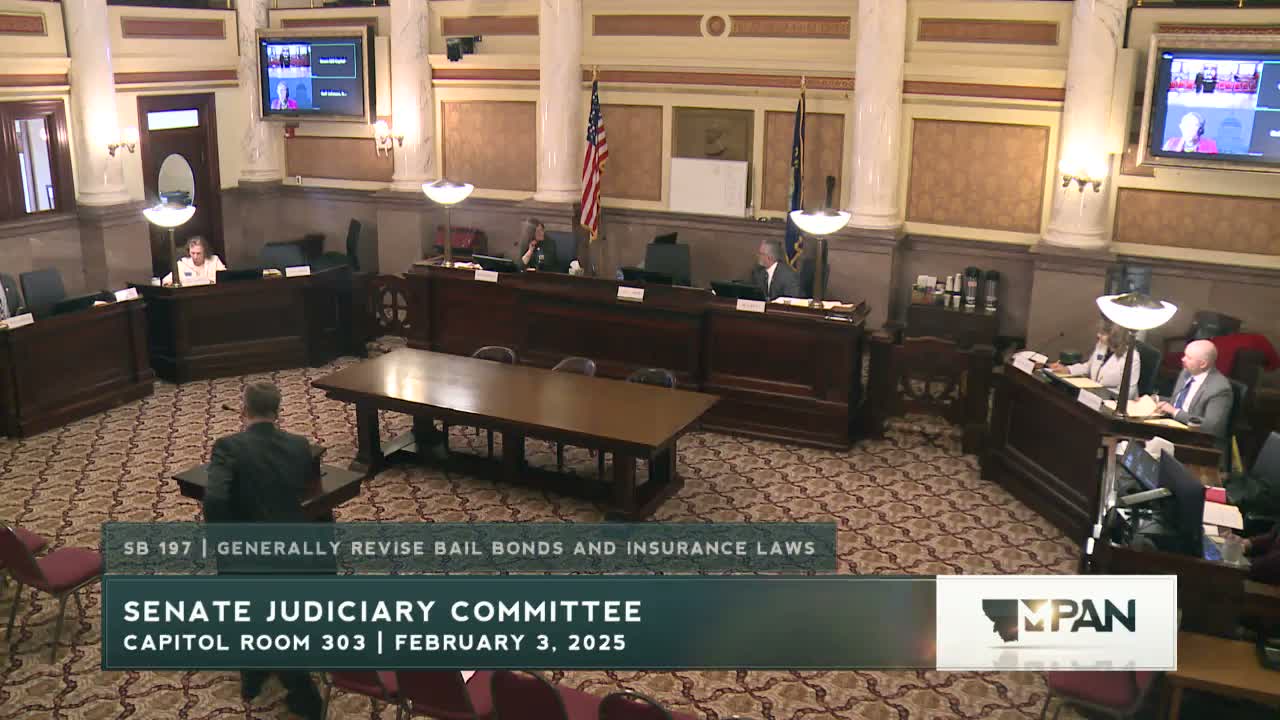
Senator Trebis opened Senate Bill 197 to repeal components of the 2023 bail‑bond insurance law (HB 62). The sponsor said the earlier changes introduced uncertainty for Montana's bail industry, tied licensing to the auditor/commissioner in ways that did not fit existing practice, and that some provisions (licensing, rule‑making) were more appropriately managed by courts and judges.
Proponents from the Montana Bail Agents Association and allied groups said HB 62 dramatically reduced the number of Montana‑based agents (testimony claimed a drop from ~123 to ~63 active agents), invited out‑of‑state bail brokerages to undercut local businesses, and made local accountability harder to maintain. They urged repeal to restore Montana agents' ability to operate and to correct the perceived negative market effects of HB 62.
Frank Cote, deputy insurance commissioner, opposed the repeal and urged staying with the reforms because they sought to impose needed controls following incidents involving unlicensed recovery agents and public safety risks (several high‑profile incidents were cited). He said some intended regulatory elements (initially a 10% premium requirement) and educational provisions were not yet fully implemented but argued certain sideboards were necessary for public safety.
Committee members asked about enforcement, licensing declines and incidents raised in testimony. Sponsor closed urging committee consideration of local industry concerns and the need to revisit the structure of oversight. The hearing closed with no committee vote recorded that day.