Get Full Government Meeting Transcripts, Videos, & Alerts Forever!
Get email alerts on the State Bar Audit topic
No spam. Unsubscribe anytime.
Debate over audit of State Bar centers on scope and authority
Summary
Supporters urged a one-time review of State Bar practices; opponents, including the State Bar, said the legislative auditor already has contractual access to license-fee records and warned the bill as written would create legal and practical conflicts. Sponsor offered to pursue amendments.
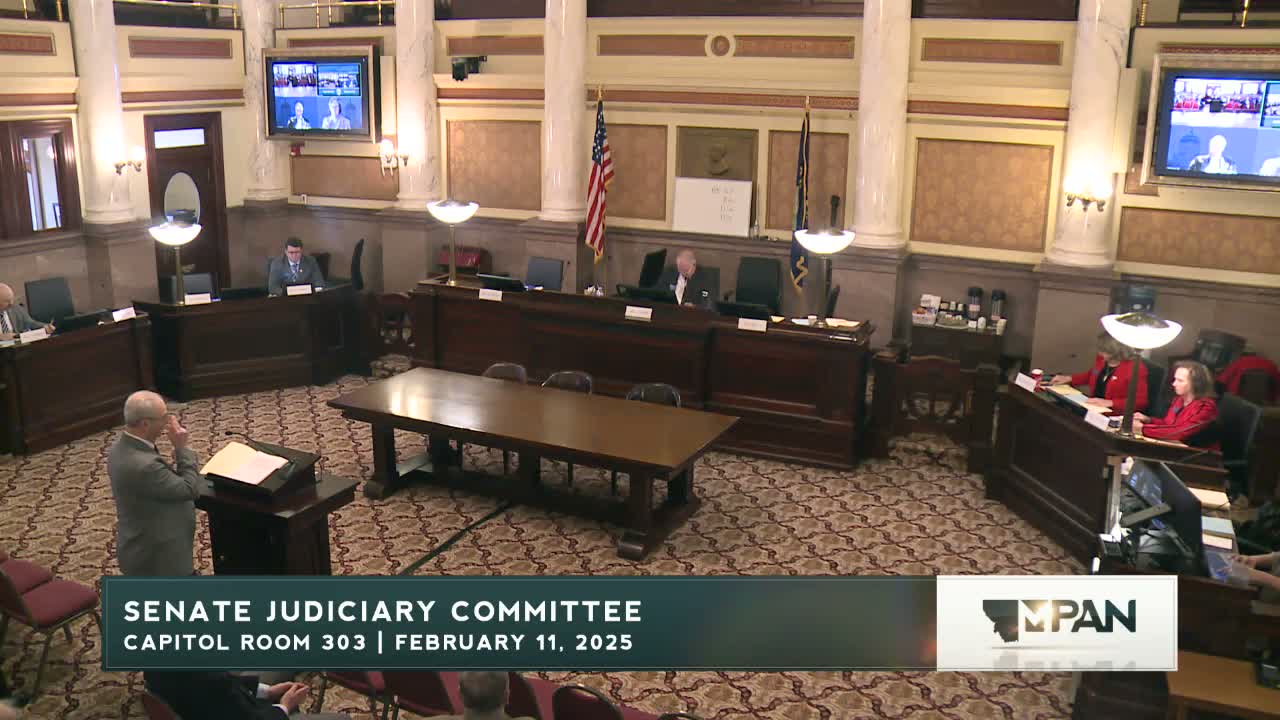
Representative (speaker 5) opened the hearing on House Bill 65, which would authorize a one-time audit of the State Bar of Montana. The sponsor said the State Bar ‘‘fulfills an important governmental purpose’’ because it collects a $25 license tax under a contract with the judicial branch and is closely aligned with the courts, arguing that warranted scrutiny justifies committee review.
Bruce Spencer, representing the State Bar of Montana, urged the committee not to pass HB 65. Spencer said the legislative auditor already has contractual authority to review records associated with the license-tax collection and explained that the State Bar is an independent nonprofit that receives no state funding. He said contractual arrangements require the clerk of the Supreme Court to collect the license tax but that the State Bar performs collections and issues license cards under a contract for approximately $7,500 per year.
Al Smith, an individual attorney, and other opponents told the committee that independent organizations with state contracts would object to an audit that seeks to examine their entire financials beyond the contract’s scope. John Marshall described the bill as appearing to be ‘‘political retribution’’ and cautioned against using taxpayer dollars for that purpose.
Angus McKeever, director of the Legislative Audit Division, testified as an informational witness that the bill as amended presents practical and legal problems. McKeever said the measure was amended in the House from a performance audit to a financial audit and explained that financial audits follow different professional standards and typically focus on governmental entities. Because the State Bar is a nonprofit, different accounting frameworks would apply and the audit division has limited experience conducting nonprofit financial audits. McKeever also noted the bill requests work spanning 10 years and said reconstructing financial statements and supporting records over that period could be impractical. He added that amendment language restricting access to confidential records would impair the independence required by the audit act and generally accepted government auditing standards.
Committee members asked opponents and McKeever about the State Bar’s current oversight and accounting practices. Spencer said the Bar undergoes an annual audit by nationally recognized accounting firms; he estimated about 5,200 lawyers pay the $25 license tax, and that dues are roughly in the $500 range. McKeever confirmed that an audit is not a regulatory enforcement mechanism — auditors make recommendations but do not have enforcement authority — and that some of the bill’s draft language raises constitutional and statutory questions about judicial-branch authority.
The sponsor said she would work with the audit director and offered to consider reverting the bill to a performance audit; the committee closed the hearing and staff offered to draft a formal amendment reverting the bill to its original performance-audit language for future consideration.
What’s next: No formal vote on HB 65 was taken today. Committee staff said a written amendment would be required to change audit scope; the chair closed the hearing and the item remains pending.