Get Full Government Meeting Transcripts, Videos, & Alerts Forever!
Get email alerts on the Nuisance Law topic
No spam. Unsubscribe anytime.
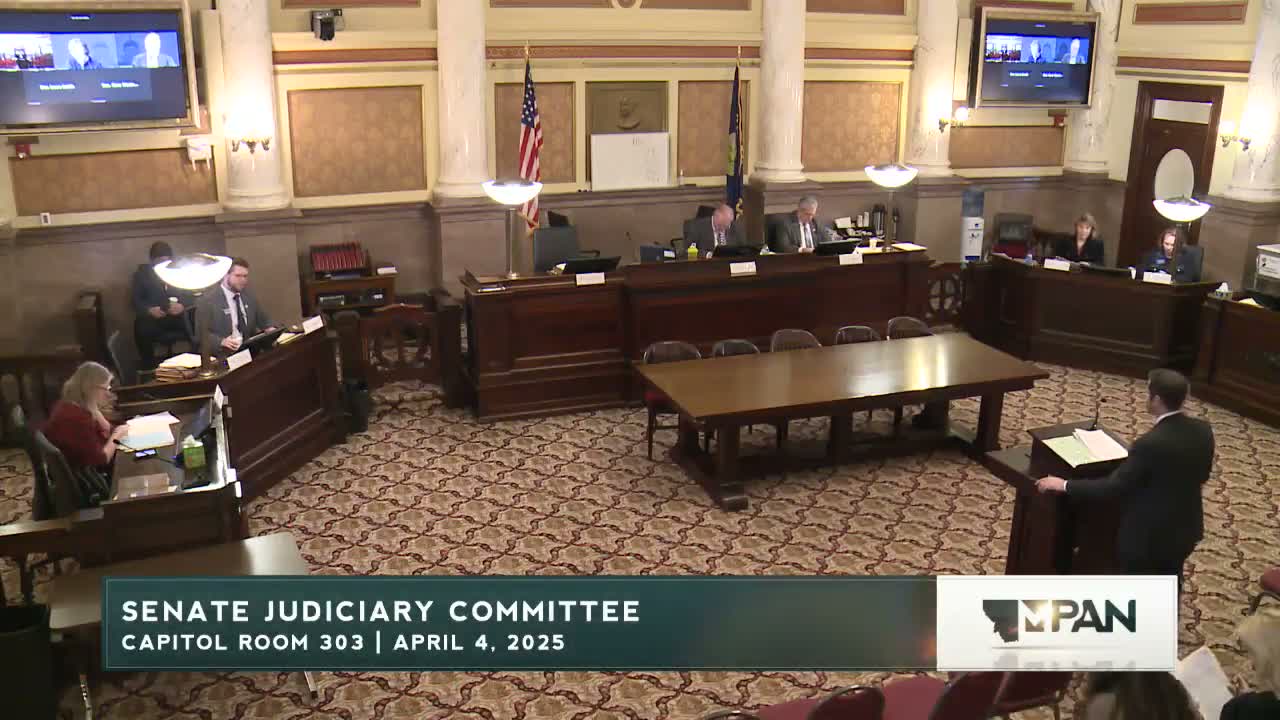
Senate Judiciary hears HB 791 to narrow public-nuisance claims, industry and insurers back changes
Summary
Representative Anthony Nicastro told the Senate Judiciary Committee HB 791 would restore traditional public‑nuisance law and bar abusive claims against lawful industries; business groups and insurers supported the bill while trial‑lawyers and some private attorneys warned it could limit remedies for communities harmed by toxins.
Representative Anthony Nicastro opened the Senate Judiciary hearing on House Bill 7 91 on behalf of House District 50, saying the bill returns Montana nuisance law to its common‑law roots and limits novel uses of public‑nuisance theory. Nicastro told the committee HB 791 would clarify public and private nuisance definitions, preserve long‑standing exclusions such as for shooting ranges and agricultural activities, and limit remedies for government plaintiffs largely to injunctive relief and abatement rather than broad damages.
The bill drew support from industry and trade groups. Charles Robinson of the Montana Chamber of Commerce said nuisance law has been “twisted by creative lawyers into the everything lawsuit,” arguing HB 791 restores the statute’s original purpose. George Harris of the Montana Coal Council and John Iverson of the Treasure State Resources Association urged passage to prevent “frivolous legal claims” against heavy industry. Nephi Cole of the National Shooting Sports Foundation described lawsuits against firearms manufacturers as an example of misuse and called the bill a needed protection for lawful commerce.
Brent Mead, bureau chief at the Department of Justice’s Office of Consumer Protection, said the attorney general’s office generally supports efforts to limit abusive nuisance suits but asked the committee to include a four‑year DOJ exclusion to avoid disrupting ongoing opioid litigation settlements and legacy cases. Mead said the request reflects settlement timelines, not disagreement with the bill’s purpose.
Opponents warned of unintended consequences. Al Smith of the Montana Trial Lawyers Association argued proponents offered no Montana examples of the abuses they describe and said the bill could remove remedies for communities harmed by toxic releases. Stephanie Baucus, a private‑practice attorney from Billings, highlighted drafting concerns, including the higher clear‑and‑convincing standard for private plaintiffs and possible over‑broad abrogation of common‑law doctrines; she stood in light opposition pending clarifying amendments.
During questioning, senators asked how the bill would apply to local issues such as gravel‑pit dust and noise; Nicastro and other proponents said private nuisance claims and other legal avenues would remain available while HB 791 focuses on narrowing public‑nuisance suits. Nicastro said a near‑final amendment would address several technical drafting questions raised in committee.
The committee closed the hearing on HB 791 after receiving notice that an amendment was being finalized. Nicastro asked the committee for concurrence, noting the amendment would preserve obstruction/interference language relocated elsewhere in the draft.