Get Full Government Meeting Transcripts, Videos, & Alerts Forever!
Get email alerts on the Public Health topic
No spam. Unsubscribe anytime.
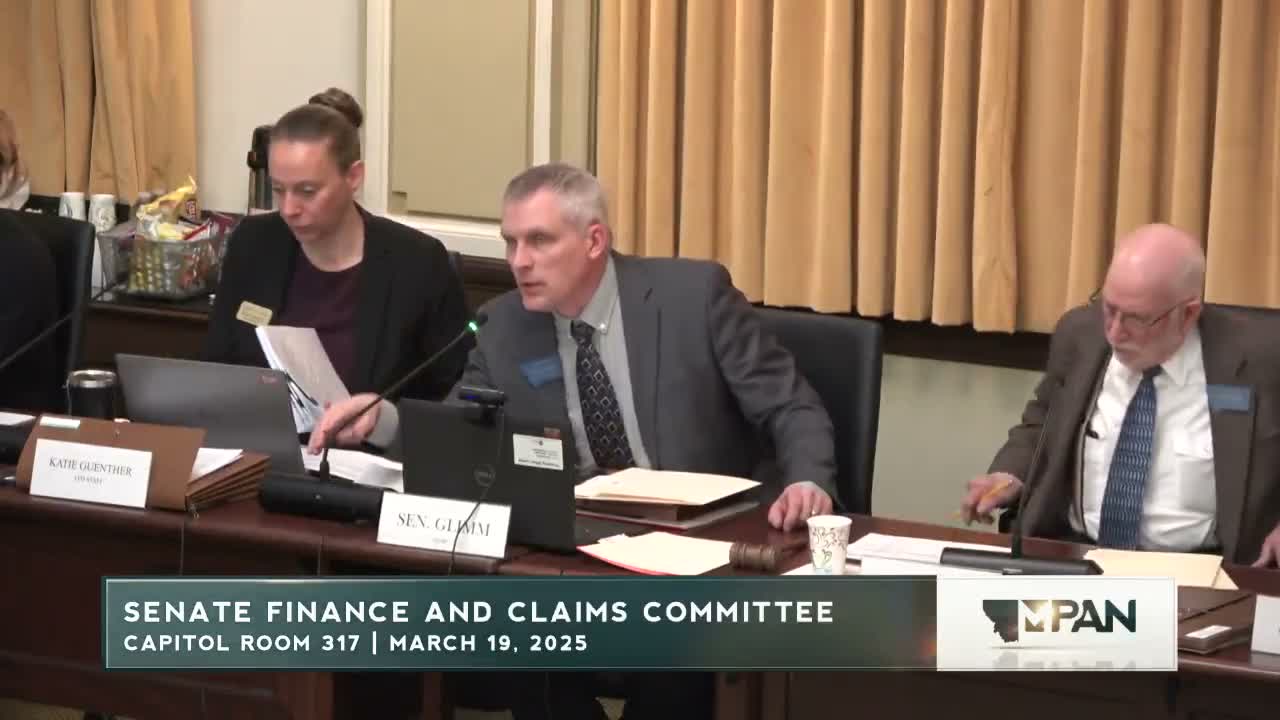
Committee weighs SB394 to cover PTSD for first responders; sponsor disputes fiscal note
Summary
SB394 would create workers' compensation coverage for PTSD for certain first responders; sponsor Cora Newman and proponents argued the fiscal note overstates costs and cited out-of-state comparisons and RAND findings, while insurers and self-insured employers warned benefits increase costs and cited Maine and other jurisdictions.
Senate Finance and Claims heard SB394, a bill that would make post-traumatic stress disorder a compensable work-related injury for specified first responders. Sponsor Senator Cora Newman presented a rebuttal to the bill's fiscal note and said an amendment would narrow coverage and reduce projected claims. Newman called the fiscal estimate "overly conservative" and cited Florida, Oregon, and RAND research to argue actual costs would likely be well below the fiscal-note estimate.
Proponents included the Montana State Firefighters Association, police and sheriffs' associations, and chiefs of police, who described PTSD as a work-related injury that can be treated early to enable return to duty and to avoid higher long-term costs such as early retirement or lost personnel. Carter Marsh (firefighters) and Dan Smith (police associations) emphasized that prompt treatment saves departments money and helps retention.
Opponents — primarily insurers and self-insured employer groups represented by Peter Strauss and Kevin Bartsch — argued that increasing benefits raises system costs and that available actuarial data are limited and contested. Strauss referenced Maine and other state experiences and said municipalities reported multi-million-dollar costs in some cases.
Committee questions covered comparability across states, claim-rate assumptions, and administrative classification of affected employers. Montana State Fund and Department of Labor and Industry counsel indicated that a new fiscal note would be required to quantify impacts under any amendment that narrows or expands covered classes.
Senator Newman concluded by reiterating the bill's targeted scope and the public-safety and retention rationales, urging committee support.