Get Full Government Meeting Transcripts, Videos, & Alerts Forever!
Get email alerts on the Workers Compensation topic
No spam. Unsubscribe anytime.
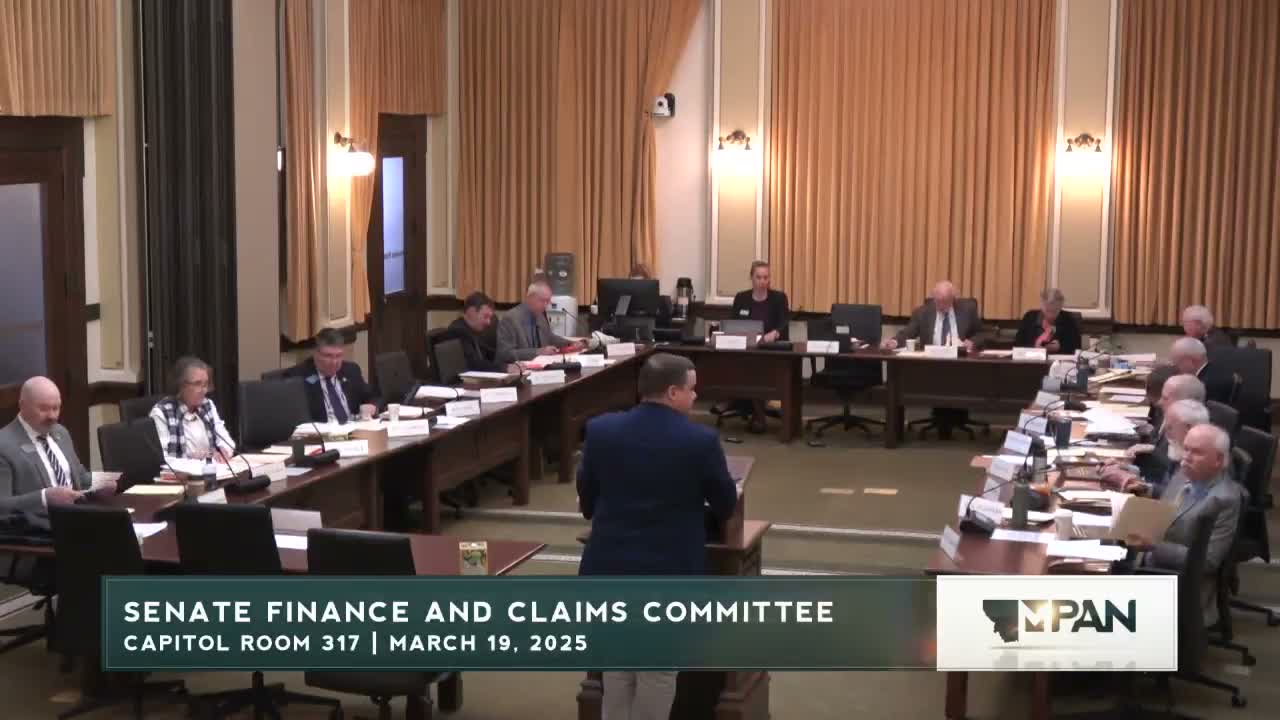
Senate committee debates raising weekly average cap to cover higher wages in SB308
Summary
SB308 would raise the workers' compensation weekly average cap to reflect a $150,000 annual income threshold; supporters said it corrects an inequity for higher-paid injured workers, while insurers and self-insured employers warned of actuarial cost increases and higher premiums.
Senator Derek Harvey presented SB308 to the Finance and Claims committee, seeking to change the workers' compensation weekly average so that the benefit calculation reflects up to $150,000 in annual earnings instead of the current statutory threshold. Harvey framed the issue as addressing a "hole" in the system that shortchanges higher-wage workers: "What this bill just seeks to do is it take it from 52,000 annual income up to a 150,000 annual income for that weekly average," he said.
Labor and union representatives supported the change. Jake Brown, appearing for the Montana AFL-CIO, emphasized that the fiscal note is a projection and argued the policy corrects underpayment to injured workers. Dwayne Wock (IBEW Local 233) told the committee the current gap "disproportionately hurt[s] injured workers in high wage jobs." Proponents warned the change would help recruitment and retention for high-risk, higher-paid professions.
Opponents, including the Montana Self Insurers Association (Peter Strauss), MSGIA (Kevin Bartsch), the NFIB (Rhonda Wiggers) and commercial insurers, argued that adding benefits increases system costs and said the fiscal note projects a measurable premium impact. Strauss cited actuarial studies and NCCI data used in the fiscal note and offered comparisons to other states; he said increases could be in the range of 6.5–7.7% on day-one costs under some assumptions. Rhonda Wiggers said small businesses would face higher premiums and called for a "do not pass."
Committee members queried witnesses on technical issues (experience-rating, offsets with short-term disability, and the history of wage-loss adjustments). Sponsor Harvey said his intent was not to make the change retroactive and suggested a technical amendment could address concerns. The hearing closed without a committee vote.