Get Full Government Meeting Transcripts, Videos, & Alerts Forever!
Get email alerts on the Workers Compensation topic
No spam. Unsubscribe anytime.
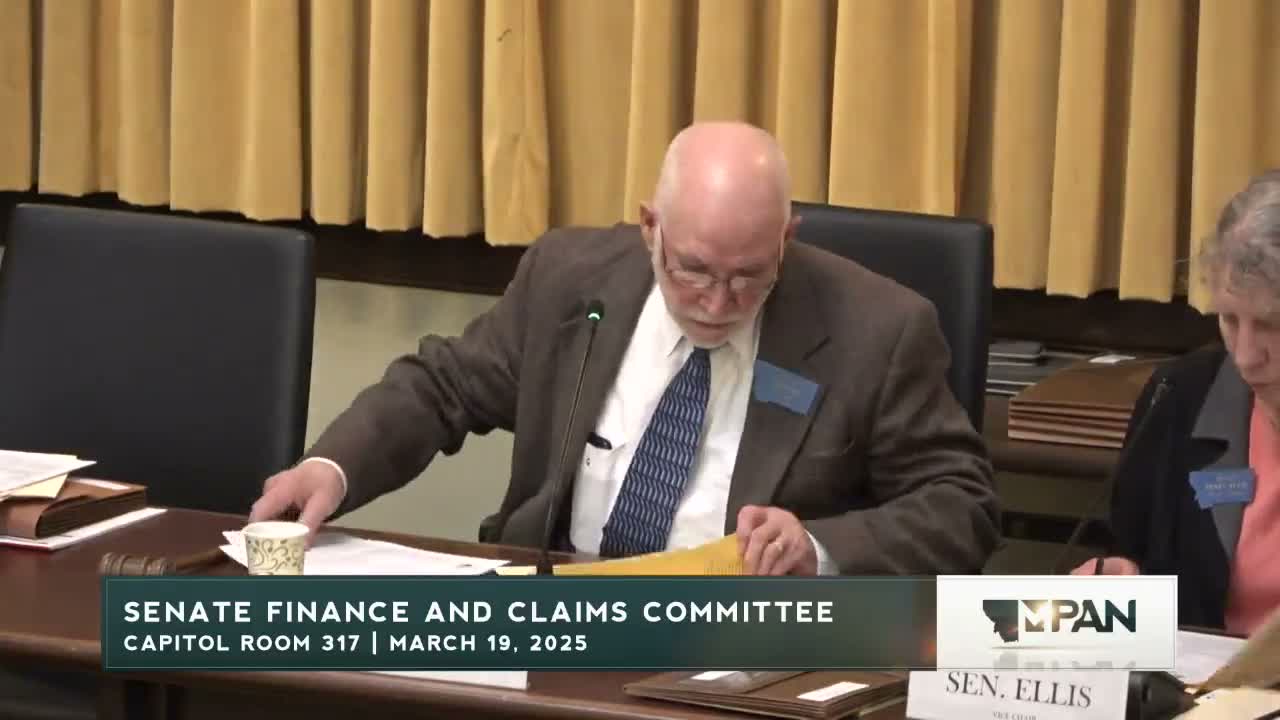
Committee hears fiscal note on SB345, proponents say costs indeterminate
Summary
Senate Finance and Claims heard testimony on SB345, which affects workers' compensation independent medical evaluations; Montana State Fund called fiscal impact indeterminate but suggested possible small cost and administrative effects, while employer and insurer groups generally supported the bill.
Senate Finance and Claims heard fiscal testimony on SB345, a bill affecting how independent medical evaluations (IMEs) and related reimbursements are handled in Montana's workers' compensation system. Sponsor Senator Greg Hertz said the hearing focused on the fiscal note and suggested any cost impact to the state would likely be minimal.
Nick Mazanec of Montana State Fund, which contributed to the fiscal note, told the committee that the effect is difficult to quantify. He said the State Fund would bear any insurance-operations impact and that several items—travel-related temporary total disability payments and ancillary costs such as day care—could increase modestly: “Typically, these folks are traveling for about 3 days,” Mazanec said, and that travel-related benefits are part of the indeterminate fiscal picture. He also told members that improved access to expert medical evaluations can clarify diagnosis and treatment and may reduce claim costs by returning workers to work sooner.
Representatives of self-insured employers and public-school pooled insurers said they generally support the bill but echoed that the fiscal note shows both potential minimal increases and some long-term savings. Peter Strauss of the Montana Self Insurers Association said the association expects similar net impacts to what the State Fund projected. Kevin Bartsch of MSGIA (schools) said the bill addresses coverage for inconvenience and could result in system savings.
No opponents offered testimony on nonfiscal merits during the committee's fiscal-note-only hearing. Quinlan O'Connor, chief legal counsel for the Department of Labor and Industry, served as an informational witness and was available to answer process questions.
The sponsor closed asking the committee to move the bill forward to the floor, noting the policy intent and anticipated limited fiscal effect.