Get Full Government Meeting Transcripts, Videos, & Alerts Forever!
Get email alerts on the Transformational Learning topic
No spam. Unsubscribe anytime.
Bill to scale 'transformational learning' advances after testimony from districts and OPI
Summary
Representative David Beatty’s House Bill 573 would move Montana’s transformational learning grant program into a focused phase 2, directing OPI to nominate up to five districts for development grants and set a timeline that ends phase 2 on June 30, 2028; the bill drew support from the Montana School Boards Association and the deputy superintendent.
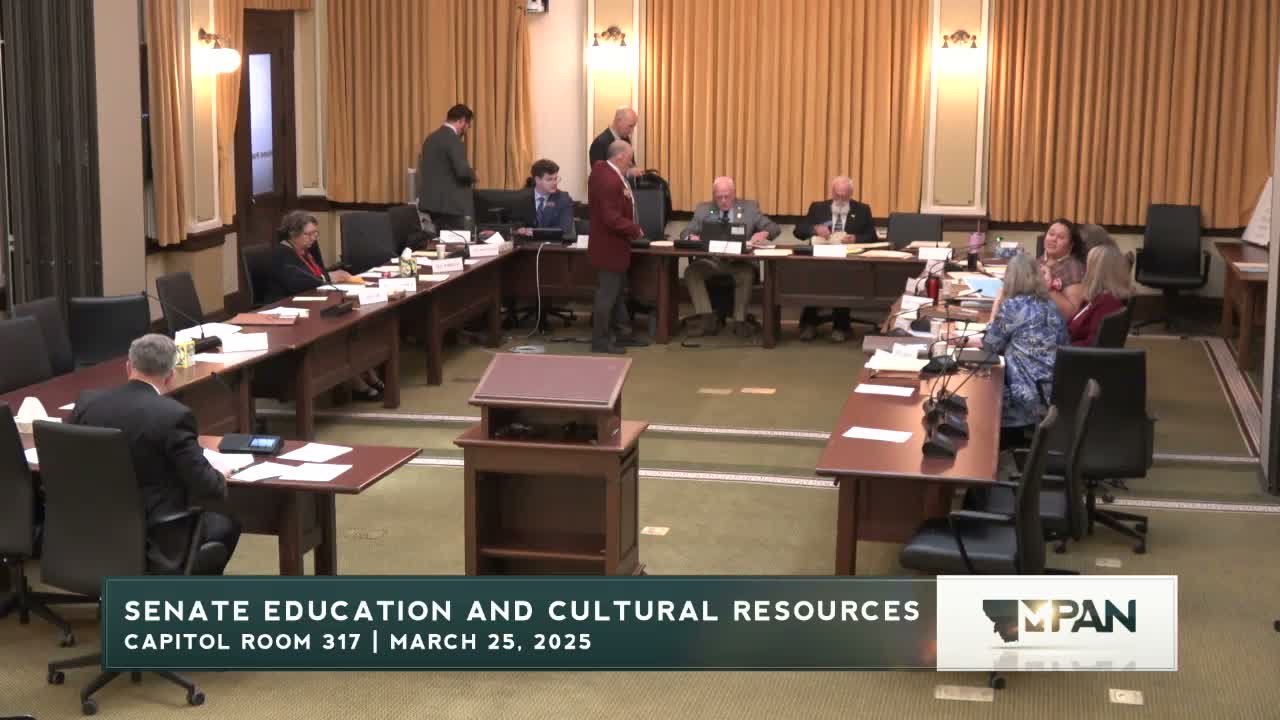
Representative David Beatty, sponsor of House Bill 573, told the Senate Education and Cultural Affairs Committee that the bill moves Montana’s transformational learning grant program from an eight‑year experimental phase into a targeted development phase.
"House Bill 573 seeks to advance the transformational learning program from what might be termed the concept phase to the development phase," Beatty said, describing a plan he said builds on work funded since 2019. He said the state has distributed more than $11 million to districts from fiscal 2020 through 2025 and that phase 2 is intended to scale approaches that have demonstrated promise.
Under the bill, the Office of Public Instruction (OPI) must submit no more than five districts to the Board of Public Education for approval by Feb. 1, 2026. Funds would be distributed by July 15, 2026, and approved districts would have until June 30, 2028, to build out development‑phase programs. OPI would then report to the education interim committee and interim budget committee no later than Sept. 1, 2028.
Lance Melton of the Montana School Boards Association testified in support, noting the association helped draft the original legislation and that phase 2 would let districts that had made measurable progress serve as models. "We helped draft the original legislation in 2019...the coalition stands in strong support of the bill," Melton said.
Ron Whitmoyer, deputy superintendent of public instruction, also urged passage, calling the bill "a critical next step" to scale personalized, proficiency‑based education and turn pioneer districts into statewide mentors and trainers.
Committee members pressed for details. Senator Weber asked how many districts are currently participating; the sponsor and OPI reported a prior OPI document listing 17 participant districts in phase 1, while Beatty confirmed phase 2 will accept up to five districts chosen for demonstrated promise. Members also sought clarifications about sunset and funding timing; Beatty said the current grant program (phase 1) terminates at the end of fiscal 2026, phase 2 ends June 30, 2028, and the bill repurposes second‑year funds to support the development phase without guaranteeing ongoing funding beyond that window.
The bill's proponents emphasized the goal of scaling proven proficiency‑based practices, subject to local district discretion. Representative Beatty closed that the legislation is intended to "identify what's going to work best and move it on to development." The committee closed the hearing on HB573 and did not vote on final passage at that time.
What’s next: HB573 will proceed through the committee process; OPI and the Board of Public Education would be responsible for selections and reporting if the bill becomes law.