Get Full Government Meeting Transcripts, Videos, & Alerts Forever!
Get email alerts on the Student Data Privacy topic
No spam. Unsubscribe anytime.
Senate committee hears parent-rights student-data bill; technologists say deletion is feasible with caveats
Summary
Senate Bill 118 would create parental control and a 'right to be forgotten' for data in Montana’s statewide education research system. Supporters emphasized privacy; the state’s chief data officer said deletion is technically feasible but requires identifiers and careful handling of derived systems; sponsor plans amendments and further department work.
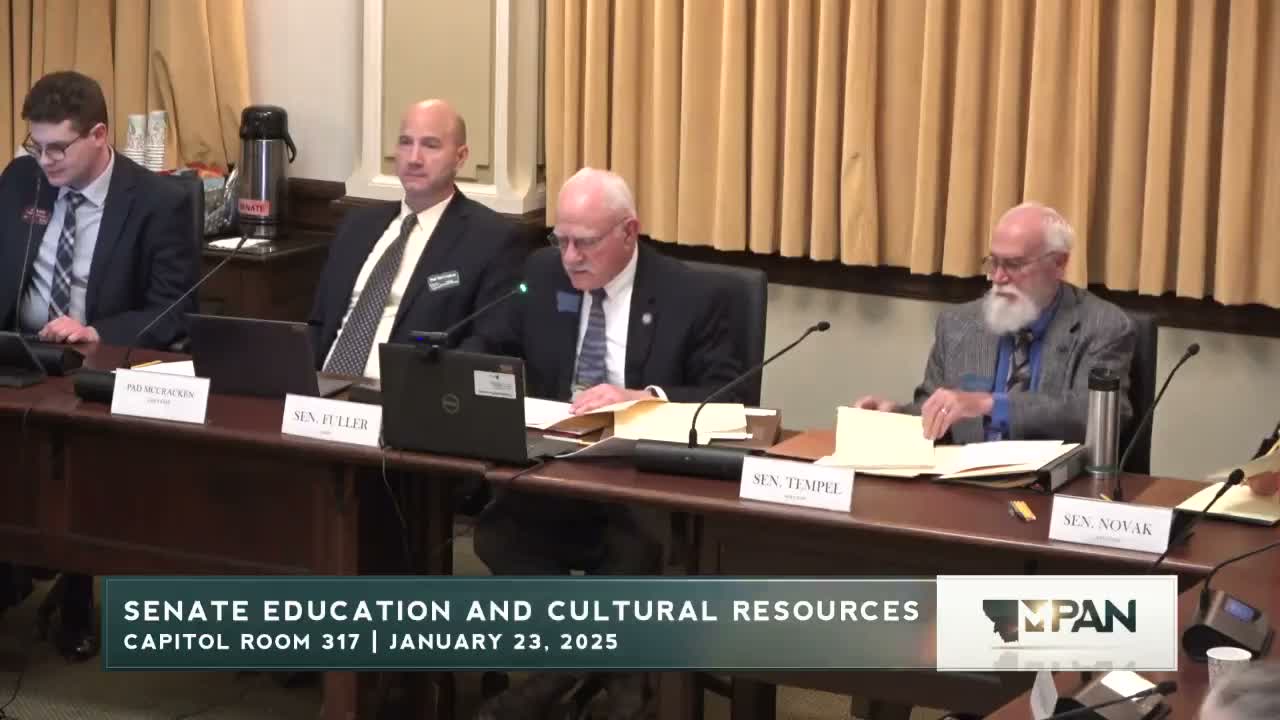
Senate Bill 118, presented to the Senate Education and Cultural Resources Committee, would give parents and students stronger control over K–12 longitudinal data in the statewide P‑20W research system, including a mechanism commonly called a 'right to be forgotten.'
Sponsor Daniel Olmecoff argued the bill draws a line between cybersecurity (system security) and privacy rights, saying parents should be able to opt their children out of inclusion in statewide studies. “This bill allows a right to be forgotten clause to be removed from the state level information,” Olmecoff told the committee, and he said he will work with departments on technical refinements and bring amendments.
Henry Seaton of the ACLU of Montana testified in support, urging protection of student privacy and warning against commoditization or wider access to sensitive student information. “This bill is designed to retain the benefits of holding student data… and to empower parents and students to decide who has access to and use of their kids' personal information,” Seaton said.
Adam Carpenter, the state's chief data officer and an informational witness, told senators the right to be forgotten is technically achievable for the P‑20W system but with important caveats. Carpenter said deletion requires some persistent identifier so the system can reliably find and remove an individual’s aggregated record; he warned that fully deleting identifiers can make it difficult to prevent re‑ingestion of the same record. Carpenter recommended keeping a deletion key so automated checks can ensure removed records do not reappear in dashboards or derived tools.
Committee members raised statutory and practical limits. Senators asked whether local K–12 records would be affected; sponsor Olmecoff and Carpenter said the bill targets the statewide research system and does not force local districts to delete federal reporting records. They also noted federal reporting obligations and court orders may limit the superintendent’s ability to comply with deletion requests.
Carpenter addressed the impact of opt-outs on statistical validity, saying analysts typically need sufficient sample sizes and that very high opt-out rates — far above typical expectations — would be required to make longitudinal analysis nonviable. The sponsor and witness urged more departmental work; Olmecoff asked the committee to hold the bill while he files amendments and coordinates with agencies. No committee vote was taken on SB118.