Get Full Government Meeting Transcripts, Videos, & Alerts Forever!
Get email alerts on the Heritage Commission Restructure topic
No spam. Unsubscribe anytime.
Panel hears bill to shrink Montana Heritage Commission, sparking debate over tribal representation and historian seats
Summary
Senate Bill 116 would reduce the Montana Heritage Commission from 14 to 9 members, change appointment balances, and align staffing/pay language with other Commerce boards. Supporters cite modest savings and simpler voting; tribal representatives and some senators pushed for explicit historian and THPO representation.
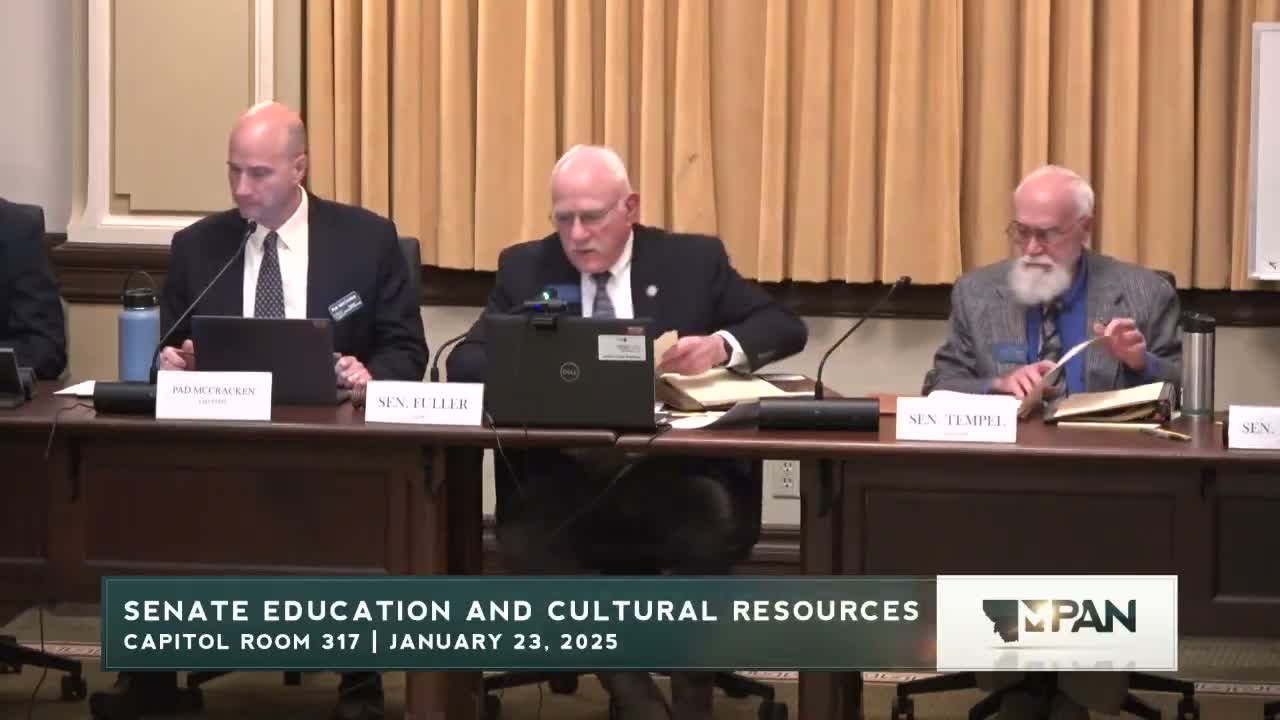
Senate Bill 116, presented Tuesday to the Senate Education and Cultural Resources Committee, would reduce the Montana Heritage Commission from 14 members to 9 and update administrative language regarding indirect rates and staffing.
Sponsor Senator Tony Tizak introduced the measure and turned the presentation over to Deputy Director Mandy Rambo of the Montana Department of Commerce, who said the bill “reduces it to 9” members and aligns the commission’s staffing and pay language with other Commerce-attached boards. Rambo said the change to an odd-numbered commission would “make it a little bit easier for voting purposes.”
The bill trims five governor-appointed seats (from nine to four) while preserving statutory seats for three directors: the Department of Commerce, Fish, Wildlife and Parks, and the Montana Historical Society. Rambo told senators the bill also clarifies indirect-rate language so the rate is reported to the interim committee rather than negotiated annually, because indirect rates are set through the biennial budget and approved by the federal agency (HUD).
Committee members pressed several concerns. Senator Olson asked how the measure would ensure at least one Montana historian sits on the commission; Rambo noted the director of the historical society is already a statutory member but said she would be “open to amendments to make this more clear.” Senators representing tribal interests asked whether Tribal Historic Preservation Officers (THPOs) or a tribal designee would have a formal seat; Rambo said the bill does not add THPO-specific language and suggested tribal applicants could apply through the governor’s appointments process. Senator Windy Boy stressed federal consultation obligations, citing “CFR 36 800, section 106,” and urged at least one tribal designee be considered.
On fiscal impact, Rambo reported the bill’s fiscal note estimates only modest annual savings—about $6,300 to $6,400—primarily from reduced per diems and travel for fewer commissioners. She warned the commission’s operating budget depends heavily on a bed tax (lodging facility use tax), license-plate fees and seasonal earned revenue tied to visitation; a reduction in bed tax or a decline in tourism could meaningfully cut revenues.
Sponsor Tizak said he will propose an amendment to rebalance appointments between the governor and legislative leadership, suggesting a shift that would give the House and Senate additional appointments. Rambo said the department would oppose an amendment that concentrated turnover in legislative-appointed seats because it could harm continuity of operations. No vote was taken on SB116; the hearing was closed and the sponsor said he would bring amendments for committee consideration in executive action.
The committee did not act on SB116 during the session; proponents and committee members signaled continued conversations on historian representation, tribal consultation, appointment timing and technical drafting language.