Get Full Government Meeting Transcripts, Videos, & Alerts Forever!
Get email alerts on the Cannabis Regulation topic
No spam. Unsubscribe anytime.
Committee hears cannabis cleanup bill and passes Safer Banking resolution
Summary
Senate Bill 74, a package of technical fixes to Montana’s post‑legalization cannabis rules (licensing, tax‑to‑net, and manufacturing licensing), drew broad industry support and questions about fiscal impacts; the committee also passed Senate Joint Resolution 5 urging Congress to adopt safer banking protections for state‑legal cannabis businesses.
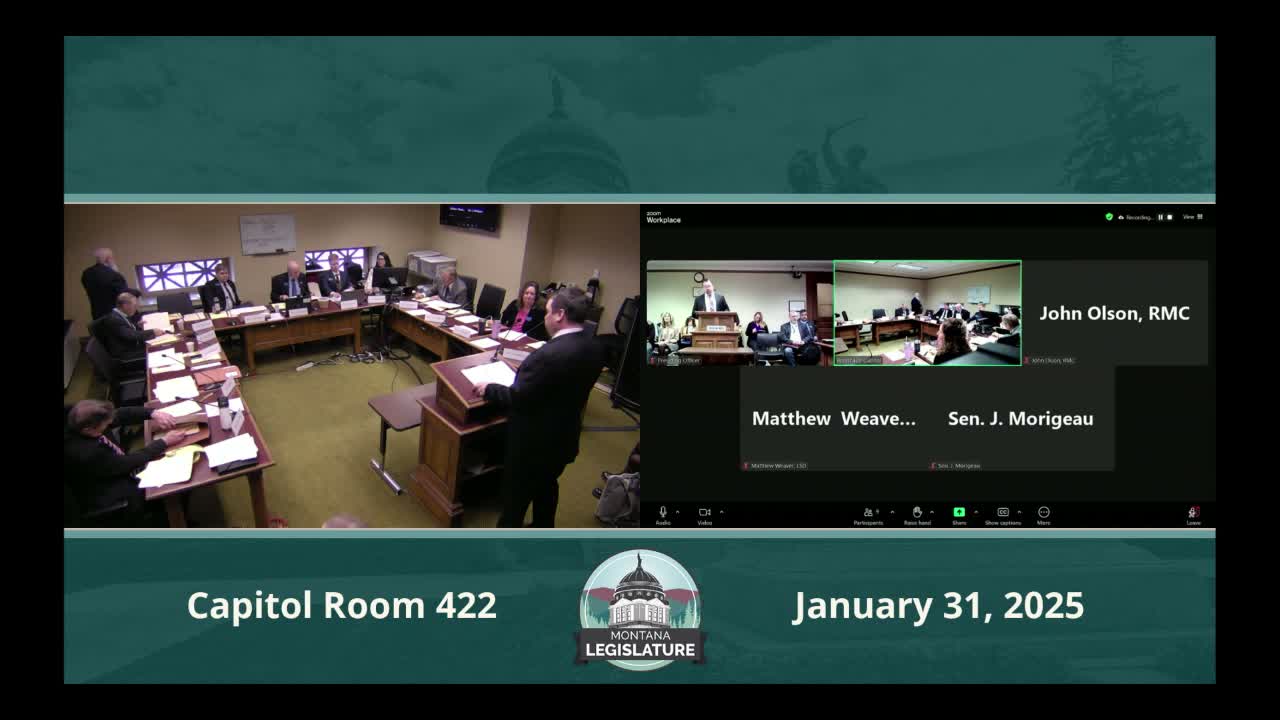
Senate Bill 74, presented as an Economic Affairs Committee cleanup of the 2021 legalization framework, drew largely positive testimony from industry, regulators and supporting businesses during a Senate Business and Labor hearing.
Sponsor Senator Kasmier said SB74 fixes operational issues in the market, including aligning manufacturing licensing (one license per manufacturer with site certificates rather than fees per facility), allowing the Cannabis Control Division to streamline landlord approval timing, and changing taxation to apply to the net sales price rather than the retail sticker price. "We're gonna tax the net," the sponsor said, explaining the intent is to remove confusion caused by discounts and retail adjustments.
Industry witnesses described the changes as narrow technical fixes. Kate Holeowa of the Montana Cannabis Industry Association said the goal was "to make the law work better" and stressed that the manufacturing licensing change primarily adjusts fee structure. Jeff Erickson, a traceability‑software vendor, told the committee Montana’s traceability system currently lacks a way to record who received discounts, meaning the Department of Revenue’s fiscal‑note estimate that taxing net would lower collections by about 1% is uncertain and could understate administrative costs.
Jennifer Hensley, representing Fidelity Diagnostics Laboratory, and other lab stakeholders raised concerns about a provision that removed a probationary licensing stage for testing labs. Hensley said high ISO‑level testing standards and limited access to commercial lending make startup costs for regulatory labs a barrier; she urged care in rewriting lab licensing language so consumer safety and access are preserved.
Barbour, administrator of the Cannabis Control Division (CCD), and Cindy Backaberg from the Department of Revenue answered technical questions on the fiscal note. Barbour noted the CCD’s budget is funded from the industry’s state special revenue account and said the projected licensing‑fee reduction (an estimated up to $225,000 per year in manufacturing license fees) would reduce the revenue that ultimately flows to the general fund but would not impair CCD operations under current HB2 appropriations.
Separately, the committee considered Senate Joint Resolution 5, a nonbinding resolution urging Congress to pass the Safer Banking Act to give banks safe harbor to serve state‑legal cannabis businesses. Jennifer Hensley and Shane Scanlon of the Independent Bankers Association supported the resolution, citing safety risks associated with cash‑heavy operations and the operational difficulties cannabis businesses face because of restricted access to banking services.
The committee approved SJ5 by voice vote (the clerk later recorded a final tally of 9 ayes and 2 nos) and will send the resolution to the Senate floor. SB74 concluded the hearing without a committee vote; the sponsor indicated he would continue to work with stakeholders and that further amendments could be forthcoming.
What’s next: CCD and Department of Revenue staff offered follow‑up on fiscal estimates if the committee requests additional detail; the sponsor said he may prepare amendments to address lab licensing and technical code alignment.