Get Full Government Meeting Transcripts, Videos, & Alerts Forever!
Get email alerts on the Human Rights Appointments topic
No spam. Unsubscribe anytime.
Senate committee advances three gubernatorial appointees to Human Rights Commission
Summary
Senate Business, Labor and Economic Affairs heard support for Curtis Almi, Peter Damro and Connie Sartain and voted to advance SR 24 after proponents described the commission's role and members' experience.
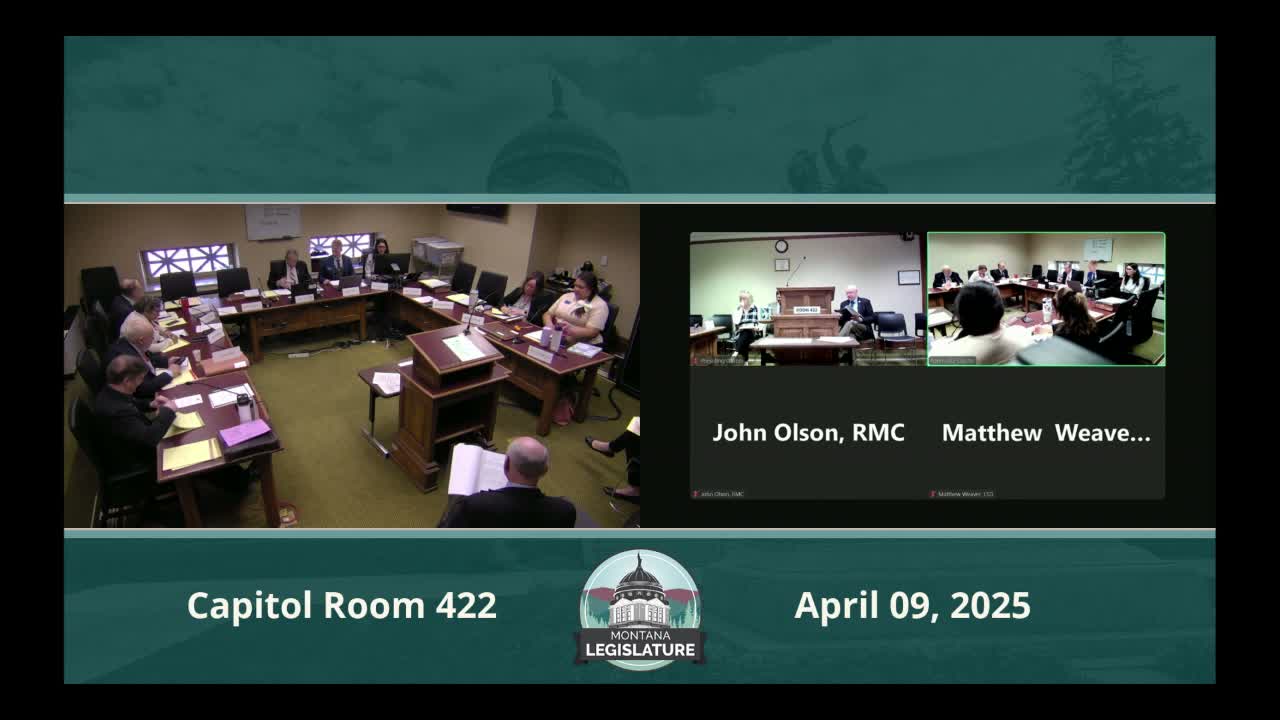
The Senate Business, Labor and Economic Affairs Committee on Friday advanced Senate Resolution 24, confirming three gubernatorial appointees to the Montana Human Rights Commission.
Senator Mark Nolan introduced the resolution, saying the nominees have stepped forward to "give back" through volunteer service. Lieutenant Governor Kristen Juras, speaking for the governor, described the commission as a five-member quasi-judicial board that hears appeals after the Department of Labor and Industry's Human Rights Bureau completes investigations. "They're not doing this for the money. They're doing this to give back to a state that they love," Juras said in support of the nominees.
Peter Damro, who the lieutenant governor said serves as the current commission chair, told the committee he was honored to be reappointed and cited his background in employment law. Connie Sartain described her time on the commission since May 2024 as educational and said she looks forward to continuing to learn the role. Curtis (Kurt) Almi said the commission's primary goal is to resolve disputes before they reach the courts and that serving has been "fulfilling."
Committee members asked about the commission's meeting cadence and workload. Juras and Damro replied the commission generally meets as needed and often averages roughly three to four meetings a year, with some hearings spanning multiple days when necessary.
After discussion the committee moved SR 24 to do pass by voice vote and the resolution will be transmitted to the full Senate for consideration. The committee also took similar action on other appointment resolutions during the session before adjourning.