Get Full Government Meeting Transcripts, Videos, & Alerts Forever!
Get email alerts on the Video Gaming topic
No spam. Unsubscribe anytime.
Panel hears proposal to raise Montana video‑gaming bet limit to $4 amid industry split
Summary
Senate Bill 153 would raise the maximum bet on video gaming machines from $2 to $4 and increase the top payout; proponents said it modernizes an industry stalled since 1987 and could modestly boost state revenue, while opponents warned of increased harm to problem gamblers and risks to small rural businesses.
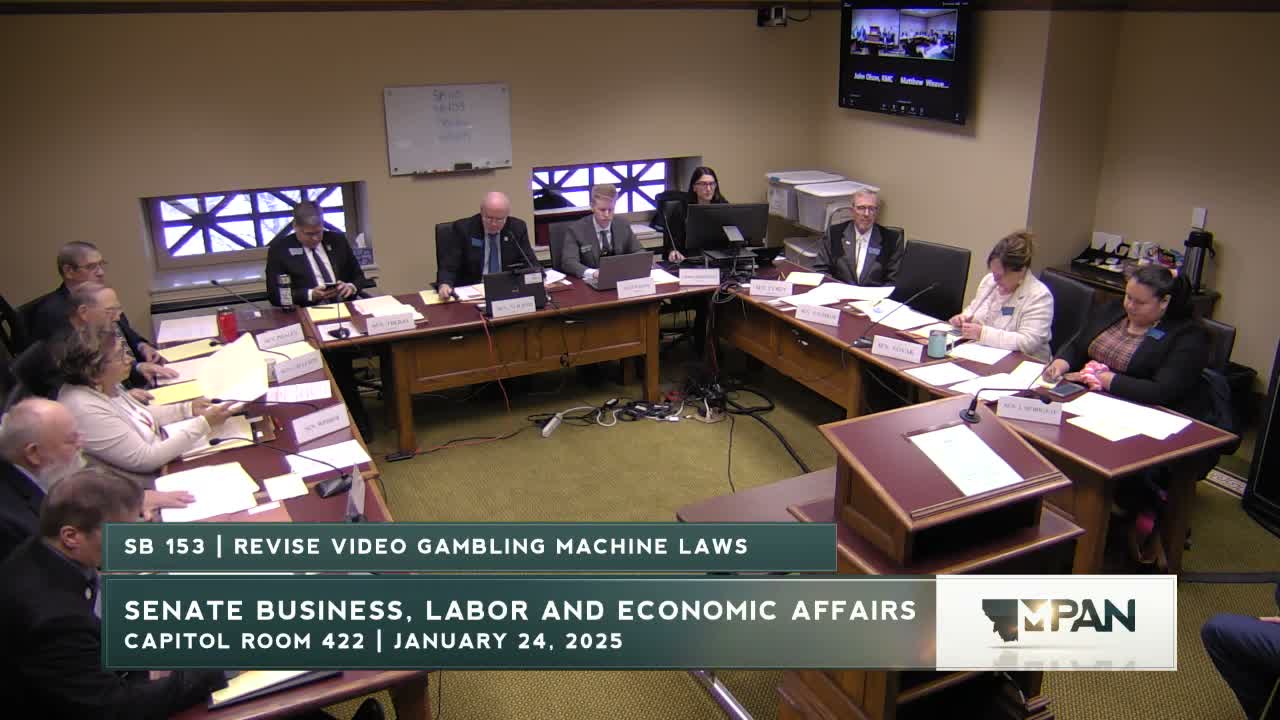
The Senate Business, Labor and Economic Affairs Committee heard testimony on Senate Bill 153, which would raise video‑gaming machine bet limits from $2 to $4 and increase the capped payout. Sponsor Senator Wiley Galt said the change is modest and overdue; the last statutory adjustment to these limits was in 1987.
Industry proponents including Jesse Luther of Golden Route Operations and Rhonda Wiggers of the Montana Coin Machine Operators Association argued the change would refresh aging games, attract new machines and modestly increase tax receipts. Luther pointed to other states, such as West Virginia, that later raised limits and saw revenue increases and told senators the change could yield an estimated conservative revenue bump for Montana. Wiggers explained the route‑operator/location split and said the 15% statutory tax would translate any growth in wagering into increased state revenue; she also described three Montana manufacturers and the local supply chain.
Opponents were vocal and diverse. Gary Rafter, identifying himself as a compulsive gambler, urged the committee to reject any increase. Robert Piccolo (Montana Council on Problem Gambling) and representatives of the Montana Tavern Association warned that higher stakes are more attractive to vulnerable people and could deepen harms. Chad Bachmeier and John Iverson (tavern interests) argued that small independent bar owners could be disadvantaged by required machine updates and payouts, and that consolidation among route operators may amplify that effect. Shauna Halford (Gaming Industry Association) framed the proposal as a significant expansion of gambling in Montana and emphasized that the industry itself is divided on the change.
Committee members asked for data on likely impacts, how bonus rounds and pay tables would change player behavior, whether small operators could manage larger payouts and how the $11.99 maximum payoff was chosen. Proponents said the $11.99 level was selected to avoid IRS W‑2G reporting thresholds and to reduce payroll paperwork for small locations; critics called that rationale problematic and said it appeared designed to avoid tax reporting.
The hearing exposed a clear industry split: some route operators and manufacturers supported the bill to modernize the market and generate modest state revenue; many tavern owners, small operators and problem‑gambling advocates opposed it for public‑health and competitive‑impact reasons. Senator Galt closed by urging committee support; no committee vote was recorded.
What’s next: Committee requested a fiscal note and additional modeling from proponents; members discussed potential amendments to balance modernization with consumer protections.