Get Full Government Meeting Transcripts, Videos, & Alerts Forever!
Get email alerts on the Distillery Investment topic
No spam. Unsubscribe anytime.
Montana committee hears bill to let investors buy interests in aging whiskey barrels
Summary
Lawmakers heard testimony on House Bill 549, which would allow distillers to use 'warehouse receipts' so investors can provide working capital against barrels aging in bonded warehouses without acquiring a license or ownership in the distillery.
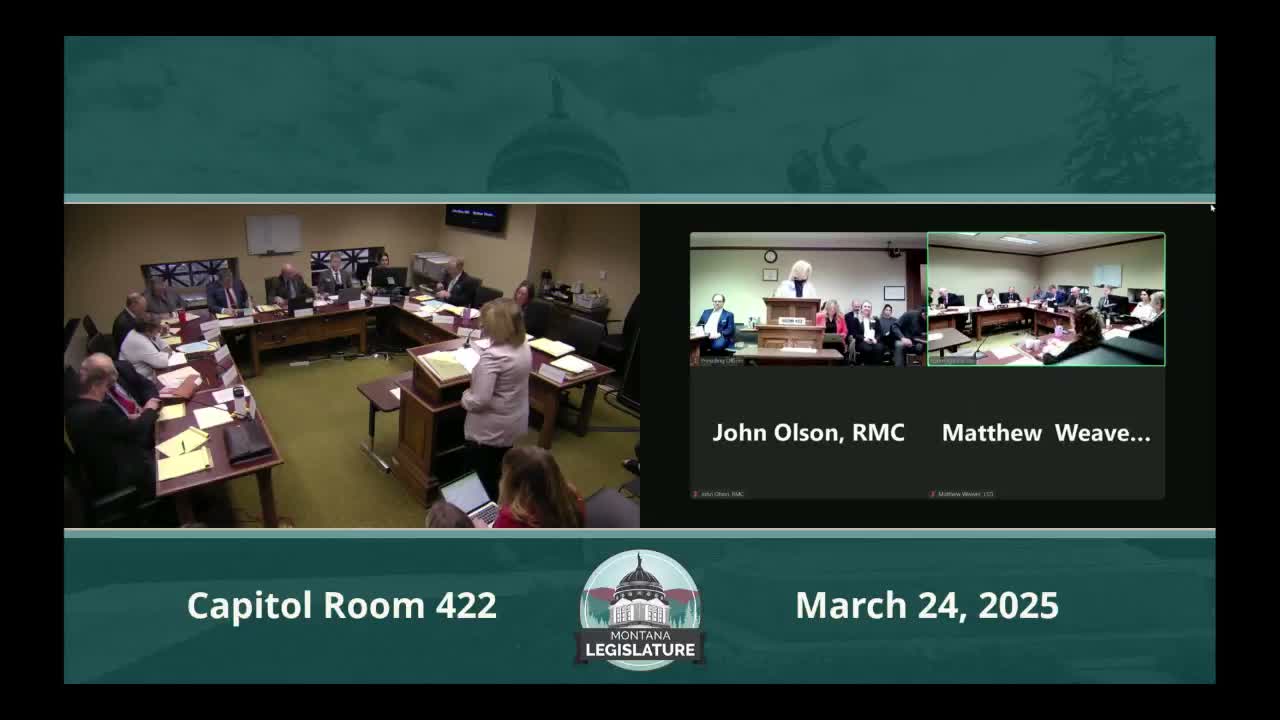
Representative Carrie Seekins Crowe (House District 39, Billings) opened testimony on House Bill 549, saying the measure would allow a practice common in other states and permitted under federal law. “This bill would allow for something called a warehouse receipt,” she told the Senate Business and Labor committee, describing a contract that lets investors buy an interest in the future value of a barrel rather than ownership in the business.
Proponents including Jennifer Hensley, who testified for the Montana Distillers Guild, and small‑business owners such as Jake Ballou of Lakeside Distillery described the practical benefits. Hensley said investors purchase an interest “in the barrel itself” and “no actual alcohol changes hands,” adding that the federal TTB requires reporting on warehouse receipts. Ballou said the mechanism would let small distilleries access working capital without selling ownership: “It allows me to buy more grain, fill more barrels … but not give up ownership of the distillery.”
Attorney Michael Lawlor, who said he drafted an earlier version of the bill for Barrel Proof Capital, told the committee the bill clarifies that a warehouse receipt interest is not an ownership interest that would trigger license transfer rules. Department of Revenue alcoholic beverage control administrator Becky Schlauch said the bill prevents the department from receiving investor‑level information and that, while a warehouse receipt would not be an undisclosed ownership interest for licensing purposes, it would limit the department’s visibility into a licensee’s complete financial picture at renewal.
Agency staff described existing safeguards for storage: Steve Swanson said off‑site bonded warehouses undergo suitability checks similar to licensed premises and that investigators can be sent to follow up when necessary. Witnesses stressed that the transaction is a commodity‑style investment and that federal and state bonded‑warehouse security and testing standards apply.
The committee closed the hearing on HB 549 with the sponsor asking members to concur; no committee vote was recorded during the hearing.