Get Full Government Meeting Transcripts, Videos, & Alerts Forever!
Get email alerts on the Electric Vehicle Taxation topic
No spam. Unsubscribe anytime.
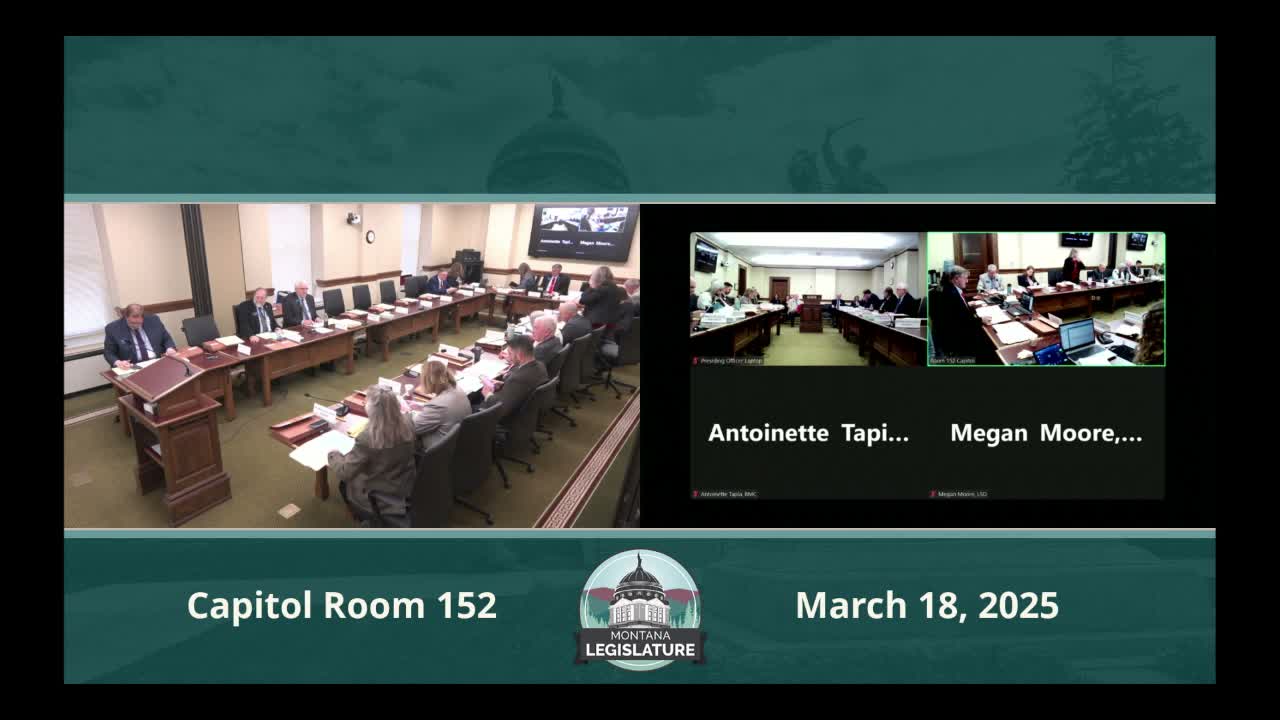
House panel hears cleanup bill setting 3¢ per‑kWh charge on public EV stations
Summary
The House Taxation Committee heard Senate Bill 228, a sponsor-described cleanup of prior EV taxation law that would enforce a 3¢ per kilowatt-hour tax on public charging stations and clarify metering. Supporters say it fixes drafting gaps; opponents say the senate removed a 2028 registration-fee reduction that protected in‑state EV drivers.
Sen. Denley Logie, sponsor of Senate Bill 228, told the House Taxation Committee the proposal is a cleanup of last session’s electric‑vehicle legislation meant to ensure public charging stations are separately metered and that a 3¢ per kilowatt-hour tax on those stations flows into the state gas‑tax fund. "We had to clean up some wording," Logie said, adding the bill removes a planned step‑down in an EV registration fee that had been part of earlier measures.
Larry Flynn, deputy director of the Montana Department of Transportation, told the committee the bill “is not a revisitation of the policy issue about the taxation of electric vehicles” but rather fixes implementation language. Flynn said the state collected about $760,000 in EV registration fees in 2024 and roughly $47,000 from the public‑charger kilowatt‑hour tax; he described the registration roll and the charging network assumptions that supported the earlier fee schedule as having changed. "There is absolutely no fiscal impact," Flynn said of the cleanup language.
Stakeholder proponents — including Doug Hardy of the Montana Electric Cooperative Association, Amanda Bridal of the Montana AFL‑CIO and Kevin Wade of the Montana Contractors Association and Chamber of Commerce — said the interim stakeholder process resolved drafting holes and that the bill makes the policy workable.
Opponents pressed the committee on one substantive change: they say a senate amendment removed a scheduled 30% reduction to the EV registration fee set to take effect in 2028. "This did start out as a good cleanup bill," said Nick Fitzmaurice of the Montana Environmental Information Center, urging restoring the 2028 step‑down to avoid double taxation of in‑state EV drivers. Remote witnesses, including Makena Sellers of the Montana Renewable Energy Association and Gallatin County resident Jesse Therian, presented data on mileage, per‑mile cost comparisons and vehicle counts and cautioned the committee that in‑state drivers already paying registration fees could face disproportionate road‑use costs.
Committee members asked technical questions about the size of the charging network and revenue. Flynn said Montana has about 30 public charging stations and agreed to provide the committee with kilowatt‑hour totals; Kendra Smith of the DOT gave registration counts (4,600 light‑duty EVs and 2,500 plug‑in hybrids in 2024). Members also asked whether hybrids were included in registration‑fee totals and how a 30% registration‑fee reduction would affect revenues; Flynn said the reduction would lower registration revenue by about $228,000 while public‑charging tax receipts remain near current annual totals of roughly $47,000, creating a math disparity the witnesses said merited scrutiny.
Logie closed by saying the measure brings cooperatives and utilities into alignment on implementation and urged passage of the cleanup language without further amendment. The committee took testimony, asked for additional data, and closed the hearing without taking a vote. The bill's short title as read to the committee was "an act revising laws related to public charging stations for electric vehicles."