Get Full Government Meeting Transcripts, Videos, & Alerts Forever!
Get email alerts on the State Finance topic
No spam. Unsubscribe anytime.
Bill to reduce paperwork for state inter-entity loans advances after agency support
Summary
House Bill 61 would streamline inter-entity loan bookkeeping used when state agencies await federal reimbursements, reducing journal-entry burden while keeping reporting controls; administrators said FY24 produced more than 1,600 journal-entry lines related to these loans and that the bill would cut paperwork without changing federal accountability.
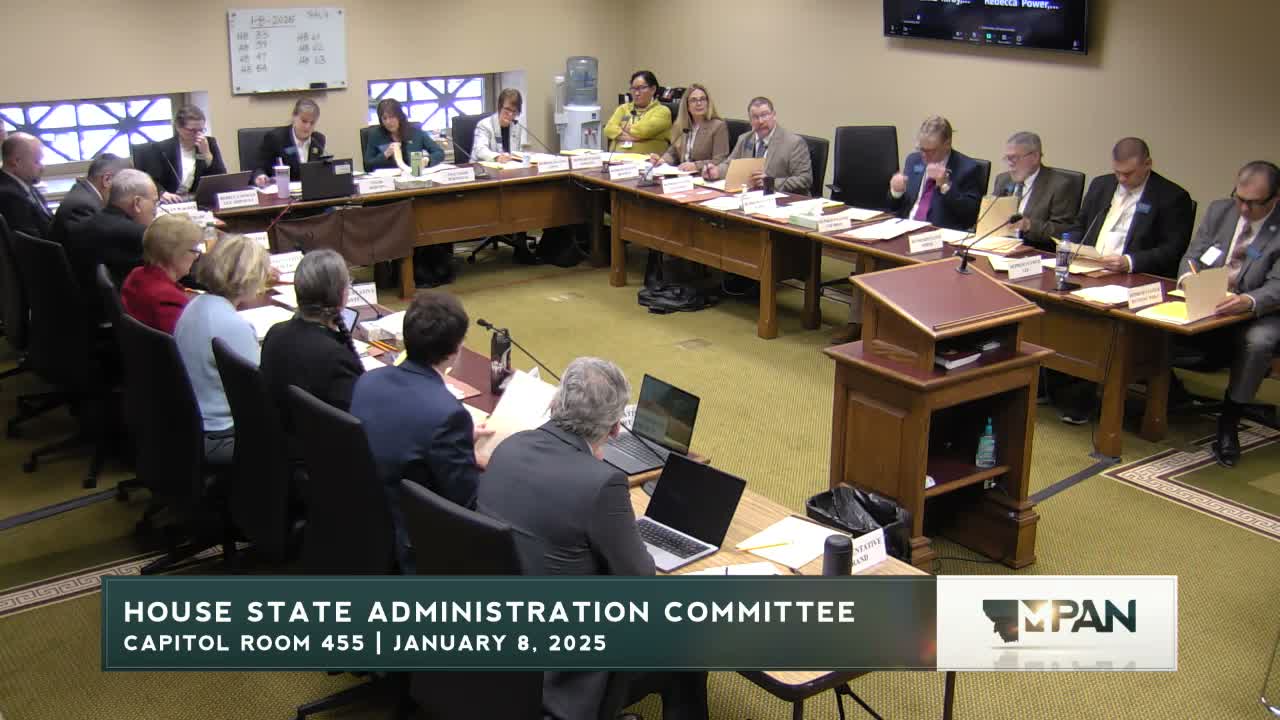
Representative Gary Perry presented House Bill 61 to streamline inter-entity loan processes that state agencies use to avoid negative cash balances while awaiting federal reimbursements. Department of Administration Director Misty Ann Giles, State Accountant Jennifer Thompson and CFOs from multiple agencies described the current process as paper-intensive and time-consuming: Thompson said fiscal year 2024 produced over 1,600 journal-entry lines associated with these loans and more than 300 funds required loans at year-end. Agencies with large federal portfolios—Department of Military Affairs, Department of Transportation, Fish, Wildlife & Parks—testified that the bill would reduce paperwork while maintaining monthly reporting and controls. Witnesses said federal reimbursement timing varies (drawdowns are sometimes prompt but some programs and disaster funds take longer), and the Cash Management Improvement Act can require interest if the federal partner fails to follow drawdown patterns.
Committee members asked about reimbursement certainty and contingency plans for federal shutdowns; witnesses said contracts and drawdown systems generally provide predictability, but the treasury could provide short-term interagency loans in extreme circumstances; longer shutdowns would create broader fiscal impacts.
Next steps: Sponsor Perry asked the committee to pass the cleanup measure; witnesses noted administrative rules or guidance might be needed to ensure consistent implementation across agencies.