Get Full Government Meeting Transcripts, Videos, & Alerts Forever!
Get email alerts on the Exempt Wells topic
No spam. Unsubscribe anytime.
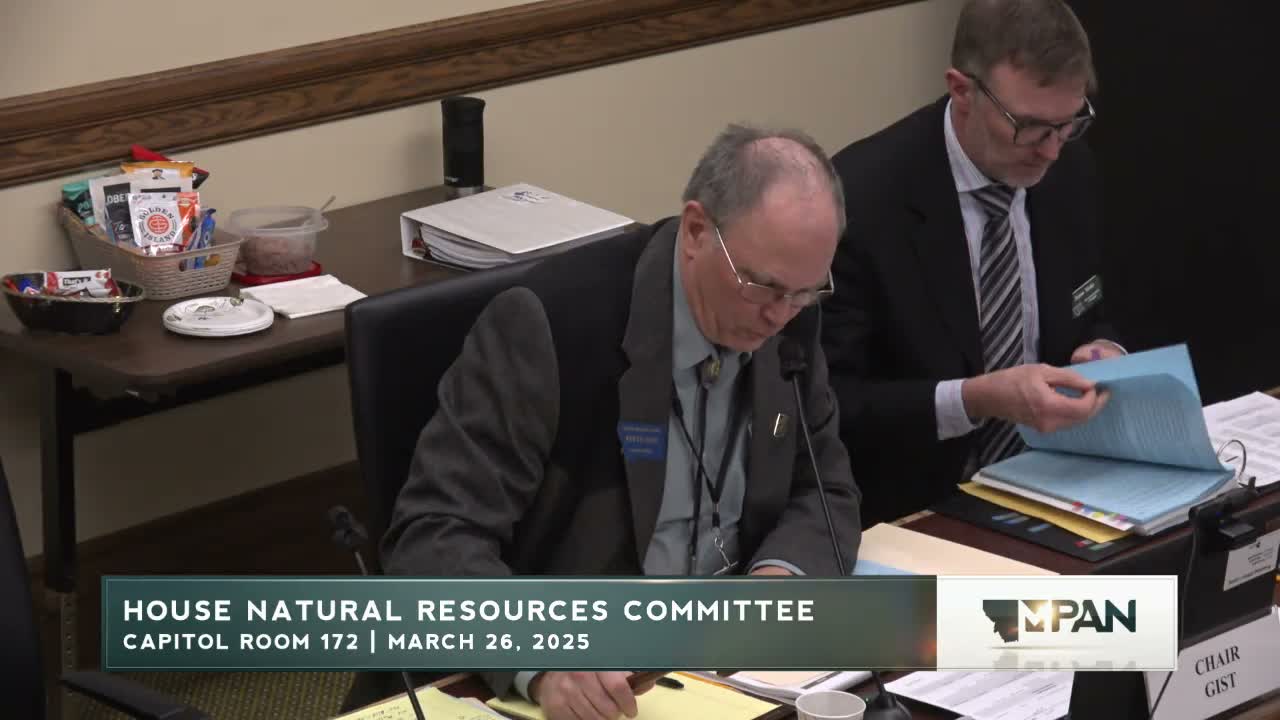
Panel weighs compromise on exempt wells and 'combined appropriation' definition
Summary
Lawmakers heard testimony on SB 436, an exempt‑well bill that would codify a statutory definition of 'combined appropriation,' retain 35 gpm / 10 acre‑ft sideboards and add an allotment of 1 acre‑ft per 2 acres; supporters called it a necessary compromise for housing and development, while opponents said it leaves cumulative impacts and monitoring unresolved.
Senate Bill 436 would incorporate into statute a definition of 'combined appropriation' and set limits for exempt groundwater wells, aiming to clarify long‑running disputes over how multiple small developments combine to use the same aquifer.
Sponsor Sen. Carl Glimm described the bill as a ‘fairly simple’ exempt‑well measure intended to put the Department of Natural Resources and Conservation’s (DNRC) existing combined‑appropriation rule into statute. Key features explained by the sponsor include a per‑acre allocation—1 acre‑foot of annual appropriation for every 2 acres of parcel—and maintenance of flow and volume sideboards (35 gallons per minute and a 10 acre‑foot cap), plus a prohibition on concentrating allotments to circumvent limits.
Proponents representing well drillers, builders, realtors and water‑resources associations generally supported the bill as a compromise that clarifies law and facilitates rural housing and development. Rhonda Wiggers (Montana Water Well Drillers Association) described decades of court fights over the undefined statutory term and urged codification of the department’s long‑used approach. Adrienne Cotton (Montana Building Industry Association) and Daniel Cox (Montana Realtors) said the measure reduces uncertainty for developers.
Opponents — including Upper Missouri Waterkeeper, Clark Fork Coalition, Montana Environmental Information Center and the League of Cities and Towns — raised several objections. They said the bill does not force DNRC to evaluate cumulative impacts of multiple exempt‑well projects, lacks monitoring and enforcement requirements, and that the new per‑parcel math (1 acre‑ft per 2 acres) may be insufficient for some uses or create perverse incentives. Several witnesses warned the bill’s title and scope could invite future amendments that change the policy in unintended ways.
DNRC’s Water Resources Division Administrator Anna Pakenham Stevenson appeared as an informational witness and was available to answer questions about implementation.
Closing comments from the sponsor framed the bill as a necessary compromise that treats all exempt‑well uses the same and could help unlock housing development while protecting senior rights via retained sideboards.
Next steps: The hearing concluded with the sponsor urging committee action; the transcript records the hearing close but no final committee vote on SB 436 in the provided segment.