Get Full Government Meeting Transcripts, Videos, & Alerts Forever!
Get email alerts on the Water Rights topic
No spam. Unsubscribe anytime.
Committee hears bill to require Land Board sign‑off before DNRC asserts ownership of private water rights
Summary
At a House Natural Resources hearing, proponents urged SB 263 to require the State Land Board, not DNRC lawyers alone, to approve any state claim to private water rights used on state leases; opponents — including the lieutenant governor and school‑trust advocates — warned the bill could conflict with fiduciary duties and existing case law.
Senate Bill 263 would require the Montana State Land Board to approve any Department of Natural Resources and Conservation (DNRC) action to assert ownership of private water rights that have at times been used on state trust land.
Sponsor Sen. Becky Beard opened the hearing saying SB 263 does not change who ultimately owns a water right but would codify a 2024 Land Board motion requiring DNRC attorneys to obtain client approval before pursuing ownership claims. ‘This bill simply codifies that motion into law to ensure future landlords follow this policy,’ she said, adding it would also guarantee notice and an opportunity for private water‑right owners to present facts to the Land Board before legal action proceeds.
Proponents representing ranchers and property‑owner groups framed the bill as a transparency and due‑process measure. Attorney John Metropoulos, for the Senior Ag Water Rights Alliance, told the committee SB 263 creates a pre‑litigation process in which DNRC notifies both the Land Board and the private water‑right owner and the Land Board then decides whether to direct its lawyers to assert ownership in court. Ranchers including Garrett Yeager and Ross Morgan described investments they made in ditches, fences and stock tanks and said unilateral state claims would constitute an unjust taking of property relied on for livelihoods.
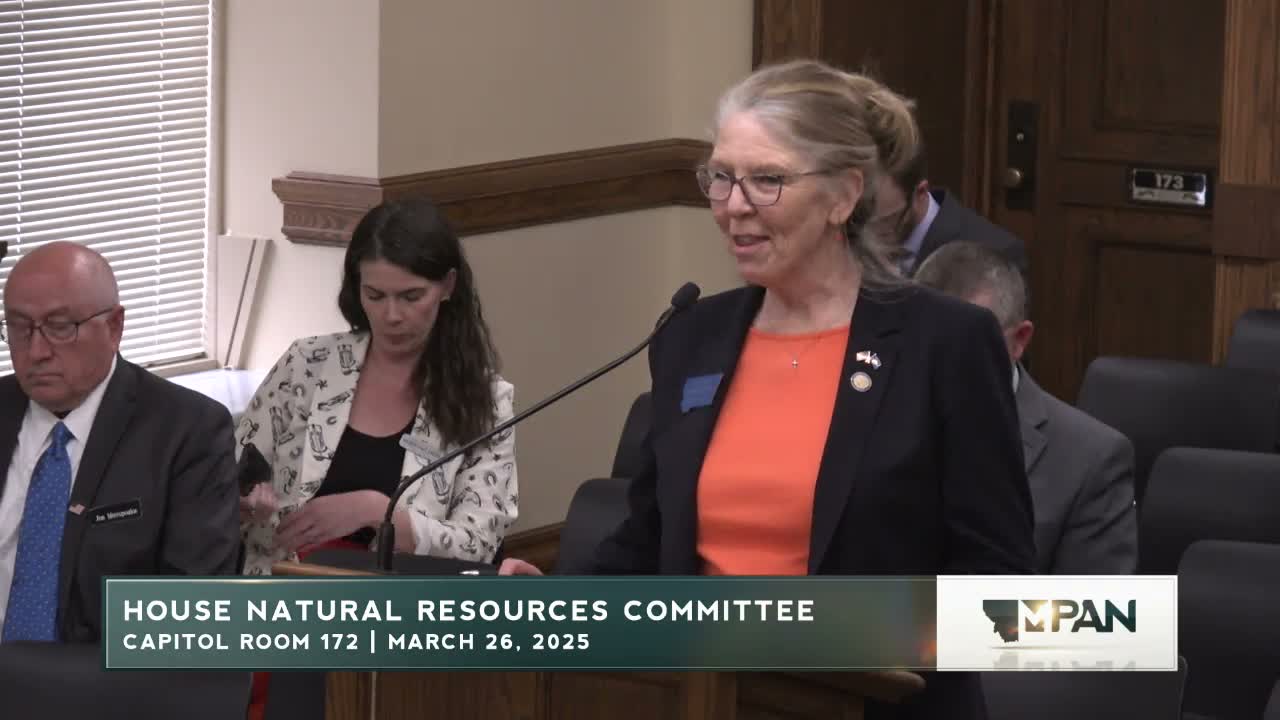
Opponents, led by Lieutenant Governor Kristin Juras speaking for Governor Gianforte, argued the bill is broader than the Land Board’s 2024 motion and risks impairing the board’s fiduciary duties to school trust lands. Juras walked lawmakers through constitutional and case‑law principles from the 1889 Enabling Act and Montana precedent, emphasizing that where an original permit’s place of use included state trust land the portion appurtenant to the trust may be treated differently. She warned SB 263’s language — particularly a provision describing certain water rights as ‘improvements’ and a 150‑day internal timetable — could be inconsistent with decisions such as Pettibone and could interfere with the Land Board’s ability to file timely objections in the water‑court process.
Committee members pressed for specifics and practical examples. Representatives asked about scenarios involving stock water and lease termination, how allocations tied to animal‑unit months would be computed, and whether the bill would leave the Land Board without time to complete its review before the water‑court objection deadline. Sponsor and proponents said they could consider shortening notice timelines if that would preserve both due process for water users and the board’s ability to meet filing deadlines.
Several witnesses noted historical complexity: some contested rights originated long before later case law clarified state ownership rules. Information witnesses from DNRC described administrative processes the department uses now and said the administration has worked to remove the state’s name from some post‑1973 permit records while still reviewing older files where fiduciary duties may require reassertion.
Sen. Beard closed by saying SB 263 is focused on creating a neighborly, pre‑legal process that lets water‑right owners speak to elected Land Board members before litigation begins. She requested the committee concur.
Next steps: The hearing closed without a committee vote recorded in the transcript; sponsors and committee members discussed possible drafting adjustments to address timing and constitutional concerns.