Get Full Government Meeting Transcripts, Videos, & Alerts Forever!
Get email alerts on the Infrastructure Drinking Water topic
No spam. Unsubscribe anytime.
Committee hears clash over HB 657 as DEQ warns of federal funding risk
Summary
Lawmakers heard opponents including DEQ and DNRC argue House Bill 657 would transfer plan‑approval authority for city sewer and water expansions to cities that employ or contract a Montana‑licensed professional engineer, risking state primacy and potentially jeopardizing eligibility for low‑interest SRF loans and federal funds. Proponents say the change would reduce duplicative review and speed housing projects.
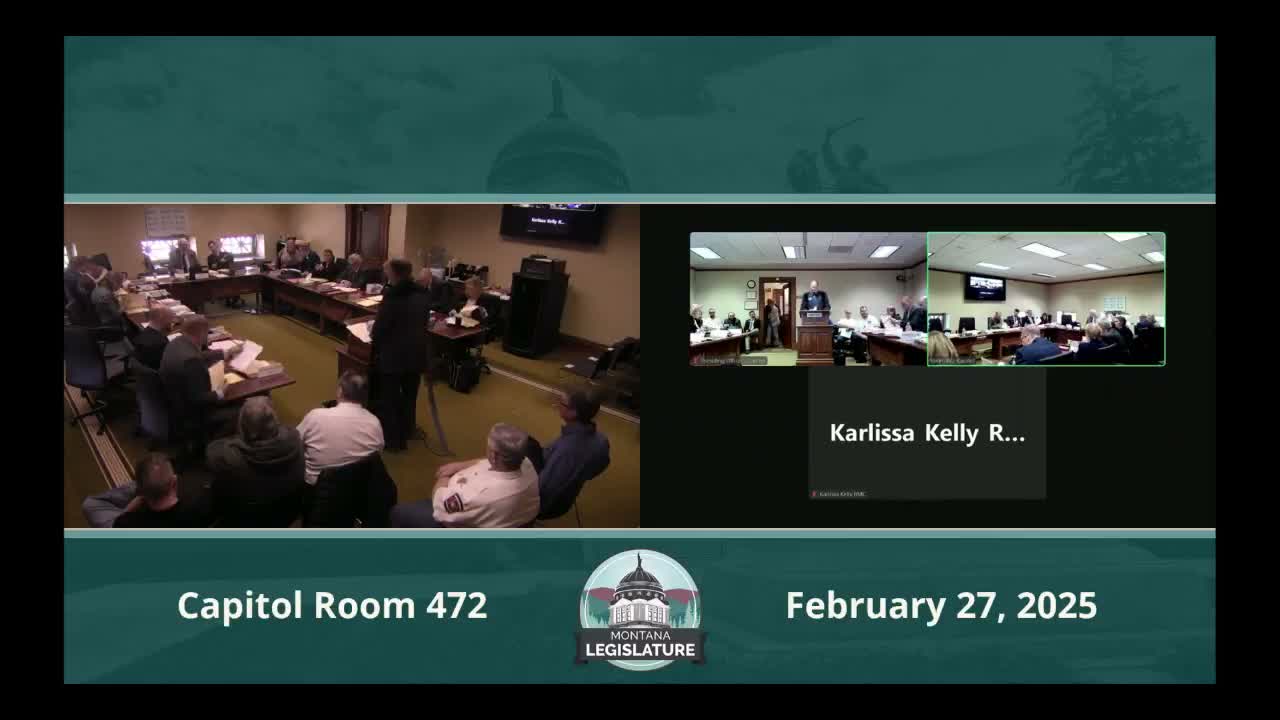
Representative Steve Gist introduced House Bill 657, which would allow cities that employ or contract with a Montana‑licensed professional engineer to review and approve engineering construction documents for expansions to city sewer and water systems, rather than sending the same documents to the Department of Environmental Quality (DEQ). Proponents told the House Local Government Committee that the change would reduce duplication and speed approvals for housing and other development.
The Montana League of Cities and Towns’ executive director Kelly Lynch said the proposal would codify delegations that have been used when DEQ was backlogged, giving cities the option — not the obligation — to perform reviews locally. “We entered into delegation agreements with DEQ,” Lynch said, “which took a while but by the time we got that all set up, they were no longer behind.” She described HB 657 as a statutory option that cities could use if they wished.
DEQ’s water quality division administrator Lindsey Krivaruchka and a DNRC official urged the committee to reject the bill. Krivaruchka told lawmakers the bill “undermines the consistent statewide standards for safe drinking water,” and warned that it “risks Montana's primacy over safe drinking water regulation” — a status DEQ holds that helps the state retain federal funding eligibility. DNRC’s Mark Bostrom noted the state revolving fund (SRF) programs and related ARPA disbursements require final approval by the state’s primacy agency and said the bill could make projects ineligible for low‑interest loans or loan forgiveness tied to SRF rules.
John Sinrud, the bill’s author, said cities already control streets and local pipe infrastructure and argued that requiring duplicative sign‑offs with DEQ adds delay for developers and housing projects. Sinrud urged the committee to allow cities to assume responsibility so long as they meet DEQ circulars and state standards.
Committee members asked DEQ how quickly plan review typically proceeds under current delegation arrangements; Krivaruchka said some routine main extensions can be reviewed in roughly 15 days through local reviewers who contract with DEQ, highlighting the tradeoff between speed and statewide consistency. Opponents suggested the statutory delegation in current law (76‑6‑121 MCA referenced in testimony) already allows contracting arrangements and that the bill would remove legal clarity about delegation and final approval.
The committee did not take final action on HB 657 during the hearing; members asked staff and stakeholders about potential amendments that would preserve DEQ primacy or preserve SRF eligibility while addressing proponents’ speed and “red‑tape” concerns.
The committee will consider whether amendments can reconcile the need for predictable statewide standards with cities’ requests to shorten approval timelines for local infrastructure projects.