Get Full Government Meeting Transcripts, Videos, & Alerts Forever!
Get email alerts on the Drugged Driving topic
No spam. Unsubscribe anytime.
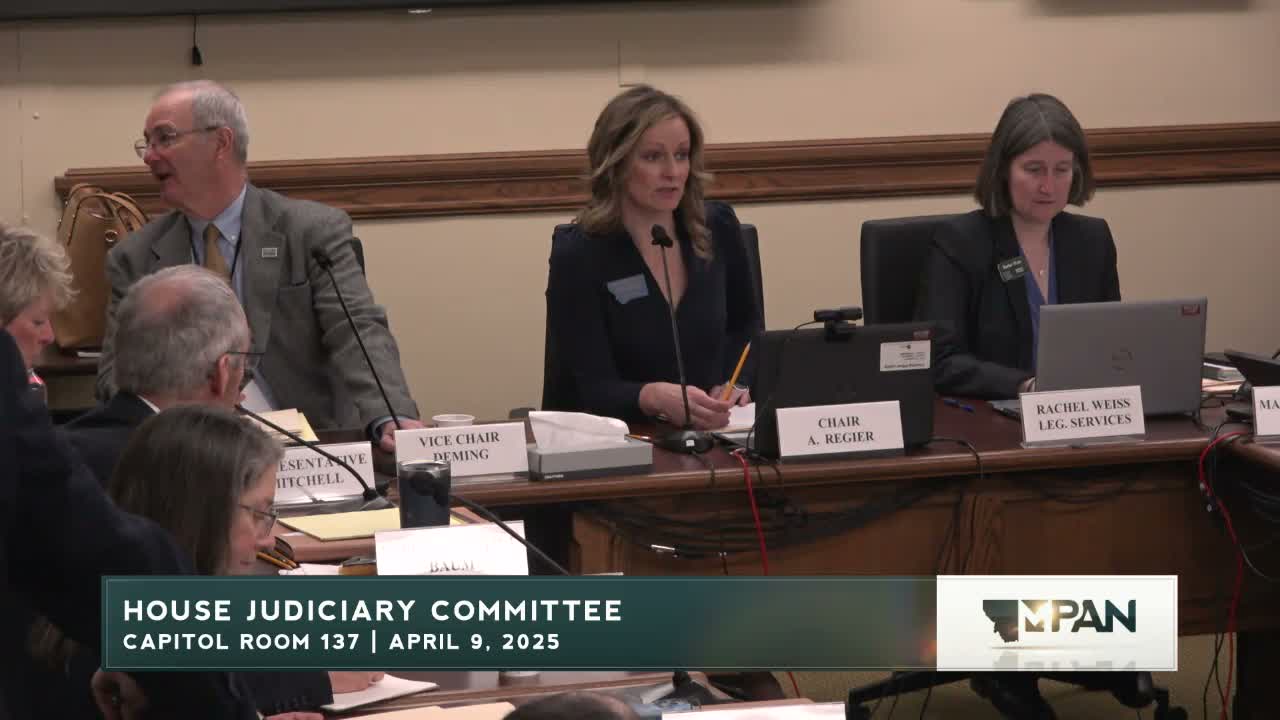
House Judiciary hears bill to make any THC in drivers under 21 a DUI
Summary
Sen. Willis Curti told the House Judiciary Committee SB 508 would make any amount of THC a per se DUI for drivers under 21; law‑enforcement testified to rising THC presence in crash investigations while drug‑policy and civil‑liberty groups warned the measure would criminalize non‑impairing residue and second‑hand exposure.
Sen. Willis Curti opened a hearing on Senate Bill 508, saying the bill would make ‘‘no one under the age of 21 years of age…drive without…any THC in their blood system,’’ aligning driving rules with Montana’s possession prohibition for minors. Curti said the measure is intended as both enforcement and an educational signal about teen substance use.
Opponents told the committee the bill would criminalize people who are not impaired. Don Cape of the Coalition for Safety and Justice said the bill would in practice catch medical users and people with non‑impairing residue and urged a no vote. Mary Bauji of the Marijuana Policy Project called SB 508 a ‘‘0 tolerance DUI law criminalizing drivers under the age of 21 for having even trace amounts of THC or metabolites in their system, regardless of actual impairment,’’ and pointed to scientific uncertainty about correlating THC blood levels with impairment.
Captain Doug Samuelson of the Highway Patrol urged the committee to pass the bill, citing agency data showing rising presence of THC in crash investigations and fatalities from 2020–2023 and referencing studies that associate THC use with higher crash risk. Samuelson told members that law enforcement uses an investigatory process—observations, evaluations, and testing—before a blood draw, but said detectable THC in younger drivers raises concern about crash risk.
Committee members pressed for operational detail: Representative Griffith noted parallels with alcohol per se levels for minors and questioned how second‑hand exposure would be handled. Captain Samuelson responded that investigators normally need signs of impairment before obtaining a blood draw.
The committee later took executive action and recorded concurrence in SB 508 during the session’s voting block; that concurrence appears in the committee's executive action record. The transcript records both the policy arguments and enforcement concerns but leaves open implementation specifics such as how labs or courts would treat trace metabolites or second‑hand exposures.
What happens next: The committee concurred with the Senate version in executive action; any further changes would appear on the House floor and in subsequent conference activity.