Get Full Government Meeting Transcripts, Videos, & Alerts Forever!
Get email alerts on the Child Welfare topic
No spam. Unsubscribe anytime.
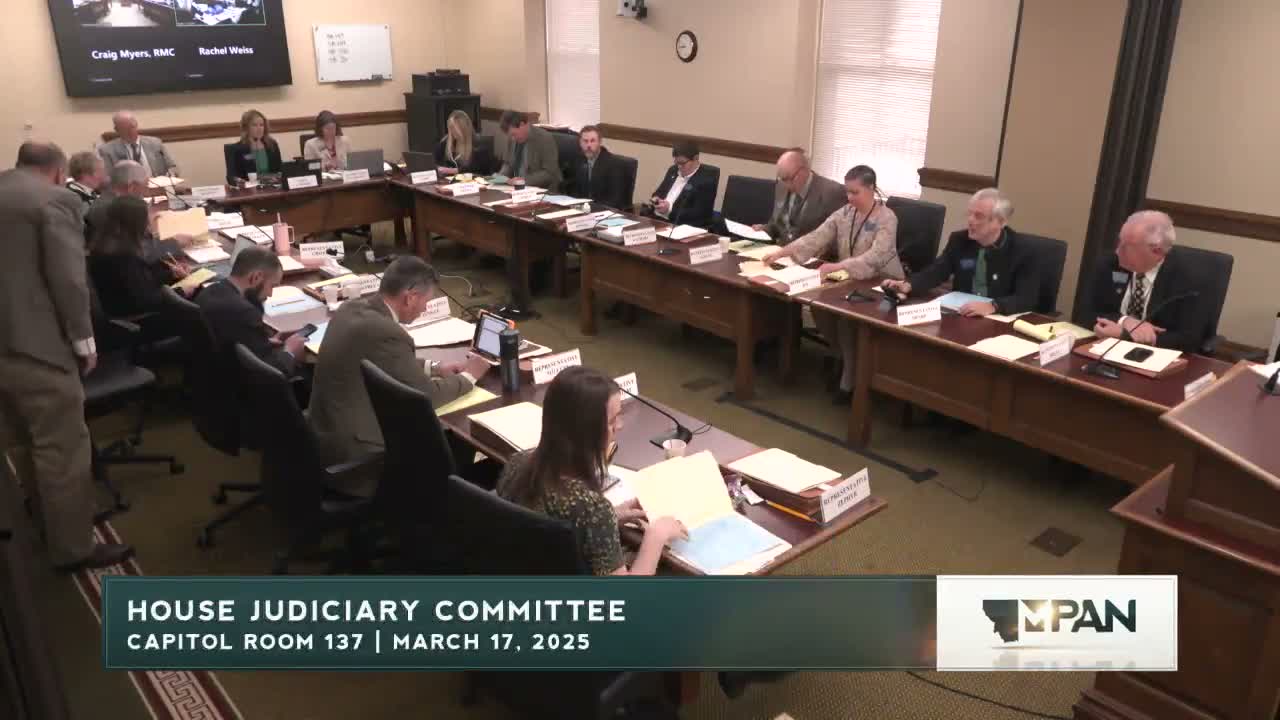
House Judiciary hears debate on raising burdens of proof in child-welfare cases
Summary
Senate Bill 156 would increase evidentiary standards in child abuse and neglect proceedings—requiring clear and convincing evidence for adjudication and custody orders and proof beyond a reasonable doubt to terminate parental rights. Department officials warned higher standards could return children to unsafe homes and increase reentry; sponsor argued changes protect parental rights.
Lawmakers heard extended testimony Monday on Senate Bill 156, a proposal that would raise the evidentiary standards in Montana's child abuse and neglect statutes.
Sponsor Senator Daniel Emmerich told the House Judiciary Committee SB156 would require clear and convincing evidence for orders of adjudication and custody and proof beyond a reasonable doubt to terminate parental rights. "So parental rights are a constitutionally guaranteed right," Emmerich said, arguing the highest standard should apply when rights are permanently terminated.
Opponents, including Nikki Grossberg, Division Administrator for Child and Family Services, urged the committee not to pass the bill. Grossberg presented data showing Montana's foster-care population at 2,104 — "the lowest since 2013" — and warned that raising the burden for adjudication and termination could lead to children returning to homes where problems have not been remedied. She said the change could increase reentry into foster care and lead to more guardianships that are governed by statutes the witness said are currently unclear.
Grossberg laid out an operational example: when parents using fentanyl are arrested and children test positive, the department can remove children and begin emergency protective services and treatment referrals, but moving to adjudication within 90 days would require a higher standard in some cases, possibly leading to dismissal and an unsafe return home absent completed services.
Committee members asked whether the bill adopts burdens used under the Indian Child Welfare Act and whether courts and departments have experience applying the higher standards. Heather Webster, deputy chief county attorney in Yellowstone County, and others described how ICWA and Montana's Indian Child Welfare Act already use elevated burdens and said some courts handle such standards; department witnesses cautioned about timing and services availability.
Sponsor Emmerich said the proposal is intended to ensure judges receive the evidence needed before terminating parental rights and that many termination decisions occur two years into a case after services have been offered.
The hearing closed without a committee vote. Committee members asked for additional data and discussion of statutory gaps in guardianship law that witnesses identified.