Get Full Government Meeting Transcripts, Videos, & Alerts Forever!
Get email alerts on the Physician Assisted Suicide topic
No spam. Unsubscribe anytime.
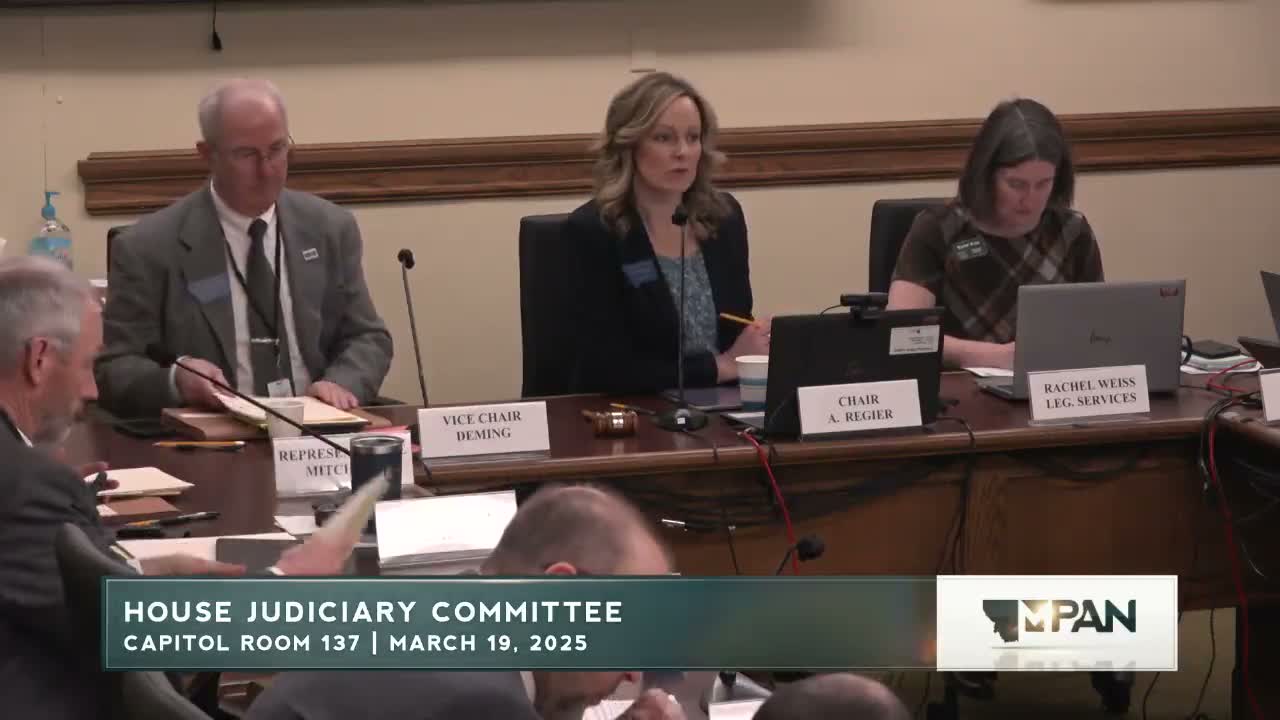
House Judiciary hears hours of testimony as lawmakers consider clarifying law on physician-assisted suicide (SB 136)
Summary
The House Judiciary Committee heard hours of testimony on SB 136, which would make it a crime for physicians to prescribe lethal medication to end a patient’s life; proponents argued the bill closes a legal loophole left by Baxter v. Montana, while opponents — including patients, hospice workers and medical professionals — said criminalizing doctors would strip a needed end-of-life option and harm vulnerable patients.
Bill: Senate Bill 136 — would clarify that Montana law prohibits physicians from deliberately prescribing medication with the intent of causing a patient’s death.
Sponsor’s opening: Senator Carl Glimm opened the hearing by citing Montana criminal statutes defining deliberate homicide and aiding or soliciting suicide, and by citing Baxter v. Montana. Glimm said Baxter left a statutory question to the legislature and argued the committee should close what he called a ‘loophole’ that allows physicians to prescribe drugs for the purpose of ending life. He warned of a slippery slope, pointing to international examples and Canadian death statistics presented by proponents.
Proponents’ case: Witnesses appearing in support included Kristen Juras (Governor’s office), physician leaders (Montana Medical Association representatives), and patient-advocacy groups. They argued SB 136 would protect vulnerable patients from coercion, preserve the doctor’s role as healer, and prevent what they characterize as experimental or unregulated use of lethal medications. Jessica Rogers (Patient’s Rights Action Fund) told the committee Montana has no reporting or guardrails comparable to states that report assisted-death data and urged the legislature to explicitly prohibit the practice.
Opponents’ case: Dozens of opponents — including patients with terminal diagnoses, family members, hospice nurses, palliative-care doctors and state health organizations — urged the committee not to criminalize medical aid in dying. Multiple witnesses described personal end-of-life experiences in which medical aid in dying gave patients a peaceful death or provided psychological relief even if the patient did not use medication. Witnesses from the Montana Hospital Association, hospice providers, and the family of the plaintiff in Baxter all emphasized the privacy and autonomy of terminally ill patients and warned of chilling effects on pain management and honest advance care conversations if physicians face potential prosecution.
Legal and evidentiary questions: Members asked detailed questions about the Rights of the Terminally Ill Act, Baxter v. Montana, and whether prescribing a lethal medication is legally distinct from withdrawing life-prolonging treatment. Legal witnesses and an attorney who worked on Baxter explained the case held that consent may be raised as a defense to homicide charges, and said the legislature has the authority to clarify public policy. Committee members also asked about empirical evidence (citing Oregon and Canada statistics offered by witnesses) and whether criminal enforcement is occurring now in Montana; the sponsor said many counties have not prosecuted such cases and that the legislature should resolve the policy question.
Outcome and next step: The committee closed the hearing on SB 136 after an extended period of testimony and questioning. No committee action on the bill occurred in the hearing itself; the next procedural step will depend on scheduling for executive action and any amendments adopted by the sponsor or committee.