Get Full Government Meeting Transcripts, Videos, & Alerts Forever!
Get email alerts on the Evidence Law topic
No spam. Unsubscribe anytime.
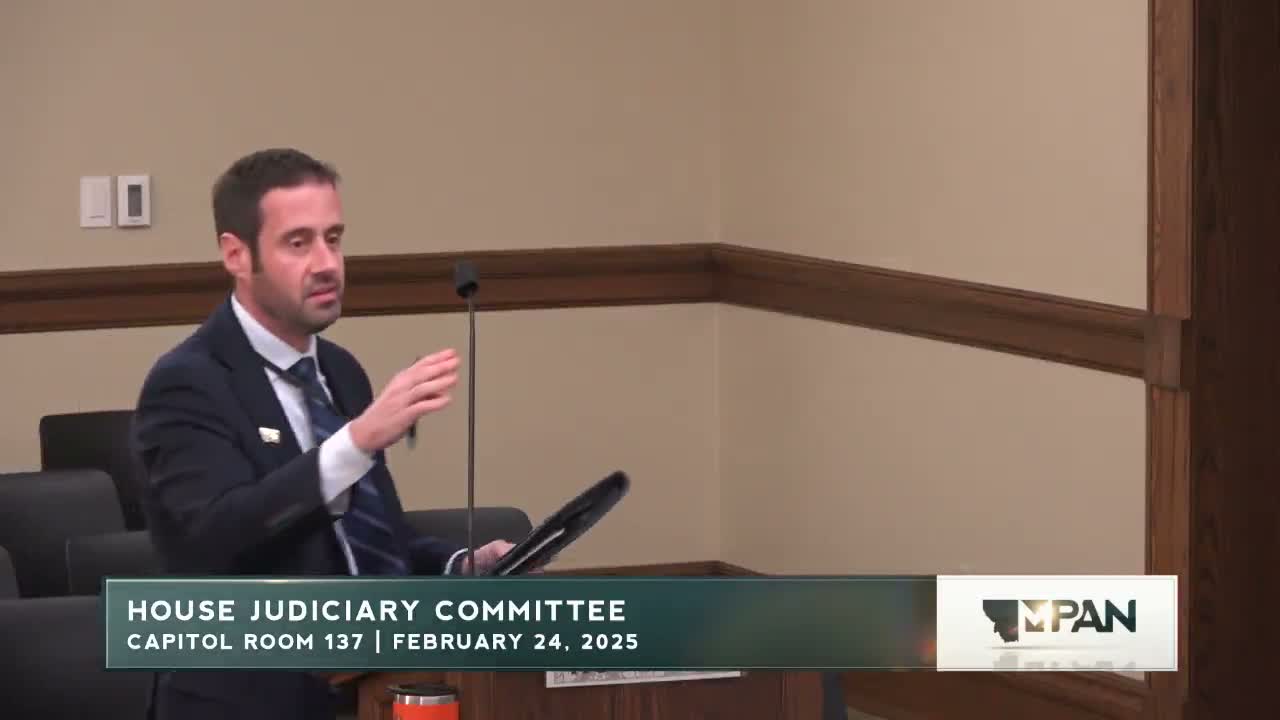
Courtroom experts: committee debates bill to codify Daubert standard in Montana
Summary
House Bill 5 48 would codify the Daubert gatekeeper test for expert testimony in state courts. Sponsor argued it would exclude unreliable evidence and streamline cases; prosecutors, defense attorneys, and evidence commissioners warned it could clog courts and create mandatory pretrial hearings, urging carve-outs for criminal cases.
Representative Anthony Nicastro presented House Bill 5 48 to implement the Daubert standard in Montana state courts, making judges the "gatekeeper" to determine whether expert testimony is admissible based on reliability, methodology and testability. He argued adopting the federal approach would prevent unreliable expert testimony and reduce unnecessary trials.
County attorneys, prosecutors, and practicing trial attorneys opposed or urged caution. Mary Berry (Chief Criminal Deputy County Attorney, Lewis and Clark County) and Brian Thompson (Montana County Attorneys Association) said mandatory pretrial Daubert hearings for common criminal experts (HGN, breath test interpretations, routine DNA testimony) would require additional court time, public defenders, and funding and could delay trials. Caitlin Boland Arab (member of the Supreme Court Commission on Evidence) said the bill differs from federal Rule 702 in two important ways: it requires the court to make a finding before an expert may testify (language reversing the federal proponent-burden formulation) and it lacks a stated burden of proof such as "preponderance of the evidence," creating uncertainty.
Several witnesses asked for carve-outs for criminal and dependency matters or asked the sponsor to work with the Supreme Court evidence commission to draft model rule text. The sponsor said he would consider amendments but defended the measure as a way to keep "junk science" from juries. The committee did not take a vote at the hearing.