Get Full Government Meeting Transcripts, Videos, & Alerts Forever!
Get email alerts on the Asbestos Litigation topic
No spam. Unsubscribe anytime.
Montana Judiciary hears HB 803 to force earlier disclosure of asbestos trust claims and curb over‑naming of defendants
Summary
Sponsors and business groups told the House Judiciary Committee HB 803 would let juries see a plaintiff’s full asbestos exposure history and require a basic factual showing before naming defendants; opponents representing Libby claimants said existing rules already provide disclosures and warned the bill could delay recoveries.
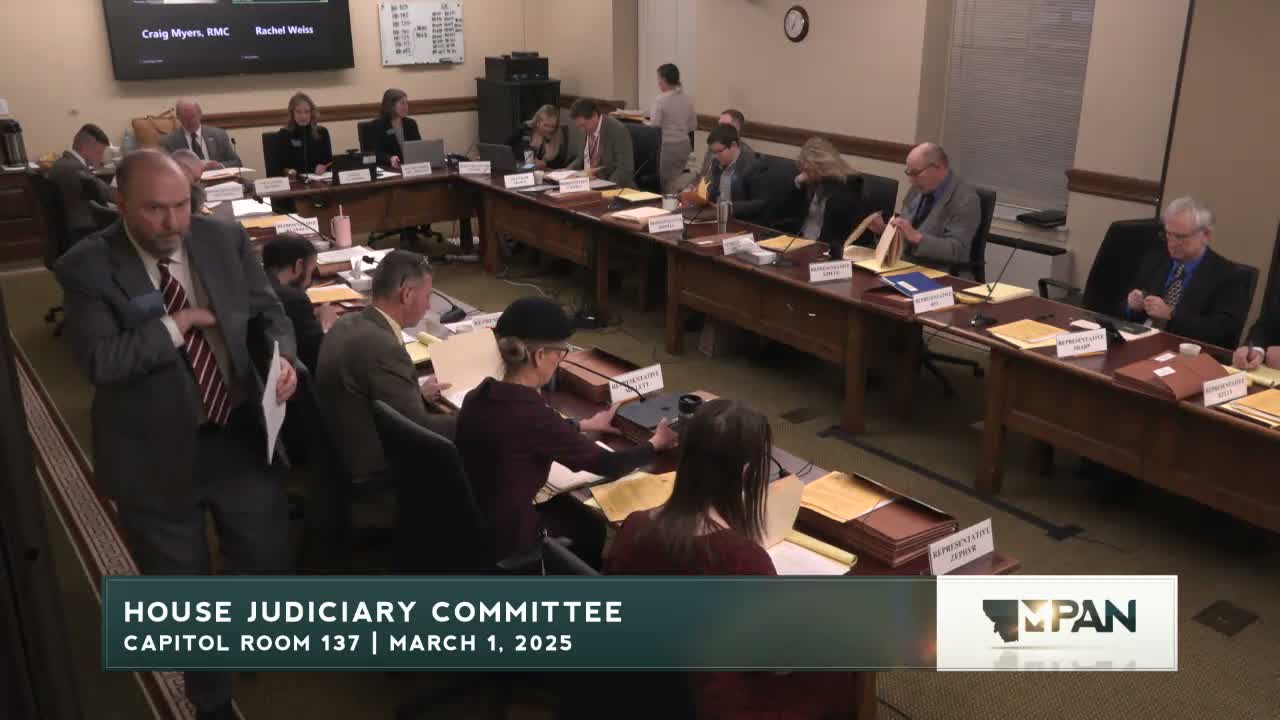
Representative Greg Overstreet opened the hearing on House Bill 803, telling the committee the bill has two parts: a trust‑claims transparency measure and an over‑naming reform to require basic factual history for each defendant named in an asbestos case. “HB 803 puts the plaintiff's entire exposure history in the open for the jury to see,” Overstreet said.
Proponents including Charles Robinson of the Montana Chamber of Commerce and Mark Behrens of the U.S. Chamber Institute for Legal Reform argued the bill would reduce duplicative recoveries from trusts and tort defendants and cut abusive over‑naming. Robinson told the committee that “double dipping” — filing trust claims and separate tort suits for the same injury — depletes compensation resources and wastes defendant resources. Behrens said similar laws exist in roughly 16 states and that disclosure at the start of a civil case would give jurors a fuller picture of exposure history.
Opponents focused on Montana’s longrunning Libby litigation. Roger Sullivan, representing Libby claimants, said the state’s current discovery rules already provide defendant disclosure and warned HB 803 could unjustly produce offsets against victims who have not yet recovered from trusts. “The rules that are in effect right now work,” Sullivan said, arguing the proposed set‑off rules could delay or reduce recoveries and raise constitutional concerns.
Committee members questioned both the practical effect on victims and how trust procedures intersect with federal bankruptcy law. Overstreet and proponents said the bill would not alter federal trust procedures but would require plaintiffs to disclose claims and minimal factual support in tort complaints so juries are informed about all exposures. Several members asked follow‑up questions about the timing and evidentiary showing required for over‑naming reform.
The hearing closed without a committee vote; the record contains the full testimony from business groups, academic witnesses, and Libby‑area lawyers. The bill will move forward for executive action later in the committee’s scheduling if the sponsor so requests.