Get Full Government Meeting Transcripts, Videos, & Alerts Forever!
Get email alerts on the Election Administration Funding topic
No spam. Unsubscribe anytime.
Witnesses back bill to limit foreign-funded grants and services to election offices
Summary
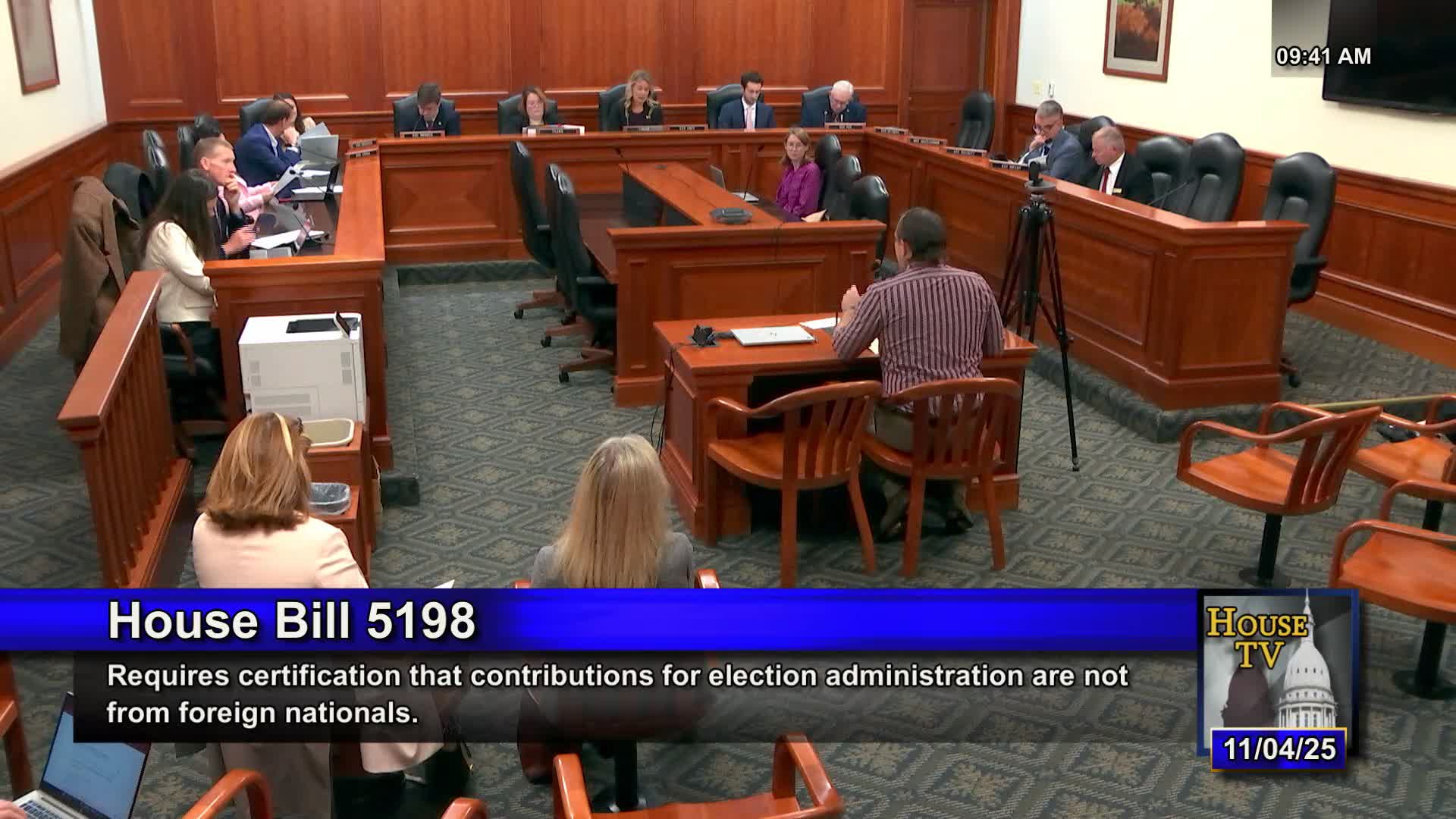
Rep. Brock and witnesses supported HB 51 98 to require entities providing funding, goods or services to election officials to certify they are free of foreign donations; testimony cited private election-financing controversies and urged certifications to increase transparency.
Representative Brock presented House Bill 51 98 as distinct from HB 51 97, saying it "deals with the election administration process" and would prohibit foreign donations for funding or in-kind support tied to the administration of elections.
Jason Snead of Honest Elections Project ACTION told the committee HB 51 98 would require entities offering funding, in-kind goods or services to certify to the secretary of state that they are free of foreign donations and to renew those certifications. He cited the Center for Tech and Civic Life and the $400 million in private funding in 2020 as an example that prompted many states to ban private election financing and warned of the "risk of undue influence" when large private grants equal annual taxpayer budgets.
Snead argued the existing pipeline that has funded ballot measures also operates in the election-administration space and cited reporting that tens of millions of foreign funds flowed to U.S. nonprofits and to entities such as the New Venture Fund. "This is what HB 51 98 aims to push back on with a simple certification filed with the secretary of state," he said.
Committee members asked for examples of foreign funding tied specifically to Michigan election offices and about penalties for knowing violations; witnesses and the sponsor said they could not point to a specific Michigan example in committee but argued the bills would create enforcement tools and transparency.
No formal vote was recorded on HB 51 98. The hearing concluded after additional testimony cards were read and the committee adjourned.