Get Full Government Meeting Transcripts, Videos, & Alerts Forever!
Get email alerts on the Transportation Budget topic
No spam. Unsubscribe anytime.
Appropriations subcommittee reviews $7.9 billion MDOT budget, details road funding package
Summary
The House appropriations subcommittee examined the enacted FY2026 Michigan Department of Transportation budget and the new road funding package that funds it — including a 20¢/gallon motor fuel tax increase, revenue shifts, and a new neighborhood road fund — and asked for follow-up on new program administration and distribution estimates.
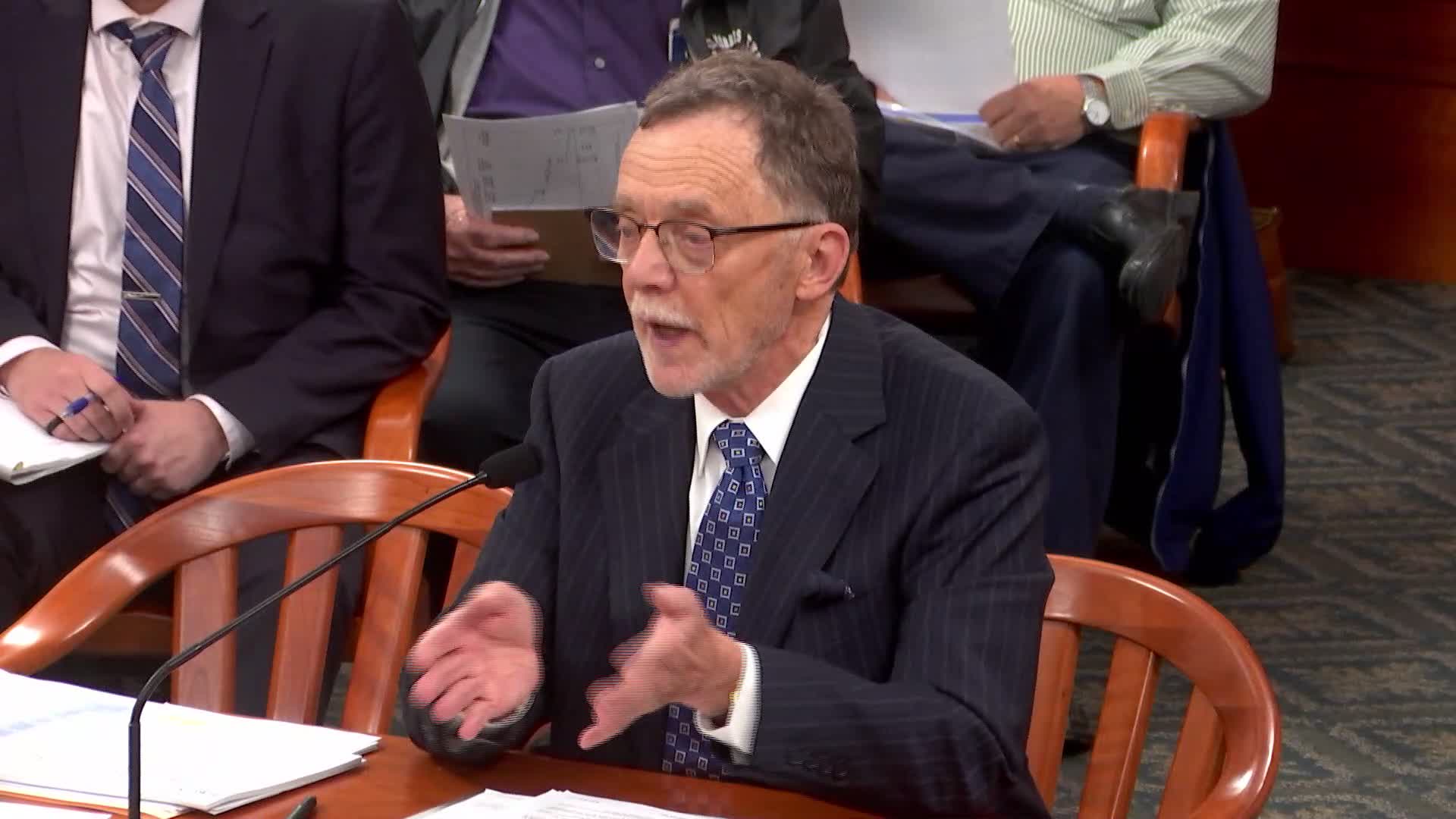
Bill Hamilton of the House Fiscal Agency presented the enacted FY2026 Michigan Department of Transportation budget and the accompanying road funding package, telling the House Appropriations Subcommittee on State and Local Transportation that gross appropriations rise from about $6.8 billion to approximately $7.9 billion, an increase driven primarily by new state restricted revenues from the recently enacted road funding package.
Hamilton said the package includes a 20¢ per gallon increase in the motor fuel tax effective Jan. 1, 2026 (House Bill 4183), which he estimated would generate roughly $1.07 billion from motor fuels over a 12-month rollout. He added that related surcharge increases on plug-in hybrids and electric vehicles would add about $11 million. Hamilton emphasized that many figures in the budget summary are estimates tied to the new revenue sources.
The road funding package also shifts some existing earmarked revenue streams and creates new ones. Hamilton described a conversion that removes a $600 million income tax earmark to the Michigan Transportation Fund and replaces that capacity with corporate income tax and new revenues (including an estimated wholesale marijuana tax), changing the net amounts available for distribution. Under Senate Bill 578, dedicated amounts were shown for local bridges ($100 million), a $40 million rail grade separation fund, $100 million for public transportation programs, and a new Infrastructure Projects Authority Fund ($65 million), with the balance distributed to county road commissions, cities and villages, and the state trunkline fund.
On distribution, Hamilton said internal distribution formulas remain governed by Public Act 51 (1951) once funds reach the county, city, or state buckets, and early estimates using a 2024 baseline suggest local agencies could see roughly a one-third increase (about 33%) compared with the 2024 baseline. He cautioned that finalized 2025 numbers are a better basis for precise allocation estimates and that revenue models may change year to year.
Committee members pressed for clarifications. Representative Slaw asked what specific projects the new Infrastructure Projects Authority Fund will support; Hamilton said the program is new, the bill analysis contains broad criteria, and operational details (including administering authority) remain to be clarified. Representative Morgan asked whether township match requirements persist; Hamilton said neighborhood road fund language appears to remove required matching for those dollars, giving local agencies more latitude, but he and MDOT staff would confirm interpretations.
Hamilton also detailed program-level changes: debt service increases tied to schedules, modest increases in design and maintenance line items to reflect contract and material costs, and transit-specific appropriations that include a roughly $44.9 million increase in local bus operating assistance distributed by formula to roughly 78 transit systems and several new full-time positions. He noted several one-time deposits from the Comprehensive Transportation Fund to targeted accounts (maritime/ports, heritage preservation, nonmotorized trails, and aviation), and a one-time MTF deposit for the road usage pilot study.
The presentation closed with Hamilton noting boilerplate and statutory language changes (including a road usage pilot in section 1005 and new contracting opportunity and movable bridge fund provisions) and with his offer to provide follow-up detail on program administration and distribution models.
The committee did not take additional formal votes on budget items during this meeting; Representative Morgan moved to adopt the minutes from the Sept. 17 meeting, and the motion was adopted by unanimous consent.