Get Full Government Meeting Transcripts, Videos, & Alerts Forever!
Get email alerts on the Ballot Funding topic
No spam. Unsubscribe anytime.
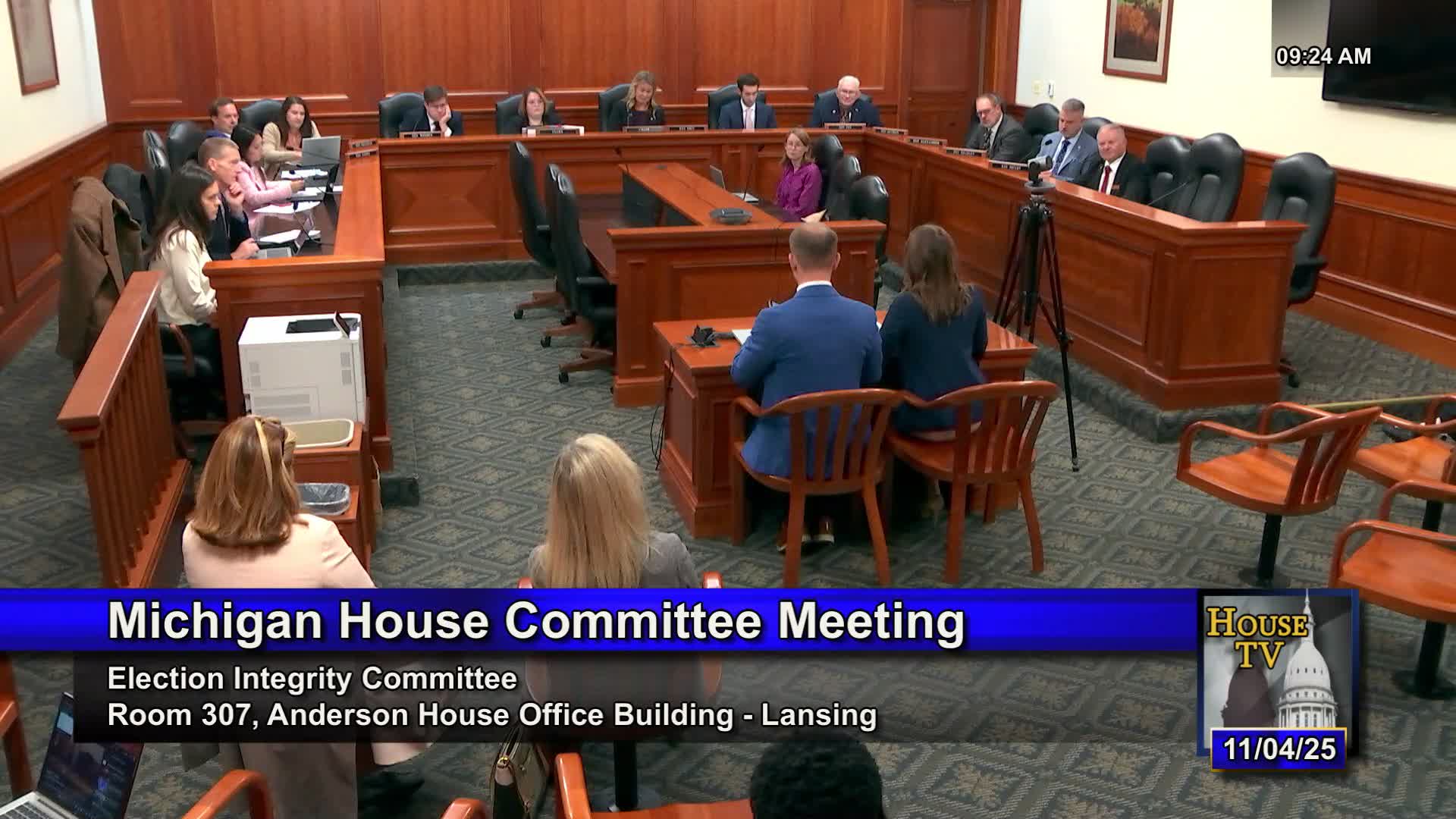
Panel hears testimony urging ban on foreign funding of Michigan ballot measures
Summary
Witnesses urged passage of HB 51 97 to close a federal loophole that allows foreign nationals to fund state ballot measures; testimony cited the "16Thirty Fund" and traced millions in foreign-tied spending in Michigan while members questioned enforceability and donor-privacy trade-offs.
Representative Smith introduced House Bill 51 97 as a measure "which would close existing loopholes in our election system by prohibiting foreign funding of ballot proposals and initiatives." She said federal law already bars foreign contributions to candidate campaigns but not to ballot measure committees.
Caitlin Sutherland, founding executive director of Americans for Public Trust, testified that foreign money is actively bankrolling U.S. policy fights and ballot campaigns. "One of [16Thirty Fund's] top donors is a reclusive Swiss billionaire named Hans Georg Wyss," she said, and APT—s work traced "almost $34,000,000" poured into Michigan by the 16Thirty Fund over many years. Sutherland said these policy decisions "should be left to U.S. citizens, and foreign money has no place in Michigan."
Jason Snead of Honest Elections Project ACTION said the bill must ban both direct and indirect foreign contributions and apply protections to independent expenditures to prevent laundering. He described a practical enforcement mechanism: requiring organizations to certify they "have not received above a certain specified amount of foreign money over a period of time," noting the measure sets that threshold at "$100,000 over a 4 year period." Snead warned that tracing money is difficult, but said certifications under penalty of perjury would create enforcement tools and transparency.
Committee members pressed witnesses on practical enforcement and donor privacy. Representative Wooden asked what could be done beyond affidavits given the anonymity of some c4s; Snead said that certifications and investigations could follow if evidence of dishonesty emerges. Representative Colazar asked whether any solution could be "100% foolproof" in preventing foreign influence; Snead acknowledged such guarantees are not possible but said the bill would be an important step toward transparency.
No formal committee vote was taken on HB 51 97 during this hearing. The hearing record includes supporters and opponents on testimony cards; the committee adjourned after concluding the testimony and questions.
What happens next: The committee will consider enforcement details, certification language and privacy safeguards in follow-up work before any vote.